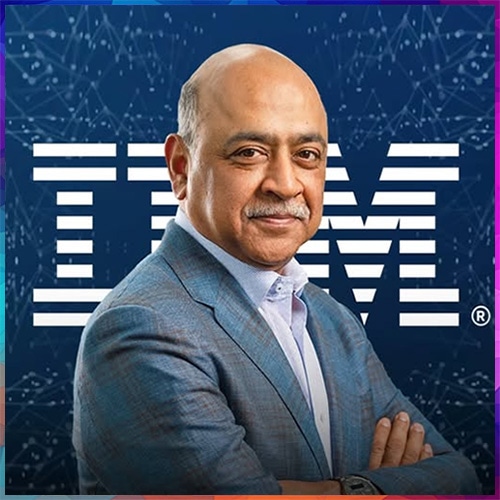
IBM is strengthening its commitment to India while accelerating investments in quantum computing, artificial intelligence, and enterprise technology, according to remarks attributed to CEO Arvind Krishna.
The technology giant reportedly invests approximately $3 billion annually in India, reflecting the country's growing importance in IBM's global operations, engineering capabilities, and technology development strategy.
IBM is also planning a $10 billion global quantum computing push, highlighting its ambition to develop advanced computing capabilities that could eventually transform scientific research, industrial optimization, and complex enterprise workloads.
Krishna revealed that nearly half of the code written within IBM is already generated using artificial intelligence. This signals a significant shift in software development, where AI increasingly assists programmers with coding, testing, and routine engineering activities.
However, AI-generated code does not eliminate the need for software professionals. Instead, developers will increasingly focus on architecture, security, validation, integration, and solving complex business problems requiring human judgment.
India's expanding pool of technology professionals positions the country to benefit from this transition. Nevertheless, workforce competitiveness will depend on continuous reskilling in AI engineering, cybersecurity, quantum technologies, and advanced computing.
IBM's quantum ambitions also reflect intensifying competition among global technology companies seeking breakthroughs beyond conventional computing. Commercial success will depend on overcoming technical challenges, improving reliability, and demonstrating measurable advantages for practical applications.
The larger message is that India's technology future will increasingly depend on combining AI-led productivity with deep-tech innovation. IBM's investment strategy highlights opportunities for Indian enterprises, researchers, and technology partners, while reinforcing the need to develop indigenous capabilities, skilled talent, and trusted digital infrastructure.