ICETCI 2026 brings global researchers together to explore the future of computational intelligence

Mahindra University hosted the sixth edition of ICETCI, bringing together researchers, academics and technology leaders from India and abroad to examine advances in AI, quantum computing, optimisation and emerging computational techniques.
The Sixth International Conference on Emerging Techniques in Computational Intelligence (ICETCI 2026), held at Mahindra University, brought together researchers, academics, technology leaders and industry experts to discuss developments in computational intelligence and its applications across sectors.
The four-day conference featured workshops on emerging technology areas, keynote lectures by international experts and nearly 200 contributed paper presentations selected through a rigorous review process. The programme covered computational techniques, artificial intelligence, optimisation and advanced computing, while providing researchers and industry practitioners a platform to exchange ideas and explore potential collaborations.
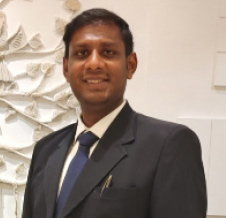
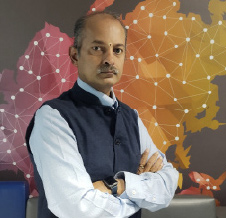
Speaking on the role of computational intelligence in future innovation, Prof. Debashish Bhattacharji, Former Vice President – Research, Technology & New Materials, Tata Steel Global, said, “Computational intelligence is moving from being a specialised area of research to becoming an important enabler of innovation across sectors. The real opportunity lies in bringing together advances in algorithms, computing, materials and domain knowledge to address complex challenges. Platforms such as ICETCI are important because they create meaningful connections between fundamental research and applications that can shape the technologies of tomorrow.”

Experts highlight AI, quantum computing convergence
The inaugural session featured Dr Satheesh Reddy, former Chairman, Defence Research and Development Organisation (DRDO), and former Director General, Missiles and Strategic Systems, along with Dr Debashish Bhattacharya, former Vice President – Research, Technology & New Materials, Tata Steel Global. Both speakers brought experience spanning research, innovation, technology and strategic capabilities.
The conference also focused on the growing convergence between artificial intelligence, quantum computing and advanced computational methods.
“The next phase of computational intelligence will be shaped by the convergence of AI, quantum computing and advanced computational methods. India has a strong research community and a growing technology ecosystem, and conferences such as ICETCI provide an important platform for researchers and industry practitioners to exchange ideas, identify new opportunities and accelerate innovation,” said Dr. L. Venkata Subramaniam, CEO, Qbit Force Quantum Pvt. Ltd. and Former Head of IBM Quantum India.
Keynote speakers at the conference included Kalyanmoy Deb, Endowed Shelby Distinguished Professor, University of Alabama, USA; Simon See, Global Head, NVIDIA AI Technology Centre, Singapore; Pankaj Dayama, Senior Technical Staff Member, Master Inventor and Senior Manager – AI for Industry 4.0, IBM Research, India; Pradeep Kumar Jilagam, Director of Systems Architecture & Workload Engineering for Mobile & Client Business Unit, Micron Technology Operations India LLP; Shalabh Bhatnagar, Professor, Department of Computer Science and Automation, Indian Institute of Science, Bengaluru; and L. Venkata Subramaniam, CEO, Qbit Force Quantum Pvt. Ltd, India.
Mahindra University stresses interdisciplinary research
Dr Yajulu Medury, Vice Chancellor, Mahindra University, said, “ICETCI 2026 reflects the growing importance of computational intelligence in addressing complex challenges across research, industry and society. The event established itself as a premier global platform for the exchange of pioneering ideas, uniting world-class researchers, industry pioneers, and policymakers to chart the future of Artificial Intelligence and Computational Intelligence. At Mahindra University, we remain committed to fostering interdisciplinary research and equipping the next generation of innovators with the knowledge and skills to contribute to a rapidly evolving technology landscape.”
The conference attracted authors and participants from across the world, with almost 140 papers presented during the event. More than 120 institutions from India, the US, Japan and other countries participated, reflecting the international scope of the conference.
The research presented at ICETCI 2026 covered a range of applications, including digital trust, healthcare, brain-computer interaction and efforts to counter misinformation. Collectively, the studies highlighted the expanding role of AI and computational intelligence in addressing complex technological and societal challenges.
Research and industry collaboration take centre stage
Dr Arya Kumar Bhattacharya, Dean, Research and Development, École Centrale School of Engineering, Mahindra University, said, “The strength of computational intelligence lies in its ability to bring together ideas from mathematics, computer science, engineering and domain-specific research. ICETCI 2026 has provided a valuable platform for presenting high-quality research while encouraging dialogue around how emerging computational methods can address real-world challenges. Such interactions are essential for strengthening India’s research ecosystem and accelerating technology development.”
Beyond the technical sessions, the conference also included a cultural programme, giving participants from academia and industry an opportunity to interact in a more informal setting.
With researchers and technology experts discussing advances across AI, quantum computing and other emerging computational disciplines, ICETCI 2026 underscored the growing importance of interdisciplinary collaboration in translating research into practical applications and shaping the next generation of intelligent technologies.

See What’s Next in Tech With the Fast Forward Newsletter






Tweets From @varindiamag
Nothing to see here - yet
When they Tweet, their Tweets will show up here.