
Breaking News
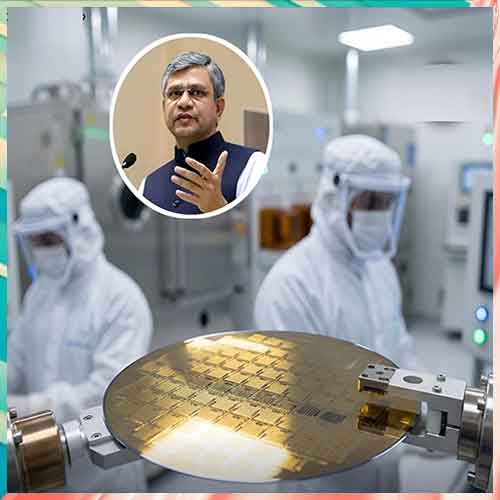
India has set its sights on developing 3nm semiconductor chips and establishing sovereign AI capabilities by 2032, marking the initiative as a critical national mission. Ashwani Vaishnav, Minister for Railways, Information & Broadcasting, and Electronics & Information Technology, described AI as the “fifth industrial revolution” and stressed the need for India to build indigenous capabilities.
The semiconductor industry is expanding rapidly, driven by demand from AI, electric vehicles, consumer electronics, and mobile devices. India has already started commercial production in 2026, with facilities from companies like CG Semiconductor, Kaynes Semicon, Tata Electronics, and Micron coming online. Ten additional semiconductor manufacturing units have been approved so far, and India has also inaugurated design centers for advanced 3nm chip development, including Renesas Electronics’ facilities in Noida and Bengaluru.
Design vs. Manufacturing: The 3nm Challenge
While India has made strides in design, achieving mass production of 3nm chips remains a global challenge. Leading-edge 3nm production is currently dominated by major foundries such as TSMC and Samsung, which rely on extremely advanced tools like EUV lithography and deep supply chain ecosystems. Designing at 3nm requires expertise in FinFET/GAAFET structures, multi-die planning, power and signal integrity, and access to foundry-specific design kits—capabilities that only a handful of global companies possess.
Renesas, for instance, can design and sample 3nm chips but does not yet have mass production capabilities. Experts note that even minor yield losses at 3nm can have significant financial impacts, making fabs highly capital-intensive, with billions required for setup, ongoing reinvestment, and operational support including water, power, and chemicals.
Road to Sovereign AI
Beyond semiconductors, India’s push for sovereign AI involves developing domestic AI models, which requires large-scale computing infrastructure, GPU access, and secure data pipelines. Analysts emphasize that a strong semiconductor supply chain is critical to supporting AI ambitions. With global supply of critical minerals largely controlled by China, India will also need to address material dependencies to ensure long-term competitiveness.
While India has a strong design talent base, experts suggest that focusing on chip design first provides a lower-risk, high-value approach compared with building fabs immediately. By investing strategically in design, talent, and ecosystem development, India can lay the groundwork for eventual domestic manufacturing and AI sovereignty by 2032.

See What’s Next in Tech With the Fast Forward Newsletter









Tweets From @varindiamag
Nothing to see here - yet
When they Tweet, their Tweets will show up here.