Developed by Wipro, IISc, and RV College of Engineering, the six-year project marks a major step in India’s journey toward self-reliant and intelligent mobility solutions
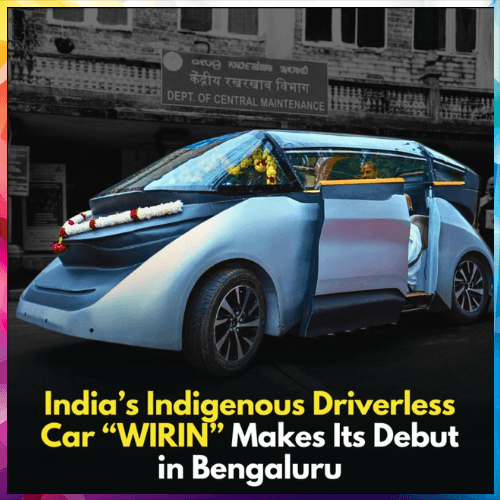
India has taken a major leap in autonomous technology with the unveiling of WIRIN (Wipro–IISc Research and Innovation Network) — a driverless car jointly developed by Wipro, the Indian Institute of Science (IISc), and RV College of Engineering (RVCE) in Bengaluru. The vehicle was officially showcased at RVCE on October 27, highlighting India’s growing strength in homegrown innovation for future mobility.
A short viral video shared on X showed the car smoothly navigating the RVCE campus, demonstrating the success of India’s indigenous self-driving technology. The project, which took six years of intensive research and development, was led by RVCE faculty members Uttara Kumari and Rajaa Vidya, along with engineering students, to design a system capable of adapting to the unpredictable conditions of Indian roads.
WIRIN: Blending AI, robotics, and 5G
The WIRIN initiative, launched in 2019, focuses on integrating advanced technologies such as artificial intelligence (AI), machine learning (ML), robotics, 5G, visual computing, and Vehicle-to-Everything (V2X) communication. The goal is to build autonomous systems that can handle real-world challenges like potholes, erratic traffic, and animal crossings — conditions unique to India’s roadways.
This collaborative effort brings together Wipro’s expertise in cognitive navigation, simulation, and 5G-based systems with IISc’s deep research capabilities, setting the stage for India’s leadership in smart mobility. Experts say the WIRIN prototype could pave the way for safer, more efficient, and sustainable urban transportation in the years ahead — positioning India firmly on the global map of autonomous vehicle innovation.