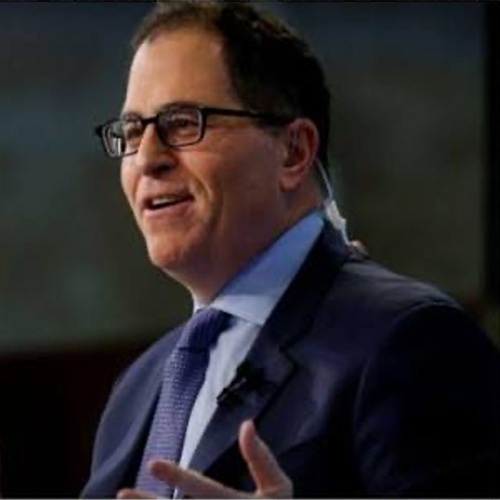
Michael Dell’s extraordinary rise in wealth is not simply the story of selling more computers. On September 9, 2026, Forbes estimated his fortune at $273.2 billion, briefly making him the world’s second-richest person. The ranking is volatile—he subsequently moved lower as markets changed—but the underlying transformation is striking. Dell Technologies shares have risen more than 300% during 2026, magnifying Michael Dell’s wealth because he retains roughly 40% of the company.
The central strategy was to transform Dell from a PC company into an infrastructure company. The $60-billion-plus acquisition of EMC in 2016 gave Dell enterprise storage, data-center relationships and VMware. VMware was later spun off, and when Broadcom acquired it, Dell personally received a substantial Broadcom holding. His wealth therefore became diversified across Dell Technologies, Broadcom and investments through DFO Management rather than depending solely on PC sales.
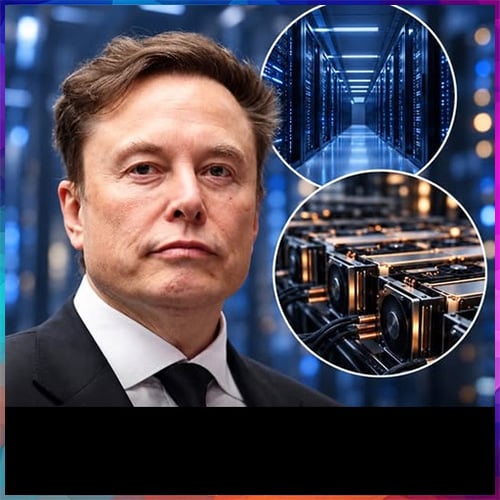
The second—and now most powerful—move has been AI infrastructure. Dell recognized that the generative-AI boom would require enormous quantities of GPU servers, storage, networking, cooling and integrated data-center infrastructure. In its latest quarter, Dell reported $60.9 billion of AI-server orders, $16.4 billion of AI-server revenue and a $95 billion AI backlog. Total quarterly revenue reached a record $47 billion, up 58% year over year. Dell now forecasts $192 billion of FY27 revenue.

This explains why calling Dell a “computing-products company” understates its position. Dell is increasingly supplying the factory floor of the AI economy. Its strategy combines NVIDIA-powered servers, PowerEdge systems, storage, networking, liquid cooling, edge computing and AI data platforms. Instead of competing to create the dominant AI model, Dell is positioning itself to provide infrastructure to enterprises, governments, sovereign-AI projects and AI cloud operators regardless of which models ultimately dominate.
Complementing Vision of President Trump
There is a connection with President Donald Trump’s technology and industrial agenda. Dell participates in the U.S. push toward domestic AI infrastructure and federal AI deployment, and Michael Dell serves on Trump’s Council of Advisors on Science and Technology. Dell has also emphasized public-private cooperation for federal AI infrastructure.
Trump has publicly promoted Dell computers, and one recent report says his disclosed portfolio purchased between $1 million and $5 million of Dell shares in February 2026 before subsequent public remarks encouraging people to buy Dell computers. These developments have further strengthened Dell’s market momentum, complementing its impressive financial performance. Surging AI-server demand, accelerating revenue growth, a record order backlog and stronger earnings demonstrate how successfully Dell has positioned itself at the centre of the global AI infrastructure opportunity.
Scaling New Heights
Michael Dell also made a crucial financial decision: he kept ownership. Rather than cashing out as Dell matured, he took the company private in 2013, executed the huge EMC transaction, returned Dell to public markets in 2018, spun out VMware and retained a very large Dell stake. When the market dramatically revalued AI infrastructure, that retained equity converted corporate transformation directly into personal wealth.
The deeper business lesson is that Michael Dell did not abandon hardware—he redefined what hardware represents. A PC is a product; an AI data center is strategic infrastructure involving compute, storage, networking, cooling, software, services and recurring enterprise relationships. Dell moved upward from selling individual machines toward supplying the infrastructure on which the AI economy operates. That shift—from selling computers to enabling computational capacity—is the real story behind the extraordinary creation of value.