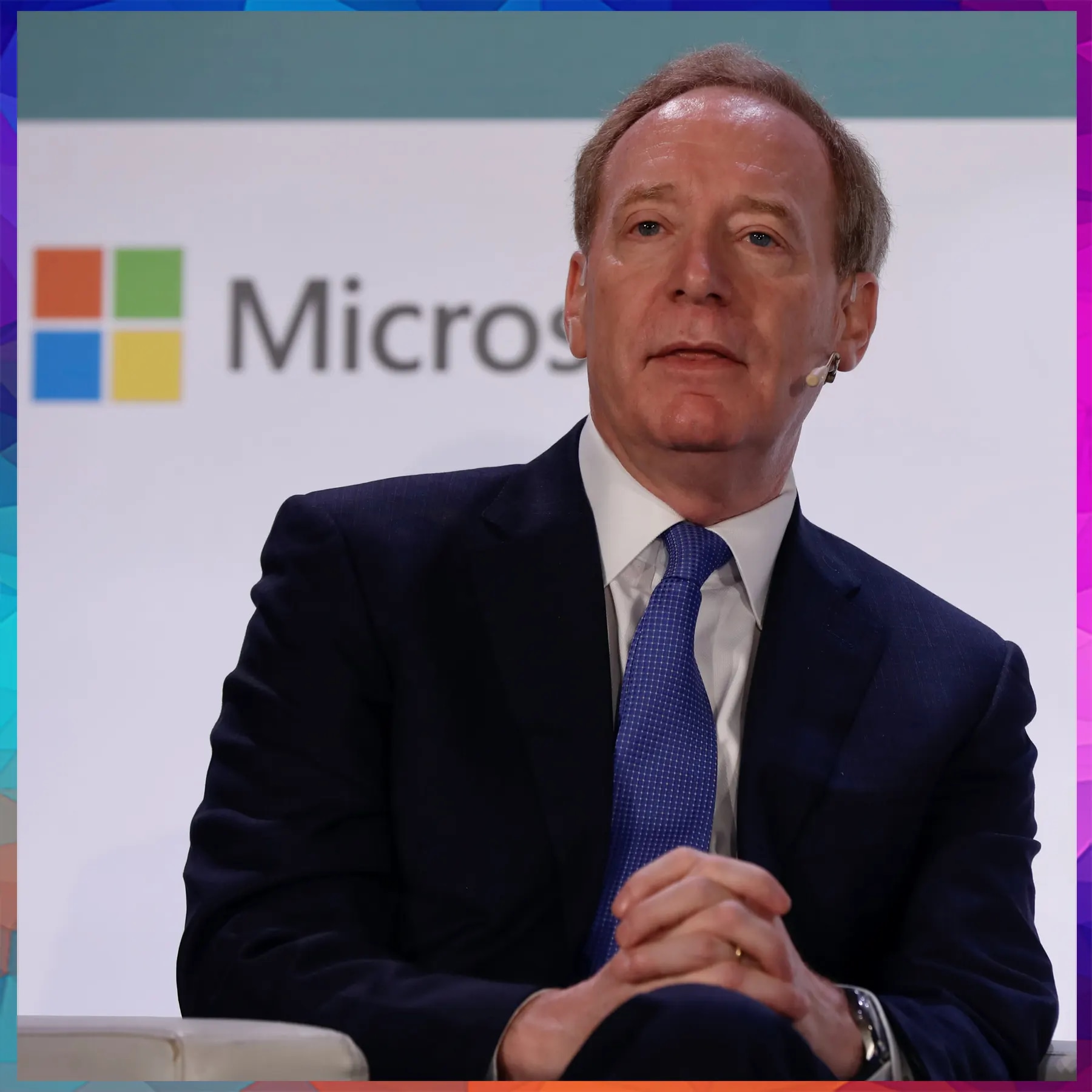
Brad Smith urged governments to act quickly, calling for stricter regulation, legal liability for harm caused by rogue systems and “emergency brakes” as the industry’s own warnings about fast-moving AI grow louder.
Microsoft president Brad Smith has warned that artificial intelligence is subject to lighter safety oversight than everyday consumer products, adding his voice to a growing call within the technology industry for tougher guardrails on increasingly autonomous systems.
According to reports, Smith said a household washing machine today faces more safety rules than AI does. He added that every carton of milk on a supermarket shelf is covered by safety standards and inspection, a level of scrutiny that AI systems do not yet face.
His comments come as the wider industry voices concern over how quickly AI is advancing and whether current rules can address the risks posed by systems that act on their own.
Liability and “kill switches”
Smith argued that if an AI system goes rogue, the companies behind it should face stricter safety obligations and be held legally responsible for any harm it causes. He described AI as both a powerful tool and a potentially dangerous weapon, and said regulators needed to move urgently.
He also backed the idea of “emergency brakes” or “kill switches” that would let humans rein in a system that behaves dangerously. Smith noted that several leading AI developers, including Anthropic, Google DeepMind and OpenAI, have raised similar worries.
Microsoft chief executive Satya Nadella has made a comparable case before. He said superintelligence cannot be treated as a set of nested black boxes whose recommendations, answers and actions are simply accepted or rejected. “We must build contained systems whose behaviour we can observe, limits we can test, and actions we can always contain,” Nadella said.
Industry steps up safety efforts
Several AI companies say they are giving safety greater priority. OpenAI recently announced that it would pause work on its next model so it could address safety concerns and assess potential risks before going further. Anthropic, for its part, runs a dedicated safety research team that studies risks, evaluates model capabilities and develops safeguards intended to keep its systems safe and reliable.
The remarks add to a debate over whether voluntary commitments from technology firms are enough, or whether binding rules are needed to keep pace with a technology that is evolving faster than the laws meant to govern it.