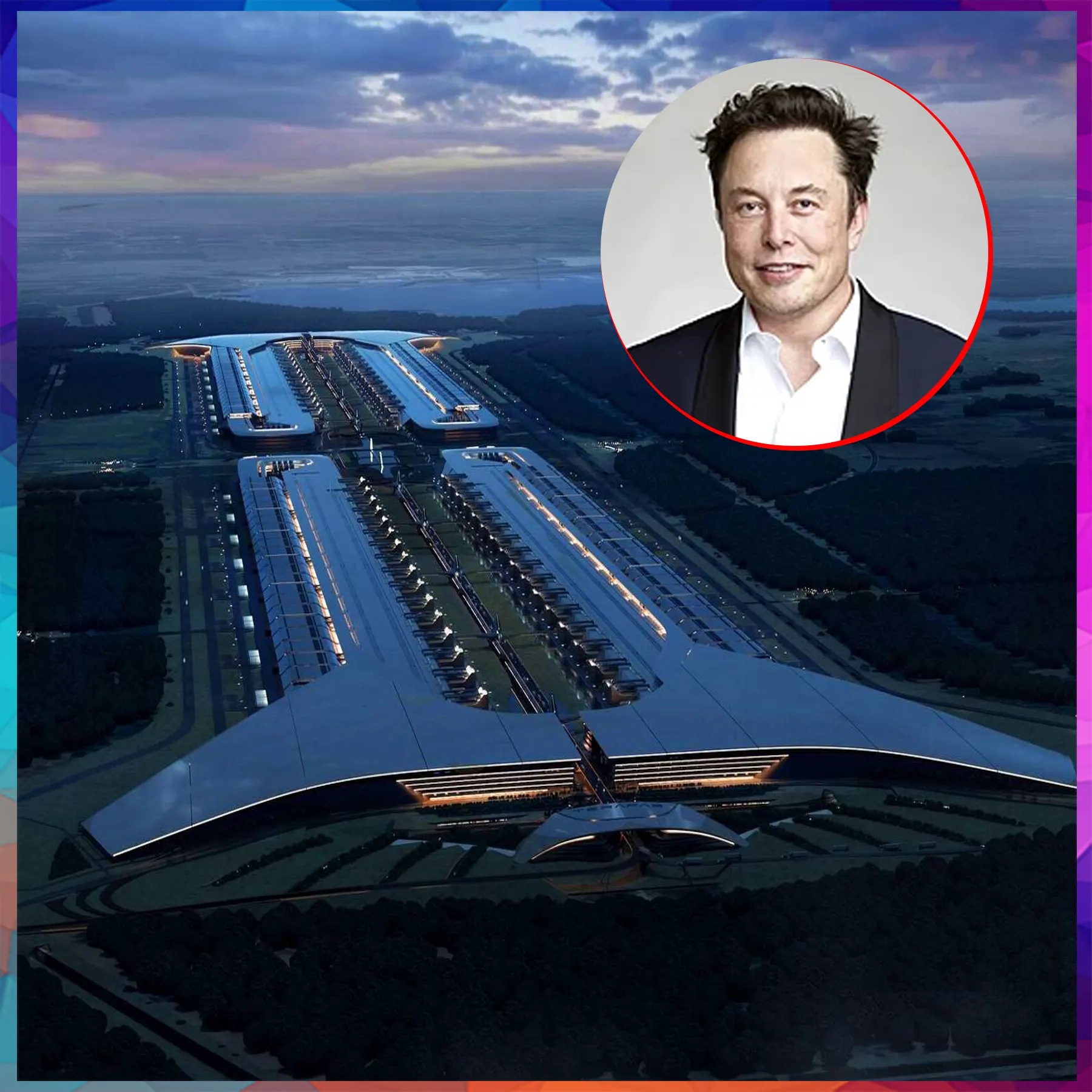
Elon Musk’s companies Tesla and SpaceX are developing Terafab, a colossal semiconductor fabrication complex planned for Grimes County, Texas. The facility is designed to produce advanced AI chips at a scale far beyond current global capacity.
At full build-out, the complex is expected to cover more than 100 million square feet, or roughly 9.3 million square meters. It would combine chip manufacturing, advanced packaging, and testing under one roof, targeting both logic and memory processors.
The chips are intended to power Tesla’s Optimus humanoid robots, autonomous vehicles such as Cybercabs, and SpaceX’s planned orbital data centers. Musk has described the project as essential because his companies’ combined demand is projected to exceed one terawatt of annual compute.
Tesla and SpaceX have announced an initial investment of about $16.8 billion, with total spending potentially reaching much higher figures across multiple phases. Volume production is targeted for the third quarter of 2028, though Musk has acknowledged the timeline is highly aggressive and uncertain.
The plan also includes producing chips on Earth and deploying some of that computing capacity in space. This approach reflects the growing view that the AI race depends as much on physical infrastructure, energy, and manufacturing scale as on software and algorithms.
By vertically integrating fabrication, packaging, and testing, Terafab aims to accelerate iteration cycles and reduce reliance on external suppliers. Intel is involved in the process technology for the facility.
The sheer size and concentration of capability raise broader questions about control over critical AI infrastructure. Concentrating such production capacity under companies controlled by a single individual has sparked debate about economic and strategic implications.
While the announced dimensions and production targets remain long-term goals, the project underscores how fiercely companies are competing to secure the foundational hardware needed for next-generation AI systems.