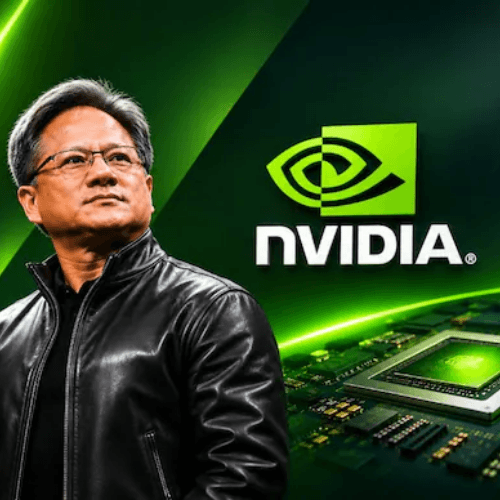
Following reports of Jensen Huang's resignation from Nvidia, AI accountability organization Guardrails Action has reportedly mobilized a coalition demanding greater congressional scrutiny of the semiconductor giant's business practices and governance.
The coalition, bringing together labor organizations, civil society advocates, and AI accountability groups, is urging Democratic congressional leaders to examine Nvidia's growing influence over the artificial intelligence industry.
At the center of the controversy are concerns about corporate transparency, semiconductor export controls, and the concentration of computing power among a handful of technology companies.
Advocates argue that Nvidia's dominance in AI infrastructure creates significant economic and national security responsibilities that require stronger independent oversight.
The company's extensive investments in AI startups and infrastructure providers have also raised questions about potential conflicts of interest and interconnected financial relationships.
Critics worry that investments supporting customers purchasing Nvidia processors could create circular financial arrangements, making sustainable market demand harder to evaluate.
The coalition's broader agenda reportedly emphasizes accountability, worker protections, competition, and safeguards against the unchecked deployment of increasingly powerful AI systems.
For lawmakers, investigating Nvidia could provide an opportunity to examine whether existing regulations adequately address the emerging risks of concentrated AI infrastructure ownership.
However, calls for congressional investigation do not establish corporate misconduct. Allegations involving Nvidia's leadership, commercial relationships, or technology transfers require independent verification.
Nvidia remains central to global AI development, supplying advanced processors that power hyperscale data centers, enterprise applications, and scientific research.
Any congressional inquiry could therefore have consequences beyond Nvidia, potentially influencing semiconductor regulation, investment strategies, and the future direction of American AI policy.
The central question is whether America's AI leadership can advance alongside meaningful accountability.Stronger transparency, competitive markets, and responsible governance will be essential to maintaining public trust in the rapidly expanding AI economy.