
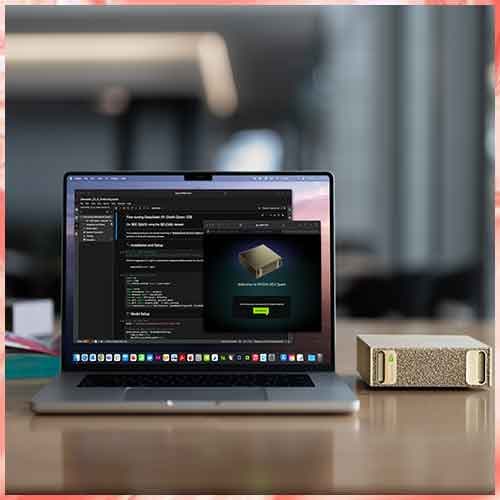
NVIDIA is expanding its AI computing strategy beyond its Linux-centric DGX ecosystem by bringing DGX-class capabilities into Microsoft Windows. After establishing DGX Spark with NVIDIA’s Ubuntu-based DGX OS, CUDA and optimized AI software stack, the company is targeting a much larger universe of enterprise Windows users.
DGX Spark represents NVIDIA’s compact Linux-based personal AI supercomputer, designed for developers, researchers and data scientists who want powerful AI capabilities on the desktop. Its tightly integrated hardware and software environment demonstrates how sophisticated AI development and inference can increasingly move from centralized data centers to local systems.
The next step is RTX Spark, NVIDIA’s Windows-focused personal AI computing platform. Designed for Windows PCs, it brings high-performance AI closer to mainstream developers and professional users, enabling local AI models and personal AI agents to work alongside familiar Windows applications and workflows.
NVIDIA is also moving higher up the performance curve with DGX Station for Windows, positioned as a high-end Windows enterprise AI supercomputer. The strategy can be summarized as: DGX Spark → Linux-based personal AI supercomputer; RTX Spark → Windows personal AI computer; DGX Station for Windows → High-end Windows enterprise AI supercomputer.
This transition is strategically significant because NVIDIA is effectively bringing data-center-class AI capabilities closer to the familiar Windows desktop environment. Enterprises could increasingly develop and run powerful AI models and autonomous agents locally, keeping sensitive workloads closer to corporate data rather than sending everything to the cloud. NVIDIA is therefore not abandoning Linux; it is expanding its AI computing architecture across both ecosystems—potentially transforming the enterprise desktop into a new platform for local, secure and increasingly autonomous AI computing.