
The third panel discussion at the event, moderated by Gyana Ranjan Swain, Consulting Editor of VARINDIA, focused on the topic, “From Cyber Warfare to Data Protection: Building a Secure Viksit Bharat.” The distinguished panellists included Vijay Sethi, Chairman, Mentorkart & Crafsol Technologies; Dr. Puneet Kaur Kohli, CTIO, Generali Central Life Insurance; Arvind Koul, Global Head – Digital & Cybersecurity, Uno Minda; Prof. (Dr.) J S Sodhi, Group CIO & Sr. VP, Amity Education Group; and Sujoy Brahmachari, CIO & CISO, Rosmerta Technology Ltd.
The discussion explored the evolving cyber threat landscape, AI-powered risks, regulatory compliance, and the critical need for enterprise-wide cybersecurity frameworks. Panellists highlighted the importance of proactive defence, AI-driven transformation, secure product and operational technology systems, and human-centric risk management. Opening the session, Swain underscored the imperative of building a digitally resilient India, aligning with the Viksit Bharat 2047 vision. The conversation provided insights into leveraging technology, governance, and skill development to safeguard organizations while fostering innovation across BFSI, manufacturing, and education sectors.
 L to R: Gyana Ranjan Swain, Consulting Editor, VARINDIA; Arvind Koul, Global Head - Digital & Cybersecurity, Uno Minda; Vijay Sethi, Chairman, Mentorkart & Crafsol Technologies; Dr. Puneet Kaur Kohli, CTIO, Generali Central Life Insurance; Prof. (Dr.) J S Sodhi, Group CIO & Sr. VP, Amity Education Group; and Sujoy Brahmachari, CIO & CISO, Rosmerta Technology Ltd.
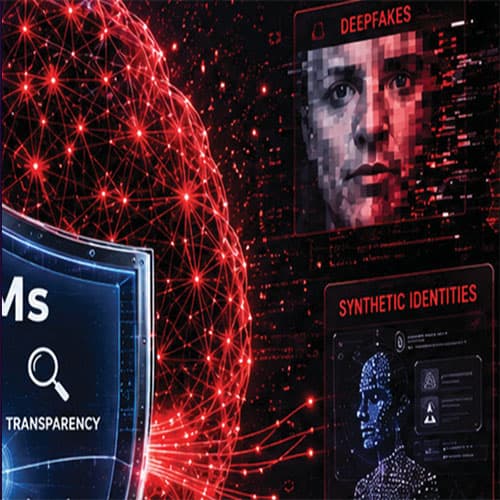
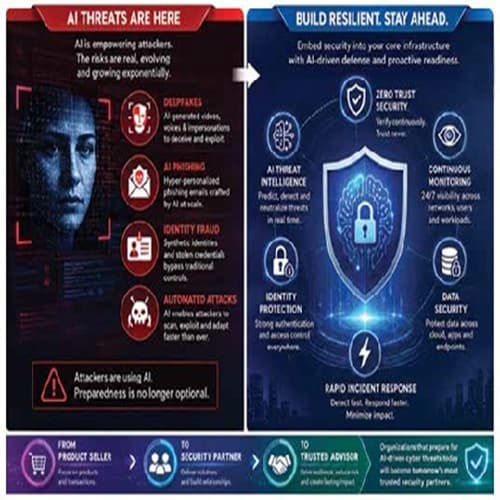
Vijay Sethi, Chairman, Mentorkart & Crafsol Technologies, said it is increasingly difficult to distinguish between cybercrime and cyber warfare in 2026. He described ransomware as a nearly $12 trillion industry, no longer a conventional crime but a structured, AI-powered ecosystem driven by ransomware-as-a-service and advanced phishing. With cloud platforms operating across borders, even a single software malfunction in one country can disrupt organizations thousands of kilometers away, amplifying systemic risk. Sethi warned that deepfakes are not just financial fraud tools but can potentially reshape societal mindsets at scale. He stressed that attackers remain “10 steps ahead,” leveraging the same AI technologies that defenders use. On quantum threats, he highlighted the “harvest now, decrypt later” model and urged enterprises to immediately prepare for post-quantum cryptography rather than waiting for quantum computing to mature.
Dr. Puneet Kaur Kohli, CTIO, Generali Central Life Insurance, said the BFSI sector sits at the “threshold of attacks” due to its regulatory intensity and India’s expanding digital footprint. She stressed that cybersecurity is no longer a siloed CISO mandate but an enterprise-wide discipline, especially as AI simultaneously amplifies risk and resilience. Kohli warned against blindly adopting vendor-led solutions, pointing to OEM confusion and inadequate UAT validation in accelerated production cycles. Calling for stronger encryption standards, AI governance frameworks, and software accountability, she urged collective preparedness aligned with the Viksit Bharat 2047 vision — asserting that a digitally empowered India must also be a secure one. She highlighted AI-driven transformation across insurance operations, citing nearly 30% productivity gains through automation, digital sales enablement, secure API architectures, and code copilots, while emphasizing skill-building, architectural discipline, and planned investments.
Arvind Koul, Global Head - Digital & Cybersecurity, Uno Minda, said cybersecurity in manufacturing has moved far beyond endpoint protection to encompass enterprise systems, operational technology (OT), and product security. He warned that cyber incidents can halt factories and significantly impact revenues, making resilience mission- critical. With global OEMs demanding compliance such as ISO 21434, product cybersecurity has become non-negotiable. Calling AI both a “shield and a sword,” Koul said it enables defenders to analyze millions of logs, shift from reactive to proactive security, and bridge the global talent gap, while also empowering adaptive malware and deepfake fraud. In manufacturing operations, AI has delivered measurable gains, including reducing quality defects from nearly 4% to about 2.6–2.7%. However, he cautioned that AI is only a layer—clean data, strong governance, and foundational controls determine real impact.
Prof. (Dr.) J S Sodhi, Group CIO & Sr. VP, Amity Education Group, said cybersecurity must move beyond tools, checklists, and compliance to a design-led, mindset- driven discipline. He argued that hacking operates at a level beyond conventional CISO frameworks, requiring security to be embedded at the conceptual stage of every solution. Describing today’s environment as a form of cyber warfare, Sodhi asserted that every organization is under threat— whether aware of it or not—and that human vulnerability remains the weakest link, making continuous training and upgrading essential. He highlighted Amity’s in-house cyber forensics lab and collaboration with law enforcement. Expressing optimism about AI, he said the younger generation is driving innovation, patents, and research, supported by advanced AI infrastructure on campus. Reflecting this belief, the institution has made foundational AI education mandatory across all disciplines.
Sujoy Brahmachari, CIO & CISO, Rosmerta Technology Ltd., emphasized that in the BFSI sector, regulatory compliance, particularly with RBI guidelines, is paramount, requiring thorough gap assessments and periodic validation of systems and processes to prevent data leaks and manage the threat landscape. He highlighted that skilled personnel are critical, with both humans and AI tools, including Agentic AI, needing continuous learning to address evolving cybersecurity challenges. In manufacturing, AI adoption is increasing through embedded enterprise solutions and custom-built applications for functions such as HR, finance, and quality assurance to enhance efficiency. However, he stressed that data security, private models, robust and scalable infrastructure, and thorough risk assessments are essential before implementation, ensuring that AI solutions deliver value without introducing unforeseen vulnerabilities.