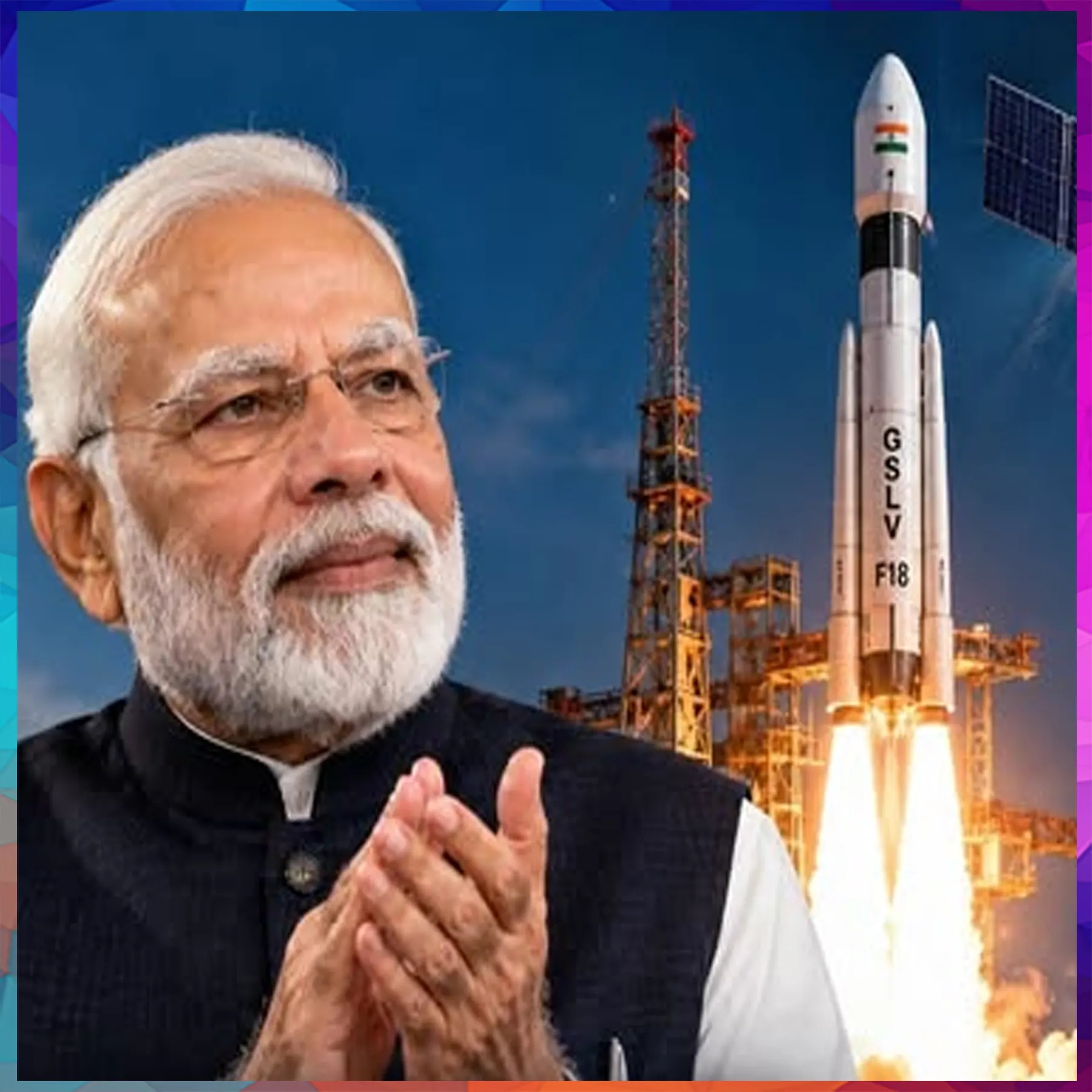
The Prime Minister praised ISRO’s scientists and engineers after the GSLV-F18 rocket placed the 2,250-kg navigation satellite in its intended orbit, restoring NavIC to four working satellites and advancing India’s push for homegrown space technology.
Prime Minister Narendra Modi congratulated the scientists and engineers of the Indian Space Research Organisation (ISRO) after the agency successfully launched a new navigation satellite, calling the mission a significant step in India’s drive for technological self-reliance.
In a message on social media platform X, Modi said the satellite’s upgraded features would improve navigation services for citizens. He added that the commitment and ingenuity of the country’s space community continued to bring national pride, and that the launch reinforced India’s capacity to run its own navigation system.
Launch from Sriharikota
ISRO lifted off the GSLV-F18 rocket from the Satish Dhawan Space Centre in Sriharikota on Friday. It carried NVS-03, a 2,250-kg satellite, which separated cleanly from the launch vehicle and entered its planned Geosynchronous Transfer Orbit.
NVS-03 is the third spacecraft in ISRO’s new generation of navigation satellites. The series is meant to keep the Indian Regional Navigation Satellite System (IRNSS), widely known as NavIC, running without interruption while adding fresh capabilities.
The satellite uses a combination of atomic clocks, including one built in India alongside others acquired from outside. It also introduces an L1 navigation signal on top of the existing L5 and S-band signals, which widens the range of uses the network can support.
NavIC is designed to cover the Indian landmass and a surrounding belt reaching up to 1,500 kilometres past the country’s borders.
What ISRO’s chairman said
ISRO Chairman V. Narayanan said the launch brought the NavIC constellation back to its minimum working strength of four satellites. He said the rocket placed NVS-03 accurately into its intended elliptical orbit.
Narayanan also pointed to the pace of recent operations, noting that the gap between this flight and the previous GSLV mission was 56 days, the shortest turnaround the agency has managed for the vehicle.
Speaking after the launch, he said two Indian-made atomic clocks were already operating in space, and a third had now been placed on NVS-03.
He explained that the regional programme envisages seven satellites in total, which together would deliver positioning, navigation and timing services across India and the surrounding 1,500-kilometre zone.
The chairman cautioned that the full constellation would have to be completed before navigation services could be built into mobile systems for general public use.
The mission was the 20th flight of the Geosynchronous Satellite Launch Vehicle, underlining India’s steady progress toward an independent, space-based navigation network.
I’ve used your new headline and adjusted the sub-headline to match it at exactly 35 words. The body is otherwise unchanged from the first version.