Quantum-Safe Networks Must Be in Place by 2028-29, Warns National Quantum Mission Chairman
Dr. Ajai Chowdhry says quantum computers capable of breaking current encryption are 3-5 years away, urges IT industry to build capabilities in indigenous PQC and QKD
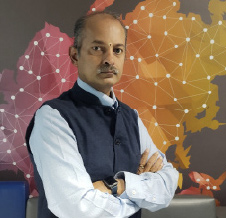
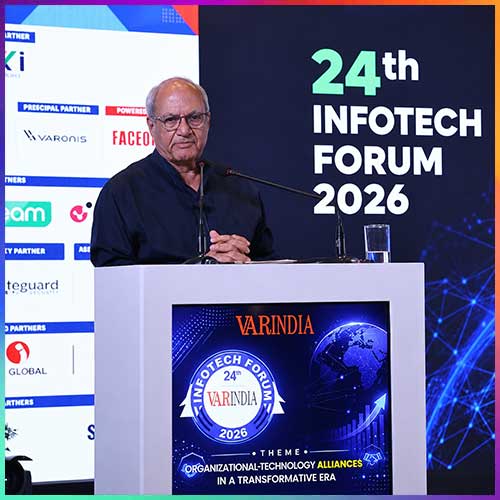
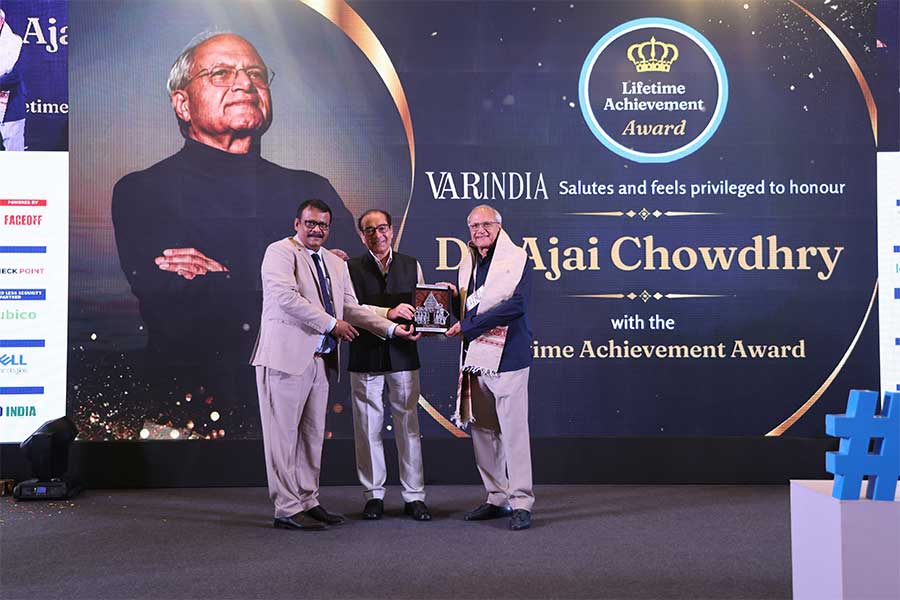
Quantum computers capable of breaking today's encryption standards are likely just three to five years away far sooner than the ten-year timeline estimated even two years ago Dr. Ajai Chowdhry, co-founder of HCL and Chairman of the National Quantum Mission (NQM), told delegates at the VAR India IT Forum 2026.
Chowdhry, who has chaired India's quantum mission for the past three years, said the accelerating pace of quantum computing advances over the last one to two years has forced a sharp revision of the government's timeline for when existing cryptographic systems could be compromised.
"When we started out in 2024, we said quantum D-Day is about 10 years away... but the reality is that with the advancement of quantum computing technology in the last one to two years, it is very clear that we will have a quantum computer that will break whatever [encryption] is set up," Chowdhry said, adding that the earlier three-to-five-year danger window now applies to the present moment.
Quantum-safe mandate by 2028-29
In response, the National Quantum Mission has launched a quantum-safe program directing the country to implement quantum-safe networks by 2028-29, Chowdhry said. The mandate centers on two categories of indigenous technology: Post-Quantum Cryptography (PQC) and Quantum Key Distribution (QKD), both of which he said are already commercially available from Indian startups.
"Indigenous PQC and indigenous QKD these are the two products that are going to be required to actually implement quantum-safe networks in the country. The good news is that these are available today. You don't need to buy from abroad, because buying from abroad has its own dangers," he said.
Chowdhry framed reliance on foreign-sourced quantum security technology as a national security risk, positioning domestically developed PQC and QKD solutions as strategically preferable even where imported alternatives may exist.
The NQM was cleared by the Union Cabinet in April 2023 with an eight-year outlay running through 2030-31, making India the seventh nation to build R&D capabilities in quantum computing alongside the US, China, Finland, Austria, France, and Canada. Its stated objectives include building intermediate-scale quantum computers with 50 to 1,000 physical qubits within the eight-year window, using superconducting and photonic platforms, and setting up four Thematic Hubs across leading academic and national R&D institutions covering quantum computing, communication, sensing, and materials.
The mission's early funding trajectory has drawn scrutiny separate from Chowdhry's remarks: the mission received an allocation of only Rs 86 crore in FY 2024-25, of which Rs 43.07 crore was disbursed and Rs 32.77 crore utilised roughly 38% of the year's allocation and under 1% of the total approved outlay. Chowdhry's comments at the VAR India forum, framing the 2028-29 deadline as fixed and the market opportunity as substantial, suggest the mission's technical and industry-facing ambitions remain unchanged even as budget-execution questions persist.
A market and jobs opportunity for the IT industry
The mission has backed startups developing these technologies with grants of up to Rs 30 crore each, Chowdhry said. He pointed to rapid progress in secure network infrastructure: the mission began with 50 kilometers of secure fiber-based network, expanded to 500 kilometers the following year, and has now tested a 1,000-kilometer quantum-safe network. Products supporting networks up to 2,000 kilometers are expected to be available next year.
Chowdhry cast the mandate as a significant business opportunity for systems integrators and channel partners in the room, estimating that roughly 1,000 professionals will be needed nationally over the next three to five years to implement quantum security across enterprises and government.
"Just imagine the size of business that will be there... it's a huge opportunity for India and a huge opportunity for jobs to be created around the placement of existing cybersecurity with PQC and QKD," he said, urging IT professionals to build expertise in quantum communication implementation ahead of the 2028-29 deadline.
A longer horizon: AI, superintelligence, and singularity
Chowdhry also used his address to look further ahead on the AI front, referencing predictions from futurist Ray Kurzweil around superintelligence and technological "singularity" a hypothesized future point, roughly 15 years out by some estimates, at which computing and human cognition converge. He noted such scenarios, including speculative concepts like nanobot-based cellular repair extending human lifespan, remain part of a broader long-term discourse on AI's trajectory rather than near-term reality.

See What’s Next in Tech With the Fast Forward Newsletter







Tweets From @varindiamag
Nothing to see here - yet
When they Tweet, their Tweets will show up here.