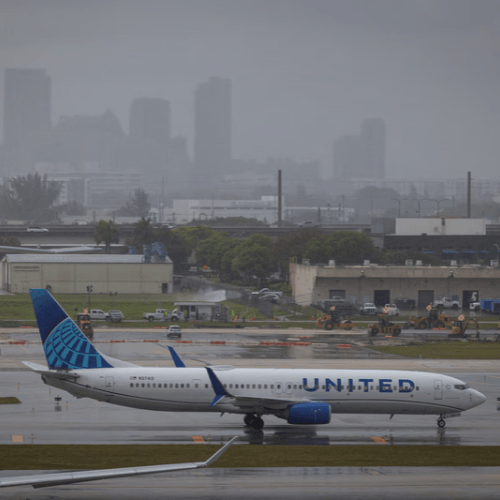
United Airlines is moving to block third-party artificial intelligence agents from managing flight bookings and customer reservations, citing growing cybersecurity, privacy, and regulatory concerns. The decision highlights an emerging conflict between autonomous AI convenience and enterprise control over sensitive customer transactions.
The airline reportedly intends to restrict AI agents operating directly through its digital platforms, as well as those accessing reservations through travel aggregators and agencies. The move could reshape how automated assistants interact with airline booking systems.
United's primary concern involves customers sharing account credentials with third-party AI assistants. Such access could expose personal information, payment details, travel itineraries, and loyalty accounts to unauthorized activities or potential cybercriminal exploitation.
Autonomous agents can independently search flights, modify reservations, purchase tickets, and manage loyalty benefits. However, insufficient safeguards could result in unintended transactions, unauthorized account modifications, or misuse of MileagePlus reward miles, creating financial and operational liabilities.
Regulatory compliance presents another challenge. United argues that certain automated activities could conflict with Federal Aviation Administration and Department of Transportation requirements, particularly where passenger acknowledgment or human participation is necessary during check-in and other regulated processes.
Industry observers believe restricting AI agents may provide temporary protection rather than a permanent solution. As autonomous commerce expands, airlines, banks, and digital platforms will face pressure to establish secure mechanisms allowing AI assistants to perform authorized transactions without exposing customer credentials.
The larger question is whether enterprises can secure autonomous AI without restricting innovation. Organizations must adopt delegated authorization, identity verification, transaction-level consent, behavioral monitoring, and real-time fraud detection. AI agents should operate through controlled APIs with clearly defined permissions rather than unrestricted account access. For the technology industry, United's decision signals a turning point: autonomous AI adoption will increasingly depend on demonstrable trust, accountability, and security. The future belongs to AI agents that can prove their identity, verify user intent, and execute transactions within transparent, enforceable boundaries.