India’s fight against the fast-growing menace of “digital arrest” fraud is entering a new phase, with authorities exploring deeper identity verification by linking messaging accounts to mobile subscriber records.
Officials say criminals frequently exploit anonymous or loosely verified accounts on platforms such as WhatsApp to impersonate police officers, tax authorities or regulators. Victims are coerced through video calls, fake documents and threats of legal action, often transferring large sums before realizing the deception.
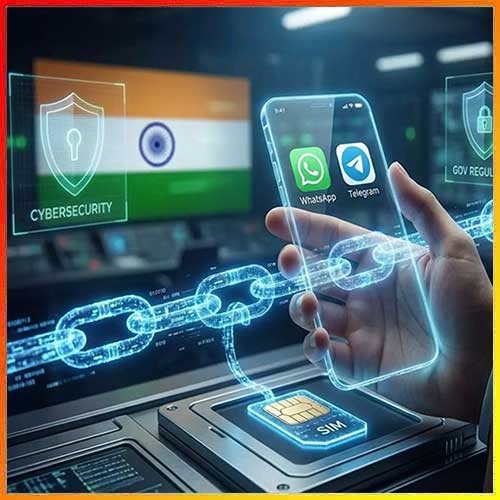
By tightening the connection between a user’s messaging identity and the SIM registration framework, investigators believe traceability can improve dramatically. The goal is not mass surveillance, officials emphasize, but deterrence—making it harder for fraudsters to create disposable identities and vanish after extortion.
The proposal builds on India’s broader digital safety push, including faster complaint routing, mule-account tracking and coordinated response between telecom operators, banks and law-enforcement agencies. Authorities argue that fraud has industrialized, with organized groups running scripted operations at scale, supported by spoofing tools and AI-generated personas.
Linking accounts to verified subscribers could shorten investigation cycles, enable quicker freezing of suspicious numbers and strengthen prosecution. It may also push platforms to introduce stronger onboarding and re-verification controls.
“Digital arrest” scams have surged alongside India’s rapid digital adoption. As citizens grow comfortable with remote services, criminals exploit institutional trust and fear. Policymakers now face a delicate balance: preserving privacy while raising the cost of anonymity for bad actors.
If implemented with safeguards, SIM-anchored verification could become a cornerstone of India’s evolving anti-fraud architecture—signaling a shift from reactive policing to preventive digital governance.
Expert says, it is way behind the actual technology solution.Experts point instead to Secure Access Service Edge, or SASE, which shifts protection from individual devices to the telecom network itself. Under this model, mobile traffic passes through a secure inspection layer before reaching the internet.
At that checkpoint, systems can block malicious destinations, detect fraud patterns, prevent malware, and stop unauthorized access attempts—even if the user’s handset lacks sophisticated protection. In effect, the network becomes a real-time guardian for every SIM.