“System Integration” as a specialized service domain came into existence in the beginning of 2000 with burgeoning growth in the telecom sector in India with the consequent surge in the subscriber base, increase in competition and supportive regulatory environment. The term “System Integration” is a general term that describes the bringing together of the component subsystems into a single integrated system.
The role of System Integration is quite obvious. According to Rothin Bhattacharyya, Executive Vice-President, HCL Infosystems, “System integration will play a crucial role in the overall development of India. The Government of India has understood the relevance of system integration and has initiated and implemented various projects in the UID, power and telecom sectors. With this momentum, India is expected to maximize its growth in this space in the next five years.”
Anand Natarajan, National Channel Manager, Quest Software, India, is of the opinion that the System Integrators (SIs) play a very vital role in addressing the services market. “We see that the landscape in India evolves over the years and is in a fairly matured state now. The business of Quest Software in India is built strongly on services and System Integrators. Quest Software gives equal importance to both big and small level players to leverage their expertise in offering effective solutions,” says Anand. Stressing the significance of SI's role in the business, Quest Software is planning on appointing a dedicated senior executive to engage better with them.
Companies such as TCS, HCL, Tech Mahindra, WIPRO and Dell are leading the system integration space from the front. For small and midsize customers, there are many local and regional players in this market.
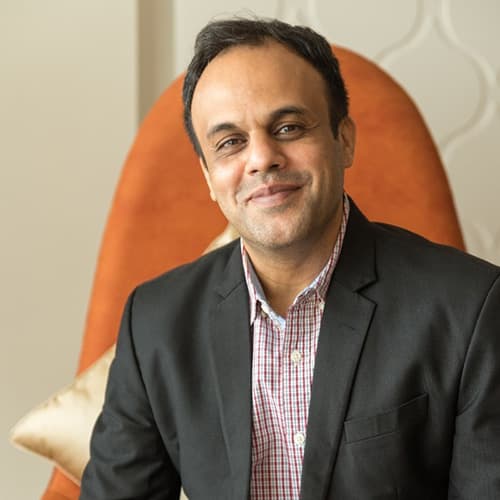
 | Anshul Gupta, COO, GOIP Global Service |
“System Integration business in India is on the rise year on year. There is a constant increase in outsourcing and IT Services requirements within large enterprises and corporate and now we see the top SMB segment also following the outsourcing bandwagon. There is also a demand for one single point ownership for the system integration activities even if all the products are from diverse sources. This is increasing the demand for high level system integration companies. Go IP's value advantage to address to this market is that we provide all three service - value added distribution, System Integration and Managed Services. This means that we take care of not only the Products and SI requirements but also provide Managed Solutions to our customers,” says Anshul Gupta, COO at GOIP Global Service
“We took an active role in understanding this new phase and building competencies for addressing business needs of Telecom Service Providers through IT by aligning IT to the business goals of our customers. This phase saw Tech Mahindra emerge as a serious global system integrator (SI) as well as outsourcing partner. We established our capability in handling both big-bang as well as incremental transformation projects. We also helped greenfield players launch their services in competitive markets within aggressive timelines. Our objective was clear - to enable our customers for future with a unified platform for converged services,” says Dhananjay Pavgi, Director, Product Management Group, Tech Mahindra.
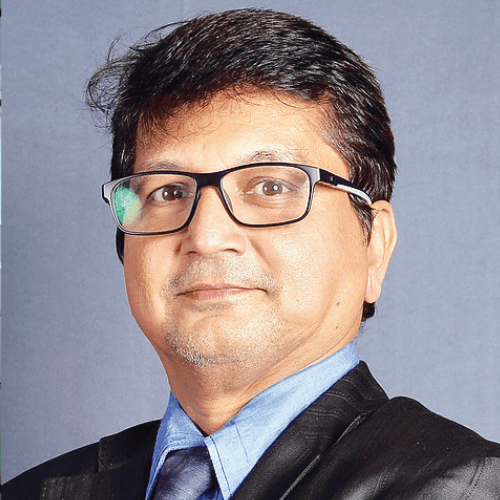
 | Mahendra Lalwani, MD, TelExcell Information Systems |
The SI segment in India is moving from a concept of selling the Hardware as required by the Customer and moving towards understanding the Customers requirement and educating the customer on emerging technologies and Products. "Telexcell, as a Value Added Distributor is constantly looking for New Companies and Products, which are both Reliable and cost effective, providing better ROI to the end customer. For Telexcell educating and training the SI partner is a constant and on-going process." says Mahendra Lalwani, Managing Director, TelExcell Information Systems.
Today, the business drivers for Telecom IT Solutions are rapidly changing as the telecom world is growing much beyond the wireline and wireless voice business. The landscape has widened its horizons by expanding the portfolio of services with Data and VAS being bundled with voice services. This has thinned the boundaries between media, entertainment and telecom service providers, merging them all under one umbrella of Communication Services Providers.
And with the changing times, Tech Mahindra has also transformed itself from an IT Solutions company catering to the telecom industry to an IT partner for the Information, Communication and Technology companies.
HCL Infosystems has been rapidly undergoing a transformation to become a leading System Integration company in the country uniquely poised to take on projects that need customized solutions. “We take pride in taking nation-building projects which will also shape the India of tomorrow. It gives us great satisfaction to see our once envisioned phenomenon of System Integration, over the period incubated by HCL Infosystems, today changing the face of every sector,” says Rothin of HCL Infosystems.
Rothin adds, “We are continuously looking at offerings of System Integration solutions which are truly transformational. There are numerous verticals we can collaborate starting from solutions in e-Governance, Power, Telecom, Healthcare, Infrastructure to Homeland Security, Airports & Railways. We are enhancing our capabilities to address major projects and building on our Service pedigree, own solutions; Capability in Software, Hardware, Networking and stitching solutions for our customers would naturally expand our business in this region.”
SIs expand into Cloud with Managed Services
Let us take a close look at the core businesses for some of the top SIs. It may be said that adding managed services to their portfolio makes sense. “Managed Services is emerging as the next big technology. Though it is in the early stage, but the future looks positive in adopting this technology considering the projects shaping in the next few years in India,” says Rothin.
Emerging technologies like cloud computing and Managed Services Providers (MSP) are fast catching up in India. MSPs are seeing good traction among the SMBs than with the enterprises. The enterprises have already established large IT set-ups and the expertise of MSPs may not be required in the short term. Given the cost and efficiency benefits that they offer, the MSPs will definitely find good business from the enterprises too in the long run.
“To sum it all up, managed services have definitely taken off in India, but it could take another 18 months before one can see a big breakthrough in this space. Quest has a huge focus on MSPs and software infrastructure management. These are rendered as managed services both on the cloud and the traditional means. It is expected that over the next 6-12 months, a lot of Quest's partners deliver managed services using Quest tools,” says Anand of Quest Software.
Quest Software has already started taking significant steps in this regard. A list of the prospective partners has been made and the organization started engaging with them with an intent to encourage them to use Quest's tools to build effective services.
Tech Mahindra is already doing substantial Managed Services business with the Indian public and private telecom operators such as BSNL, Idea cellular, STel and Etisalat DB in the capacity ranging from running their interconnect billing bureau to being a strategic IT partner to help them build their IT assets and make them operational in a remarkably shorter time. Through Managed Services, Tech Mahindra offers ongoing Business Operations services. Through this service, Tech Mahindra has been able to successfully take over the responsibility of routine maintenance of IT infrastructure, as well as business reconfigurations to stack-support launch of new products and the attendant change management, whenever it arises. Application support and maintenance, as well as vendor liaison where COTS products are implemented are other set of activities that are delivered by Tech Mahindra as part of this offering.
Bottom line
The role of System Integrators is changing in the existing marketplace. Demands for improved services coupled with growing accountability for efficiency and compliance are paving the way for the need for efficient SI solutions. The standardization of technology, automation of formerly manual tasks, and proliferation of tools to ease the burden of integration are starting to shift the focus of many System Integrators from actually doing the integration work to managing the process of integration.
----------------------------------------------------------------------------------------------------------------------------------------
 | Dhananjay Pavgi Director, Product Management Group, Tech Mahindra |
How would you describe business in 2010? Did the year see increase in the IT spending by most SMEs and enterprise organizations in India in the previous year?
As per Gartner, the Indian enterprise software market will witness a growth of 12.3% between 2009 and 2014. We are also witnessing the increasing IT spending from SMEs and enterprise organizations in India in the communication sector, majorly on revamping their IT infrastructure, data management and Business Intelligence solutions for enhanced decision-making initiatives.
Where do you see growth coming from for Tech Mahindra this year? The verticals?
Certainly, there is a lot of growth potential in the Indian market. We believe that with the 3G and BWA spectrum licences awarded last year, majority of the investments will be done by the Service Providers for setting up newer networks like 3G and developing the backhaul. Apart from this major capital expenditure, Service Providers will also spend on services, cloud technologies, better devices, enhancing customer experience and business intelligence as changing consumer behaviour is impacting both ARPU and churn.
-----------------------------------------------------------------------------------------------------------------------------------------
 | Rothin Bhattacharyya Executive Vice-President, HCL Infosystems |
How has the year 2010 been to HCL?
2010 has been a year of a lot of achievements for HCL. The company had successfully bagged projects from the Himachal Pradesh State Electricity Board, largest PDS order from the Madhya Pradesh Government and Assam Electronic Corporation.
In 2011, we have bagged system integration project from BSNL (telecom) Indian Air Force (Defence).
How would you describe business in 2010?
2010 has been a very fruitful year for the IT industry. The year has seen a huge amount of investments from not only the government, but the private and public enterprises as well.
The year also saw a positive change in the outlook of SME towards technology. There was a better understanding of the importance and impact of technology in their day-to-day business.
Where do you see growth coming from for HCL this year? The verticals?
We expect a lot of growth from many of the key essential areas like System Integration and services vertical. There is huge focus on verticals like BFSI, Learning, E-Governance, Telecom and Security. A lot of growth is also expected from the active mergers and acquisitions that are in the pipeline this year.
What do you see as the most pressing IT and business issues for HCL in India?
The major challenge that the IT industry today faces is of non-adherence to timelines. Hence, there should be a collective effort towards this direction to ensure efficiency and effectiveness in the completion of projects.
-----------------------------------------------------------------------------------------------------------------------------------------
 | Anand Natarajan, National Channel Manager, Quest Software, India |
How would you describe business in 2010? Did the year see increase in the IT spending by most SMEs and enterprise organizations in India in the previous year?
The year of 2010 was a very good one for Quest and the industry in terms of sales numbers as compared to that during the slump in 2009. There was a significant and consistent increase in the IT spend last year among both SMEs and enterprises.
All the IT hardware and software spending that were put on hold during 2008-09 saw conversions during 2010. This accelerated the pace of the business last year and also helped in generating numbers.
Where do you see growth coming from for Quest this year? The verticals?
Quest believes that the IT/ITeS vertical will drive strong growth during the year. In addition to this, BFSI, Government and quasi-government sectors are also expected to find good traction.
For more contact: Deepak Singh
edit@varindia.com