

The 24th edition of the VARINDIA Star Nite Awards (SNA), a premier platform that honors outstanding leaders in the technology sector, was recently held in New Delhi. Renowned for its scale and impact, the annual event brought together top industry executives, innovators, and key stakeholders, celebrating notable achievements and fostering a spirit of innovation.
This year, SNA 2025 hosted over 30 leading IT Associations, Federations, and Corporate leaders and celebrated the theme - Partners: The Catalyst for Rapid Innovation. The event stands as a tribute to the vision, resilience, and contributions made by the Indian VARs and partners, who continue to shape the nation’s digital growth story.
A distinguished group of esteemed guests graced the event that included leading names like Devesh Kumar Rastogi, Chairman- FAIITA; Navin Gupta, President-FAIITA; Dr. Arindam Sarkar, Asst. Professor & Head of Computer Science and Electronics - Ramakrishna Mission Vidyamandira – Howrah; Akshay Balaganur, Co-Founder & CEO- LINKEYE; Shantanu Ghosh, Chief Transformation Officer- Airowire; Sumitha Sunil, Account Director (Large Enterprise) – GOTO; Jithesh Chembil, Head Channels India - Pure Storage; Pranab Mohanty, Chief Business Officer- Data Safeguard Inc.; Rajeev K Abichandani, Head-Enterprise Channels (India & SAARC) - Fortinet Technologies; Gopal Krishna, Director (Sales) MX, APAC- Barco; Amit Jain, Founder & CEO- Integrated Tech9Labs Pvt. Ltd.; Magan Gangani, President- TAIT; Alok Gupta, President- PCAIT; Puneet Singhal, President- CMDA (Delhi); Amarnath Shetty, MD- LDS Infotech Pvt; Ltd; S Mohini Ratna, Editor- VARINDIA and Dr. Deepak Kumar Sahu, Publisher & Editor-in-chief, VARINDIA.
Dr. Deepak Kumar Sahu, Publisher & Editor-in-chief, VARINDIA presented the welcome address, setting the stage for the day-long event. In his speech, Dr Sahu highlighted how generative AI, services, and platforms are redefining business and is paving the way to a new age of innovation and transformation.
In his keynote address, Naveen Gupta, President - FAIITA welcomed the IT Associations and partners from across the country who were present at the event, while outlining the contributions made by FAAITA in promoting the growth and development of the IT ecosystem by keeping the interests of its members in mind.
Sumitha Sunil, Account Director (Large Enterprise), GoTo and Saurabh Mittal, Senior Solutions Consultant, GoTo shared the dais to give an insightful presentation and shared the unique value proposition of GoTo.

(L To R): Dr. Deepak Kumar Sahu, Publisher& Editor-in-chief-VARINDIA & Group Publications; Mr. Rajeev K Abichandani, Head- Enterprise Channels ( India & SAARC)- Fortinet Technologies ; Mr. Nikhil Mehrotra,Director Field Marketing-Nutanix Technologies India ; Mr. Navin Gupta, President- FAIITA; Mr. Devesh Rastogi, Chairman FAIITA and President AISIE; Mr. K. Subramaniam, IAAS, Director General-Comptroller Auditor General Of India; Mr. Amit Jain, Founder & CEO- Integrated Tech9Labs ; Ms. S Mohini Ratna, Editor- VARINDIA; Mr. Akshay Balaganur, Co-Founder & CEO- LINKEYE; Mr. S Karthikeyan, MD-Bloom Electronics; Dr. Mithilesh Singh,Head of Marketing - India & SAARC-Commscope Network India ; Mr. Santanu Ghosh, Chief Transformation Officer- Airowire; Mr. Dylan Chadha, Retail Lead-MENA- Context and Mr. Rameesh Kailasam,CEO- India, Tech.org
CHANNEL EMPOWERMENT SESSION
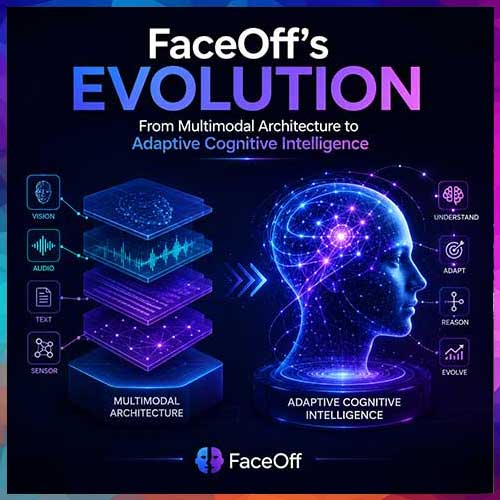
Kicking off the Channel Empowerment session, Dr. Arindam Sarkar, Assistant Professor and Head of Computer Science and Electronics at Ramakrishna Mission Vidyamandira – Howrah, stepped onto the stage to explain how FACEOFF TECHNOLOGY, a trust verification and a "Make in India Engineered for the World" solution could shape the future of responsible AI. Through his insightful speech, Dr Sarkar cited the urgency of digital integrity in today’s era and how emerging threats like deepfakes and synthetic media are redefining risks for individuals and enterprises alike.
The next speaker, Ashutosh Tandon, Pre-Sales Solution Architect- Check Point Software Technologies gave a brief presentation on how enterprises can strengthen digital resilience through advanced threat prevention, zero-trust strategies, and secure digital transformation initiatives.
Next, Amit Jain, CEO of Integrated Tech9 Labs spoke about Intelligent Cloud and on how Tech9 Labs champions the vision of a sovereign, intelligent, and future-ready cloud powered by IBM, Cisco, and Nutanix.
VAR SYMPOSIUM SESSION
In the VAR Symposium session that resumed in the afternoon, Rohit Sharma, Head Technical Sales (India/SAARC)- Micron Technology was invited to speak on how Memory and Storage are the two true catalysts for innovation and they continue to drive growth across the industry.
------------------------------------------------------------------------------------------------------------------------------------------------
Golden era for India’s VARs as investments shift from infrastructure to intelligence
DR. DEEPAK KUMAR SAHU
EDITOR-IN-CHIEF, VARINDIA
“It was a privilege to address an ecosystem of OEMs, VARs and channel professionals at a moment of transformation, where generative AI, services and platforms are reshaping our digital future and predictable, hardware-led growth is giving way to intelligence-driven innovation. We stand at a pivotal juncture defined by AI, cloud, automation, cybersecurity and deepfake detection—making this a golden era for India’s VAR community as strategic spending shifts from infrastructure to intelligence. With AI moving from pilot to production and powering security operations across 90% of Asia-Pacific organizations, enterprises are progressing from AI-based detection to predictive modelling, automated response and behavioural analytics.
The global data center boom, with AI-related spending projected to reach $3 trillion by 2029, highlights both extraordinary opportunity and the parallel rise in risks that demand sharper focus and readiness. Simultaneously, the rise of AI and GenAI has accelerated deepfake and synthetic fraud, making fake identities easier to create while driving soaring global demand for GPUs and TPUs.
As AI-driven attacks escalate, we are shifting from constant risk to platform-driven resilience against adaptive, deepfake-enabled threats that demand faster and smarter responses. Hypervisors are emerging as a major target, and with human error still responsible for 95% of breaches, insider risks and AI-driven threats will dominate cybersecurity priorities in 2025. With quantum computing advancing toward breaking RSA and ECC by 2030, organizations are fast-tracking post-quantum upgrades.
Technologies like Quantum Neuro Cryptography and QKD-based neural encryption will consume a growing share of IT security budgets. These shifts call for urgency, preparedness and a fundamental redesign of security architectures and collaboration frameworks across the ecosystem.
For the channel, this moment represents both opportunity and responsibility. Growth will increasingly come not from hardware but from cybersecurity, cloud, AI-powered services and intelligence-led outcomes. As enterprises now engage multiple partners for every major technology decision, ecosystem collaboration, recurring revenue models and long-term resilience are becoming essential. My message to the community is clear: embrace the transition to services and outcomes; invest in specialization and trusted partnerships; prioritize cybersecurity, AI, data-driven insights and sustainable monetisation models; and build ecosystems, not just channels. The decade ahead will reward those who adapt, lead and co-innovate—because the hardware age has passed, and the era of intelligent services has begun.”
---------------------------------------------------------------------------------------------------------------------------------------------
Next, Pradyut Mohapatra, Systems Engineering Manager - Channels), Versa Networks addressed the audience on Versa Unified SASE. Through his impactful presentation, he empowered partners through secure, agile network solutions and digital transformation.
The next speaker, Gaurav V Saxena, Director-Channel & Alliance- Veeam Software spoke on data resilience in the modern era and how Veeam ensures its customers data security & business continuity with its security and AI-enabled Veeam solutions.
Rajeev K Abichandani, Head-Enterprise Channels (India & SAARC) - Fortinet Technologies India spoke on how the Future can be secured through the power of Partnerships and where Fortinet as a channel friendly brand stands when it comes to empowering VARs to safeguard their future.
Shivam Chandel, Channel Business Manager, Channel Sales, SentinelOne India enlightened the VARs on reimagining cyber security in the age of AI and how AI-driven cybersecurity is an opportunity for them to empower enterprises with autonomous threat detection, adaptive defense, and intelligent automation, enabling response, and stronger resilience against evolving cyber threats.
Gopal Krishna, Director (Sales) MX, APAC - Barco spoke on the growth that the video conferencing market is witnessing, driven by innovative wireless solutions and rising demand for seamless, secure hybrid collaboration.
Taking the VAR Symposium session forward, Anant Deshpande, Regional Vice President, India & ASEAN at DigiCert shared his insights on how Partnerships and Digital Trust are indispensable strategic levers to drive agility and resilience.
This was followed by a presentation by Jithesh Chembil, Head of Channels, India, Pure Storage in which he discussed about Enterprise Data Cloud and how Pure Storage empowers partners to drive innovation and enterprise data transformation.
The event also featured two panel discussion sessions, featuring distinguished leaders from India’s tech landscape. The first panel discussion was brought together leading IT associations where they shared their perspectives on how the associations are addressing and resolving key issues across the ecosystem — involving OEMs, vendors, partners, distributors, and regulators — to strengthen collaboration and drive industry growth. Moderated by S. Mohini Ratna, Editor-VARINDIA, the panelists in this session were Devesh Rastogi, Chairman, FAIITA; Kaushik Pandiya, Governing Body- FAIITA; S Karthikeyan, Charter President, Confed ITA; Vinod Kumar, Chairman- ISODA; Bharat Chheda, President- ASIRT and Magan Gangani, President- TAIT.
The second panel discussion that addressed the VARs of the industry was titled – Lead the Leap and was moderated by Dr. Deepak Kumar Sahu, Publisher & Editor-in-chief, VARINDIA. The discussion delved into the preparedness of Indian VARs to redefine global competitiveness as India stands at the cusp of a global transformation. They stressed collaboration, AI adoption, and ecosystem innovation as growth drivers, urging partners to stay agile, customer- focused, and sustainable in building inclusive, future-ready businesses. The panelists invited to join this session were Ranjan Chopra, MD - Team Computers; Himanshu Chawla, Director- IRIS Global Services; Neel Shah, Chairman-Insight Business Machines Pvt. Ltd.; Ashish Khanna, CEO- Intensity Global Technologies Ltd. and Dinesh Kumar, Sales Director – India & SAARC, SOTI.
AN EVENING DEDICATED TO PARTNERSHIP, INNOVATION, AND EXCELLENCE!
The evening unfolded with a welcome speech by S. Mohini Ratna, Editor, VARINDIA in which she spoke about the Channel Leadership Survey (CLS) 2025, while also giving an overview of Indian IT Industry and how it is helpful in finding the ultimate winners at this awards night.
The evening thereafter witnessed the unveiling of the one of its kind Channel Policy Handbook. The book provides insights into industry best practices for channel partnerships and aims to strengthen collaboration between vendors and partners, driving growth and innovation in the IT ecosystem.
During the Corporate presentations, Akshay Balaganur, Co-Founder & CEO, LinkEye spoke on the topic Manage Large Networks with Small Teams and shared a wonderful presentation on how his company is transforming the world of networks.
Next, Dylan Chadha, Retail Lead- MENA, Context addressed the audience and shared his insights on Building India’s Data-Driven Channel Future. His valuable insights on shaping India’s data-driven channel future and inspiring transformative retail innovation was quite encouraging.
The Guest of Honour for the evening, N R Panicker, Chairman - ACCEL Ltd took to the stage and through his inspiring words, he threw light on the vision that he has for the future IT industry.
K. Subramaniam, IAAS, Director General, Comptroller and Auditor General of India presented the evening keynote address. He enlightened the audience with his valuable insights on governance, transparency, and on how to strengthen India’s audit and accountability framework.
AWARDS & FELICITATIONS
In line with its traditions and standing firm to its name, the 24th Star Nite Awards honoured the exceptional achievements of VARs, partners, vendors, and IT associations. The first set of awards celebrated India’s leading IT Associations for their exceptional contributions to the technology industry.
The associations felicitated are - PACT (Punjab Association of Computer Traders), PCAIT (Progressive Channels Association of Information Technology), TAIT (Trade Association of Information Technology, Mumbai), ISODA (Infotech Software Dealers Association) and ASIRT (Association of System Integrators & Retailers in Technology).
In the VAR Symposium session, more than 100 Eminent VARs of India were honoured in 20 different award categories. The winners were selected with over 6,935 votes cast on www.varindia.com from more than 30 cities nationwide.
This year, VARINDIA also took the initiative to recognize 10 Channel Chiefs of the Indian Technology Industry, who play an important role in transforming the Channel market by being a visionary and an architect in executing strategies and empowering channel partners.
The awards ceremony that took place in the evening witnessed the recognition of the Transformational Business Leaders 2025 and Chief Marketing Officers (CMOs) who are instrumental in shaping the future of the Indian ICT industry.
The most eagerly anticipated segment of the evening was the Channel Leadership Survey (CLS) 2025 Awards, where vendors selected and voted for by their channel partners and VARs were honoured in more than 40 different categories.
-----------------------------------------------------------------------------------------------------------------------------------------------
Collaborations and Partnerships are key to advancing India’s Digital Ecosystem
K. SUBRAMANIAM, IAAS,
DIRECTOR GENERAL,
COMPTROLLER AND AUDITOR GENERAL OF INDIA
“The Indian digital economy today constitutes about 20% of our GDP, which is about 65 lakh crores of rupees. If we want to become a $7 trillion economy by 2030, we need to have a very robust digital ecosystem. We have an eCommerce market of about $200 million. India also has the 3rd largest start-up pool of about 1, 20,000. So with this kind of an ecosystem, collaboration and partnership are the key. But, despite having this enormous digital ecosystem, we face a lot of challenges which we need to identify and overcome.
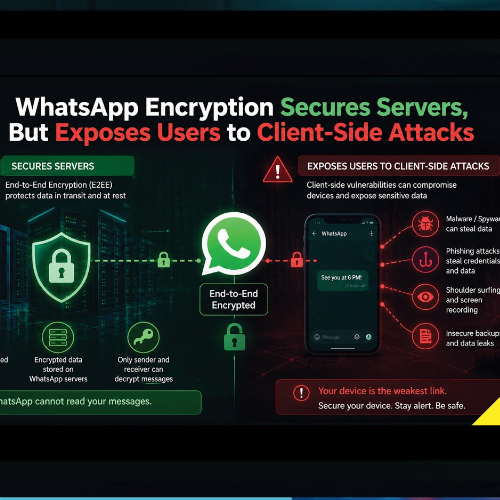
India still has a digital divide, as internet penetration is only about 60%. There are at least 500 million people who are devoid of IT services or IT connectivity. Much of our government programs and service delivery happens through digital modes, for instance digital payments to the beneficiaries. So we have a bottleneck there. With cybersecurity threats, and deepfake incidents rising, data privacy & sovereignty are at risk. I believe this cannot be regulated alone by a mere Act, but it is more a matter of mindset and culture. In India today, even medical reports are sent through WhatsApp. They are all openly available and there is no confidentiality. Besides, there is other such information within the public purview which circulates on the WhatsApp platform everyday, and there's very little concern for confidentiality. That is something which we need to resolve. We talk about innovation and Research, but in reality we spend only about .7% of our GDP on R&D whereas most of the other developed countries are spending about 2.5% of their GDP on it. We are talking about startups, but funding remains a major issue. To carry forward a startup idea, right from inception to the last mile, you need collaborations with various partners and players in order to have an impact. Again, Intellectual Property (IP) protection remains an issue. We have very few patents, as compared to China or any other developed nations. It is again a matter of culture and mindset.
Most importantly, government regulatory frameworks need continuous reform, fine-tuning, and updating. These reforms need to be both institutional as well as regulatory. For instance, take the issue of refurbished hard disks being sold in India. This issue can be tackled through government action—by preventing it at the entry point and enforcing checks during government procurement. We need to have some pre-qualifications on our end to stop vendors from being able to sell such products, or at least have some restrictions on these. These are some of the challenges to which we need to bring certain regulatory changes.”
--------------------------------------------------------------------------------------------------------------------------------------------
A new chapter of collaboration and intelligence for India’s ICT sector
S MOHINI RATNA
EDITOR, VARINDIA
“It was an honour to address the distinguished gathering at the 24th VARINDIA Star Nite Awards 2025—an evening that celebrated not only achievements but also the vision, resilience, and innovation shaping India’s ICT ecosystem. For more than two decades, VARINDIA has chronicled the nation’s technological evolution, and this year’s event once again reflected the collective strength of OEMs, VARs, solution providers, and industry leaders who continue to drive India’s digital acceleration. As the digital economy expands at unprecedented speed, partnerships are no longer transactional; they have become strategic engines of innovation. OEMs and partners today act as co- innovators, jointly shaping how enterprises adopt AI, modernize infrastructure, secure data, and build scalable, future-ready architectures. In a world where intelligence is rapidly becoming the new infrastructure, the industry stands at a defining moment— one where value is shifting from hardware-centric growth to intelligence-led services, platforms, and outcomes.
The challenges shaping this shift are equally significant. Rising cyber threats, evolving regulatory frameworks, and the urgent need for quantum-safe, AI-driven security architectures demand collaboration at a scale never seen before. As we move toward a cognitive era—where intelligence becomes embedded across systems and processes—the
flow of capital and cognition is becoming inseparable. Value is no longer merely transferred; it is embedded into intelligent frameworks that learn, adapt, and evolve. The Channel Leadership Survey (CLS) 2025 reinforces this transformation, showing that as hybrid work and digital modernization accelerate, IT complexity is rising sharply. Tier 3 and Tier 4 partners have become indispensable, even as sustainability challenges persist for those dependent on short-term or project-based revenue models.
This year’s Star Nite Awards further highlighted the expanding role of partners in managed services and cybersecurity, especially as Indian SMBs face an average of 37 cyberattacks daily and lose more than 7% of annual revenue to security breaches. With participants from 40 IT associations across the country, the event showcased the ecosystem’s collective capacity to innovate, secure digital trust, and drive inclusive growth. The path ahead calls for deeper collaboration, purposeful partnerships, and a sustained commitment to responsible innovation. Together, the industry can build a future where India leads not only in adopting technology but in creating it—strengthening the digital economy with trust, intelligence, and shared success.”
-------------------------------------------------------------------------------------------------------------------------------------------
FACEOFF’s NeuroTrust Redefines Ethical, Cognitive and Quantum-Safe Identity Protection
ARINDAM SARKAR
CHIEF ARCHITECT, FACEOFF TECHNOLOGIES INC.
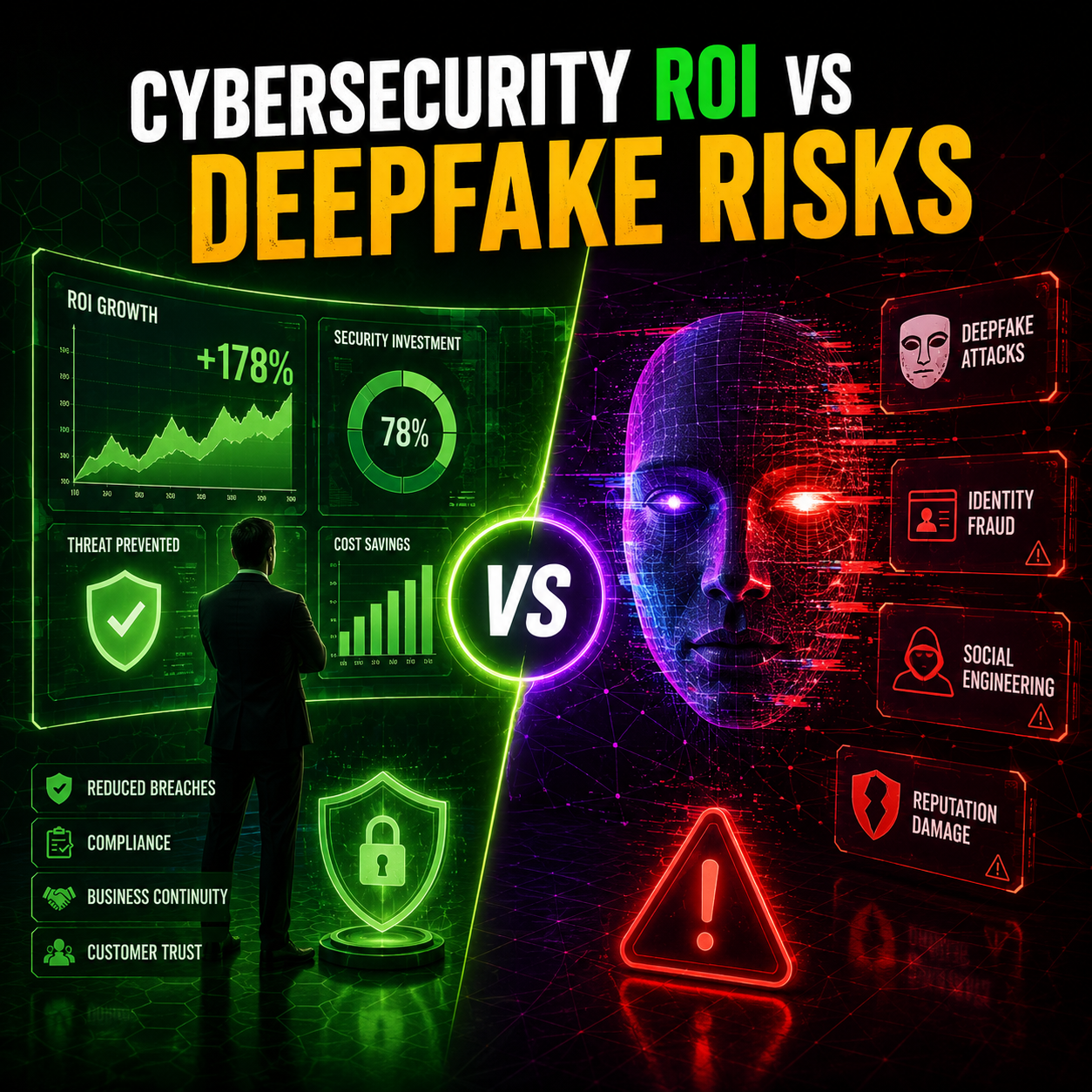
“The world is entering a dangerous era of synthetic fraud where deepfakes, AI- generated personas and stolen identity records are rapidly dissolving the foundations of trust. Aadhaar numbers, voter IDs and passport details are already available across dark-web forums, enabling criminals to create fabricated profiles for credit abuse, impersonation and large-scale benefit fraud. With generative AI tools accelerating this threat—WormGPT, WolfGPT, FraudGPT, LoopGPT—the distinction between real and fake is disappearing, pushing global losses toward USD 23 billion by 2030. Suraksha tutegi, data lutegi, unless identity systems become ethically grounded, resilient and intelligent enough to counter this wave. In this environment, identity must evolve beyond static biometrics and OTPs into a living, adaptive, multidimensional trust fabric.
NeuroTrust embodies that fabric through an ethical, cognitive and quantum-safe approach to identity verification and anomaly detection. It processes voice, face, tone,
emotion, micro-expressions and physiological signals such as heart rate and oxygen saturation to identify inconsistencies that traditional systems cannot catch. At a time when 95% of AI deployments fail due to lack of compliance and privacy-by-design, the framework introduces a privacy-preserving architecture rooted in federated learning, differential privacy and secure multiparty computation. The Adaptive Cognito Engine brings together behavioural, emotional, adversarial and neurochain intelligence to detect synthetic content, deepfakes and fabricated identities while offering forensic-grade analysis for banking, fintech, insurance, law enforcement, healthcare and public-safety ecosystems. This creates a plug-and-play trust layer that strengthens existing infrastructure without exposing sensitive data.
Data sovereignty remains absolute: the algorithms travel to the data, not the other way around. Quantum-safe adaptive cryptography ensures future-proof protection, while the NeuroTape system supports long-term, air-gapped, neuro-quantum storage of high-value information. AI agents within the system learn from prompts, analyse reports, generate insights and adapt in real time, but the human- in-the-loop remains central to decision integrity. Har bite mein hoga suraksha—every byte must be secured—because trust cannot be outsourced or automated blindly. As deepfakes multiply and synthetic identities scale at unprecedented speed, the future of national security, financial integrity and digital governance depends on a new trust infrastructure that blends ethics, cognition and quantum resilience. NeuroTrust stands as that infrastructure for a world where identity itself is under attack.”
--------------------------------------------------------------------------------------------------------------------------------------
GoTo Sets a New Benchmark in Intelligent Support with LogMeIn Rescue and Resolve
MR. SAURABH MITTAL
SAAS EVANGELIST-
GOTO
“The future of remote support and IT management is being shaped by a clear shift in customer expectations, and GoTo is focused on meeting that shift with secure, intelligent and unified solutions. Organisations today need instant, reliable support that is both proactive and deeply secure, and platforms like LogMeIn Rescue and LogMeIn Resolve are built to deliver exactly that. With more than two decades of experience powering billions of global remote sessions, GoTo understands that AI is no longer optional—it is central to delivering faster resolutions, reducing complexity and ensuring a seamless support experience. AI now analyses devices in real time, translates screens instantly, recommends guided actions, documents sessions automatically and streamlines repetitive tasks, enabling technicians to work more efficiently and customers to receive quicker, more accurate assistance.
MS. SUMITHA
SUNIL
ACCOUNT DIRECTOR (LARGE ENTERPRISE)
– GOTO
GoTo’s approach to AI is grounded in meaningful innovation, strong security fundamentals and continuous learning from users. As global investment grows in automation, cybersecurity, remote monitoring and AI-driven IT operations, solutions like Rescue and Resolve play a critical role in helping organisations modernise their support capabilities. AI improves agent confidence, accelerates onboarding, strengthens first-contact resolution and ensures that even complex issues can be diagnosed and addressed proactively. With intelligent automation and predictive insights, companies can move beyond reactive troubleshooting and embrace a proactive, self-healing IT environment that meets the heightened expectations of modern enterprises.
The need for consolidated, all-in-one platforms is more urgent than ever, and GoTo Resolve reflects this shift by unifying RMM, patch management, asset visibility, automation, service desk capabilities and secure remote access in one solution. This eliminates tool sprawl, reduces operational costs and provides a single pane of glass for IT teams managing distributed workforces. Meanwhile, Rescue continues to be trusted by banks, insurers, pharma companies, global system integrators and large enterprises for secure, zero- trust-based remote support. With the latest AI capabilities—such as device analysis, automated note-taking, scripted troubleshooting and session summarisation—both Rescue and Resolve help organisations deliver faster, smarter and more consistent support. These advancements reduce errors, strengthen compliance and allow partners to scale with confidence, resilience and greater intelligence.”
---------------------------------------------------------------------------------------------------------------------------------------------
Stronger skilling, local manufacturing and retail safeguards needed to strengthen India’s IT ecosystem
NAVIN GUPTA
PRESIDENT, FAIITA
“FAIITA has always stood as a symbol of unity, progress and commitment in the Indian IT ecosystem, and over the past 24 years we have built a strong foundation that extends from metros to Tier-1, Tier-2, Tier-3 cities and deeply into rural India. As the country enters a new era of technological transformation envisioned in the roadmap to 2047, our role as advisors and enablers becomes even more vital. Whether it is cloud, AI, cybersecurity or emerging digital solutions, our mission is to ensure that every new technology reaches the last mile, empowering partners, strengthening local ecosystems and driving national growth. The IT industry proved its resilience during the pandemic when our partners, though not formally recognised as VARs, worked tirelessly to keep hospitals, police networks and critical equipment running. That spirit of service defines us, and it continues to guide the work we do today.
At the same time, the rapid pace of technological change brings urgent challenges— foremost among them being the shortage of skilled technical manpower. Basic software knowledge is no longer enough; India needs trained professionals who understand AI, cybersecurity, cloud operations and next-generation systems. FAIITA is actively engaging OEMs to create structured training programmes for partners and their teams, but I urge the channel community to treat training with seriousness. The future belongs to those who keep learning. Along with capability building, we must also support India’s Make in India movement. I encourage partners to explore small-scale manufacturing, components and locally relevant products. Even if marketing remains difficult, supplying to domestic industries offers meaningful opportunity. Several leaders in our ecosystem have already taken bold steps in this direction, and the potential is significant.
FAIITA continues to work closely with the Government through the IT Ministry, the Commerce Ministry and GeM to resolve industry issues—whether it was the recent ₹3,000-crore camera approval matter or other large-scale policy interventions affecting retailers and MSMEs. As convenience-driven e-commerce expands rapidly, traditional retailers are losing substantial market share, making it necessary to initiate a national-level discussion on protective steps such as a convenience tax. We must safeguard the interests of lakhs of IT retailers and small businesses. Technology may evolve daily, but our commitment remains constant. With collective determination and support from partners across India, we will continue strengthening the IT ecosystem and uphold FAIITA as a benchmark of leadership, resilience and innovation.”
---------------------------------------------------------------------------------------------------------------------------------------------
Check Point strengthens cyber resilience with advanced AI-driven security strategy
Ashutosh Tandon,
Pre-Sales Solution Architect,
Check Point Software Technologies
In today’s hyper-connected environment, cyber resilience relies on understanding how rapidly threats are advancing across networks, cloud infrastructures, endpoints, email vectors, and emerging AI-driven systems. With over three decades of cybersecurity expertise, Check Point has remained committed to securing the full threat continuum—from the foundational era of data and network protection to today’s highly distributed and complex digital ecosystems. With 74 offices worldwide, more than 100,000 customers across 182 countries, and a market cap nearing $25 billion, the organisation continues to demonstrate long-term leadership and technological consistency.
Check Point’s portfolio reflects the industry’s shifting requirements. Quantum delivers comprehensive network security, CloudGuard safeguards cloud workloads, APIs, and applications, while Harmony provides zero trust, SASE, email security, and mobile protection. The recent acquisition of Lakera significantly enhances Check Point’s ability to mitigate emerging AI- and LLM-centric vulnerabilities, especially those involving data security and high-risk application behaviours. Current industry research underscores ongoing gaps such as supply chain weaknesses, unpatched systems, unmanaged assets, endpoint exposures, and the escalating sophistication of APT groups—pandas, bears, kittens, and spiders— who increasingly deploy AI-enhanced attack methodologies. To confront these challenges, Check Point has adopted a four-dimensional strategy: hybrid mesh security, micro-segmentation with zero trust, continuous threat exposure management, and AI-centric protection for applications and LLMs. As a pure-play cybersecurity provider, the organisation focuses on safeguarding digital assets across cloud, mobile, application, and user layers, enabling partners and customers to build stronger cyber resilience in a deeply interconnected world.
---------------------------------------------------------------------------------------------------------------------------------------------
Tech9IQ empowers partners with their own intelligent cloud platform
Amit Jain,
Founder & CEO,
Integrated Tech9Labs Pvt. Ltd.
“Tech9IQ was created with a clear purpose — to give partners a cloud platform that finally restores their identity in an ecosystem dominated by large OEMs and hyperscalers. For years, partners have been driving customer outcomes, solving complex IT challenges, and enabling digital transformation, yet the ownership of the solution often never belonged to them. With Tech9IQ, we are changing that narrative. This is your cloud, your services, and your brand. We are not here as another OEM; we are here as a partner empowering other partners to lead confidently with their own identity.
Tech9IQ is built as an intelligent, India-first cloud platform engineered on globally trusted technologies from Nutanix, Cisco, and IBM, but optimised for the realities of Indian enterprises. It integrates evergreen lifecycle management, micro-segmented security, automated disaster recovery, power-grade reliability, and a fully protected data vault. The platform uses AI-driven operations to self-heal, automate recurring tasks, and predict capacity requirements, ensuring partners can deliver consistent, high-quality outcomes without added complexity or overhead.
But the most important innovation is not the technology — it is the partner-first approach. Tech9IQ enables partners to brand, price, manage, and deliver cloud services entirely as their own. With zero-capex onboarding, seamless migration through our factory model, and sovereign data residency, the platform is designed to enhance partner autonomy and elevate their position in the market. Tech9IQ is more than a cloud platform — it is a foundation for partner identity, growth, and long-term differentiation.”
--------------------------------------------------------------------------------------------------------------------------------------------
Micron positions memory and storage as true catalysts for innovation
Rohit Sharma,
Head - Technical Sales (India/SAARC),
Micron Technology
“At Micron, we see memory and storage are not just components but the true catalysts driving innovation across industries. We ensure our customers benefit from end-to-end expertise. Micron stands out as the only US-based memory and storage company that designs and manufactures everything in-house—from wafers in our own fabs to finished SSDs, DRAM, HBM, and CXL products. With over 60,000 patents and 13 global manufacturing sites, including Sanand, Gujarat in India, our focus on innovation allows us to deliver high-performance, reliable, and scalable solutions for enterprise, data center, and consumer needs.
Our diverse portfolio addresses every tier of performance and capacity. From high-capacity 60TB TLC drives to high-performance SSDs delivering 14Gbps throughput, Micron offers solutions for mainstream, performance, and storage-centric workloads. Our CXL memory modules extend server capabilities beyond traditional DDR5 slots, while high-bandwidth memory (HBM) and GDDR7 enable near-CPU/GPU performance for AI and HPC workloads. By providing a complete, integrated memory and storage stack, we ensure customers achieve optimal performance, efficiency, and total cost of ownership.
Beyond data centers, our innovations extend to laptops, desktops, and automotive applications. Plug-and-play low-power DRAM modules enhance battery life in PCs, while quad-port SSDs support multiple automotive systems reliably and efficiently. At Micron, memory and storage are not ancillary—they are the enablers of AI, cloud, HPC, and intelligent mobility, driving the next generation of technological breakthroughs.”
--------------------------------------------------------------------------------------------------------------------------------------------------
Versa Unified SASE transforms enterprise networking and security globally
Pradyut Mohapatra,
Systems Engineering Manager (Channels),
Versa Networks
“We believe Unified SASE is not just a concept but a transformative approach to networking and security. Versa Unified SASE enables enterprises to protect everything, everywhere — from campus switches and home wireless access points to on-premises, cloud, and edge applications. We ensure customers build self-protecting networks, providing secure connectivity for every user, device, and application. With over 20,000 enterprise customers, 150 MSPs, and more than 1,000 channel partners globally, our solution spans 100+ countries and is trusted across industries. Versa’s software-defined portfolio includes SD-WAN, SD-LAN, SD-SSE, and software-defined wireless, all unified under a single management console and data lake, simplifying operations while maintaining security and user experience.
Our VersaONE platform delivers networking and security through a unified operating system.
Enterprises can enforce advanced threat protection, zero trust access, cloud security, and secure application connectivity from any location or device. Leveraging AI for security and networking, we provide proactive threat detection, bandwidth trend analysis, and AI-driven orchestration for configuration and management. Make-in-India
SD-WAN hardware and globally distributed PoPs bring services close to users, enhancing performance while ensuring consistent security. Versa’s recognition in Gartner’s Magic Quadrant and top ratings from CyberRatings and GigaOm validate our Unified SASE. Customers trust Versa for reliability, innovation, and responsiveness. With development teams in Bangalore and the US, we continuously evolve the platform to deliver enhanced capabilities, ensuring enterprises experience secure, efficient, and future-ready networking and application access.”
-------------------------------------------------------------------------------------------------------------------------------------------------
Redefining cybersecurity with innovations in the age of AI
Shivam Chandel
Channel Business Manager, Channel Sales,
SentinelOne India
SentinelOne as a company started in 2013. When we started, we envisioned a major revolution that will sweep across the cybersecurity industry, and that is when we thought of building our foundation with Artificial Intelligence (AI) and Machine Learning. When we talk about in-built AI today, it brings a lot of ease in our day to day task as a cyber-security analyst at any customer place. So, SentinelOne started as an endpoint security vendor, and later on, we moved to EDR, which is basically adding in some telemetry, logs, and some windows events in order to get better correlations.
When we talk about SentinelOne, it brings a difference in a lot of areas. We were the first one to bring in multiple aspects of cyber security elements. For instance, we were the first to introduce security on Linux.
We were also the first to have EDR based security on Mac. We in fact, have more than 25 patents that actually serve a lot of things that customers today use. Take, for instance, SentinelOne's platform includes an autonomous rollback feature that can automatically reverse unauthorized changes made by malicious software, such as ransomware, to restore an endpoint to a healthy, pre-attack state. This recovery process is designed to be fast, requiring minimal human effort or manual scripting. We use a Windows shadow copy for it, and that is where a unique aspect of running the business continuously comes in. With SentinelOne's Purple AI, security analysts can get the latest security insights, can autonomously investigate alerts & security incidents, thus saving valuable time for security teams.
-------------------------------------------------------------------------------------------------------------------------------------------
Digital trust is the foundational infrastructure that binds together the Internet today
Anant Deshpande
Regional Vice President, India & ASEAN,
DigiCert
“Customers today are looking to drive resilience and agility, and digital trust is foundational to driving this. It is the foundation to securing the connected world and binds together the Internet today. There is no internet, there is no digitization, there is no digital transformation without digital trust. DigiCert is the global leader in digital trust. We do PKI, which is public or private key infrastructure, and DNS. So if you are trying to access a bank website, DNS is what helps you to go to that website that you are trying to get to. It helps you to get there. PKI essentially validates that that address is a correct one and establishes the secure communication channel. So PKI and DNS are basically the two foundational elements of the internet, or rather the air and water of the internet. Everything other than that is management and protocol. DigiCert is the only player in this space that does both PKI and DNS. We know that the attack surface is expanding and we also understand that, irrespective of the industry our customers are in, there are a lot of regulations that need to be complied with. So we keep that in mind as well. With the rise of automation, attackers are leveraging highly sophisticated automated techniques. Our response can no longer be manual—humans alone cannot keep pace with machines. We must counter automation with automation.
Today, AI has completely taken over the industry. But one of the big challenges around AI is deepfake. We fail to understand what is fake and what is real. It is a big challenge for countries, individuals and regulators.
---------------------------------------------------------------------------------------------------------------------------------------
An Enterprise Data Cloud infrastructure streamlines the management of data coming from different applications
Jithesh Chembil,
Head of Channels, India,
Pure Storage
Pure Storage is a $3 billion organization. We have been in the leadership quadrant of Gartner for 12 consecutive years. Today, times are changing. There is a lot of uncertainty today, in terms of the geopolitical landscape, escalating cyber threat, and global tariff trade. Then there is a lot of spend happening on artificial intelligence and an unexpected spend on virtualization. But for partners, these uncertainties may also reveal new opportunities. IDC projects that by 2028, global spending on AI will reach nearly $600 billion. Cyber security will be the next largest area of investment, approaching roughly $400 billion. The other important thing predicted by IDC is that almost 95% of the total applications will be running on Kubernetes or cloud native based applications. And the other estimate is that almost 50% of the storage will come as services. Now is the time to support our customers in transforming and building new data platforms. If you look at the earlier storage, people used to buy storage based on utilization. If you have one application, you purchase one storage system. Then, for another application, you buy yet another storage solution. Over time, this results in multiple systems already in place. This highlights the need for a management system in order to manage data efficiently. Since the number of applications have risen over time, data management becomes a very imperative issue. The only option in this scenario is to build an enterprise data cloud architecture. We build our architecture on three major components. But one of the most important components is the Evergreen architecture that delivers the enterprise-grade features, IT agility, and sustainability your organization needs.
--------------------------------------------------------------------------------------------------------------------------------------------
The Network today stands as the backbone of every business
Akshay Balaganur,
Co-Founder & CEO,
LinkEye
Today, the network functions much like a utility—similar to electricity or water. When it’s running smoothly, it goes unnoticed; but the moment it fails, everything is disrupted. In the last 10 years, we have been working with several enterprise customers here in India and outside with our small company called Airowire Networks. In the last 10 -15 years, with the onset of technologies like cloud, SAS and now AI, the network is no longer constrained to the office. It is to be found everywhere.
The next big challenge is the huge amount of data that the network generates that is not humanly possible to assess or analyze it. The third biggest shortcoming is the shrinking size of the IT teams and engineers. We don't have network engineers anymore who are managing the network. Most importantly, our attention span as humans has gone down. So, we decided to work on making network monitoring very simple, measurable and actionable.
In India, the Internet is the biggest challenge, unlike the West. The last-mile connectivity provided by internet service providers to customer locations often becomes unstable for several reasons. Indian partners cater to a wide range of Indian companies, many of which have sites numbering in the hundreds or thousands. Each of these sites might have two or three ISP links, which are unstable. Now, you have 3000 or 4000 links to be managed by your IT team. This is a huge operational overhead. SD- WAN does solve the problem of giving you an uptime, but a failed link still has to be dealt with by the IT. So Airowire Networks has an AI agent which talks to the SD-WAN, does the troubleshooting and then figures out if it is AN ISP problem.
------------------------------------------------------------------------------------------------------------------------------------------
Forward-thinking partners are already rewriting how the Channel grows
Dylan Chadha,
Retail Lead-MENA,
Context
Data has taken a new role to help retailers, resellers and vendors to not just manage business more efficiently, but actually grow the entire pie across the ecosystem. Across Europe, we have seen how access to collective market data has transformed relationships and outcomes in the channel. We see similar opportunities are opening up here in India too. I would like to call this the great revenue shift. In Europe, more than 35% of all software revenues are now delivered as a service. This isn't just about technology, but it is a change in how value is created. Resellers there are adapting fast, investing in digital capability, managing services and customer success. The message is clear - those who combine record revenue with data driven insights will define the next decade. The most forward thinking partners are already rewriting how the channel grows. Their priorities, cybersecurity, Cloud products and AI are where customers now place trust and spend. And as we all know, the biggest year on year growth in the last year has been AI. This playbook is unfolding globally, and our role is to provide a data foundation that supports it, helping every market, including India, accelerate that transformation. Unfortunately, most companies have an AI readiness gap. According to a reseller survey we did where we asked 5000 people, 64% of them said that they weren't AI ready yet. The need of the hour is to develop AI capabilities fast, before partners fall behind in fully leveraging AI. It is not possible for anyone to build meaningful machine learning insights using only internal data. The AI readiness gap compounds a wider power imbalance. Vendors still set prices, control margins and decide who sells what to whom. Distributors relying solely on their own data or vendor forecasts might witness very soon eroding profitability.
-------------------------------------------------------------------------------------------------------------------------------------------
With rapid technology advancement, the Channel has to be more tech-savvy than ever
N R Panicker,
Chairman,
ACCEL Ltd
I have been an entrepreneur since 1991 and was a VAR and System Integrator back then. I started a small services company at a time when there were many companies but not many products like we see today. Over the years, I have seen many dealers and value-added resellers come up, only to suddenly disappear. Distributors, however, have continued to survive. This scenario continues even today. In the last three to four years, I have seen several companies emerge and then suddenly shut down for various reasons. Accel has managed to survive for 34 years—which I think is a long time—despite being a small company.
Dealers and SIs suffer the most in the entire ecosystem because they are the ones selling directly to the end user. Many times, even when they secure orders, their payments get stuck. The unfortunate truth is that there is no one to protect the interests of these dealers and SIs. So, the most important factor for survival is discipline.
Another key factor is that channel partners must be technologically savvy. They should not cut corners and must take the business seriously, because there are no shortcuts to profits. Also, when you sell software or hardware to a company and a certain amount comes into your bank account, please remember that is not your money. That money belongs to the distributor or the OEM, and you must pass it on. If your margin is 2%, then only that 2% is yours to use. A steady cash flow ensures a stable business. The money you are left with at the end of operations is the real profit you have.
----------------------------------------------------------------------------------------------------------------------------------------
Veeam strengthens cyber resilience with security- first, AI-enabled data protection
Gaurav V Saxena,
Director - Channels & Alliances,
Veeam Software
“Data resilience is becoming a boardroom priority, driven by rising cyber threats and the urgency brought by the DPDP Act. Organisations now demand security-first, AI-enabled data protection that ensures resilience across complex, hybrid and multi-cloud environments. Veeam records global revenues of over USD 1.75 billion, operates in more than 150 countries, and protects 67% of Fortune 500 companies. In India, the company continues to grow at over 65% CAGR, serving 8,000+ customers across government, BFSI, IT/ITeS, defence and education through a strong partner ecosystem and strategic alliances.
At Veeam, continuous investments in R&D centres in Bangalore and Pune, along with comprehensive certification programs, strengthen the broader ecosystem. The platform is built on five core pillars—data backup, data recovery, data portability, data security and data intelligence—which power the Veeam Data Platform 13.0.
Support for 160+ workloads, native protection for Kubernetes and containers via Kasten, modern hypervisors and expanded capabilities through Veeam Data Cloud on Azure ensure flexibility across on-prem, cloud and SaaS environments. Recent advancements, including the acquisition of Securiti AI, enhanced incident-response tools, negotiation assistance and ransomware recovery warranties, further improve cyber readiness. As ransomware becomes more sophisticated and AI-driven attacks escalate, organisations must benchmark their cyber preparedness. Through Veeam Cyber Secure and the Data Resiliency Maturity Model, designed with McKinsey and Manchester University, enterprises gain structured pathways to strengthen resilience and contribute to building a more secure and future-ready digital ecosystem for India.”
-------------------------------------------------------------------------------------------------------------
Fortinet drives India’s cybersecurity future with a channel-first converged networking vision
Rajeev K Abichandani,
Head - Enterprise Channels (India & SAARC),
Fortinet Technologies
“Fortinet continues to scale its presence across India and SAARC, holding more than 50 percent share of the firewall market and leading the SD-WAN segment with close to 30 percent share. With 25,000+ customers across 130 cities and one of the largest 200+ cybersecurity go-to-market teams, the company remains firmly anchored in a channel-centric and partner-first model. Our growth is driven by the belief that networking and security must converge, delivered through a single operating system, single console and single licence to reduce complexity, consolidate vendors and enhance user experience across hybrid work, distributed edges and multi-cloud environments.
Secure networking is the foundation of our portfolio, with firewalls, SD-WAN, SASE, ZTNA, SD-Branch and secure switching and wireless built organically on FortiOS to ensure consistent policy enforcement, visibility and control across on-prem, cloud and remote environments. As attack surfaces expand and user access becomes
more distributed, unified SASE becomes critical for secure connectivity across branch, campus, remote and OT networks. Support for both cloud-delivered and on-prem architectures ensures flexibility while maintaining performance and end-to-end security. Multiple recognitions across Gartner Magic Quadrants reinforce the strength of this integrated platform.
Enterprises across BFSI, retail, e-commerce, logistics, hospitality and hyper-distributed sectors rely on this convergence-first approach to secure mission-critical operations. Engagement models for MSSPs, SIs and service providers strengthen collaboration, while ongoing partner-enablement initiatives help organisations build secure, scalable and future-ready networks across India and the SAARC region.”
--------------------------------------------------------------------------------------------------------------------------------------------
Barco ClickShare redefines hybrid collaboration with effortless, one-click meeting experiences
Gopal Krishna,
Director (Sales) MX, APAC,
Barco
“In today’s environment of AI, data and quantum technology, the most overlooked challenge remains the meeting itself. Whether in-person or virtual, users still struggle with cables, ports, passwords, platform mismatches and basic connectivity issues. With hybrid work becoming the norm, employees often come to the office primarily for meetings, yet nearly half face a technological hurdle even before the discussion begins. This is exactly where Barco ClickShare changes the experience—by making the meeting room simple, intuitive and truly effortless.
ClickShare eliminates everyday meeting chaos with a three-step workflow: walk into the room with your laptop, plug the Barco button or launch the ClickShare app, and focus entirely on the meeting. The platform wirelessly connects to the room’s camera, mic, speaker and display, enabling seamless collaboration on Teams, Zoom, Google Meet or Webex. It supports sharing from laptops, mobiles and tablets and keeps all participants—remote or in-room—at the centre of the meeting. With wireless presentation, wireless conferencing, Clickshare Hubs, Microsoft-certified MTR systems and the Wi-Fi 6E-based Gen 5 button, the experience becomes unified, secure and consistent.
The portfolio integrates smoothly with third-party peripherals from Logitech, Poly, HP, Jabra, Sennheiser, Bose and others. ISO 27001 certification, a five-year warranty and full BYOD compatibility make it suitable for large enterprises. For partners, it remains a plug-and-play IT product requiring no AV expertise—just two basic connections and the room is ready. ClickShare removes complexity so users can simply walk in, connect through a single Type-C dongle and start their meeting without worrying about technology.”

See What’s Next in Tech With the Fast Forward Newsletter






Tweets From @varindiamag
Nothing to see here - yet
When they Tweet, their Tweets will show up here.