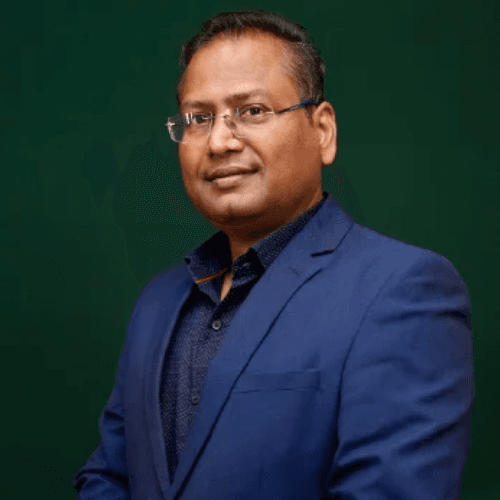
Rajat Jain
MD
Xerox India
To arrive at 2014's top technology trends, each year in the first half of January, VARINDIA speaks to some of the industry analysts, and backs up their forecast by talking to value-added resellers. We also spoke with the vendors and other stakeholders serving the channel community.
 |
| Saurabh Grover Director AOC Monitor & Tablet Business, India |
 |
| Srinivas Tadigadapa Director – Enterprise Sales Intel – South Asia |
 |
| Mohammad Salman Sr. Vice President HCL Services Ltd. |
 |
| Venkatesh Swaminathan Country Head The Attachmate Group India |
 |
| Jagdish Mahapatra Managing Director McAfee India and SAARC |
Over the years Cloud, Big Data, Mobility & Security have emerged as industry mega trends that IT managers and CIO’s have been closely observing. “While adoption of cloud was largely restricted in Enterprise businesses but this year a significant number of SME’s also deployed cloud based solutions,” says Rajat Jain, MD - Xerox India.
SMAC (Social Media, Mobility, Analytics and Cloud) is touted as one of the biggest trends of 2014. Organisations will aim to leverage maximum benefits through these gen-next IT-offerings such as Big Data, Cloud, and Mobility etc. “The upcoming trends in information technology enable organizations to provide cost-effective and fast deployable solutions which are at par with the international IT standards. We will see organizations driving innovation through different business and delivery models, while integrating several IT systems,” says Mohammad Salman - Sr. Vice President - HCL Services Ltd.
Reflecting upon the year gone by Srinivas Tadigadapa, Director – Enterprise Sales, Intel – South Asia said, “Year 2013 saw Intel take major strides in areas like IoT and HPC with their applications growing across sectors. With specific reference to HPC, India took center stage with the Top500 Supercomputers list recognizing 12 Supercomputers from India and elevating its position to become the 7th country among 27 countries to house the top supercomputers globally. Also the launch of Intel’s Hadoop version II marked Intel’s foray into strengthening its software ecosystem to complement its Hardware capabilities”.
BYOD
According to Venkatesh Swaminathan, Country Head, The Attachmate Group India, “It won't be the hot topic that it was in 2013, but in 2014 BYOD will become very real with more people using a personal device for work than not--this will start a conversation around the value and viability of the "20th century" IT shop and the need for "IT to happen at the individual level".
“Organisations expect one single solution to address the overall BYOD challenge which is not practically feasible. BYOD needs to be looked at from different dimensions like Data Loss Prevention, Network access Control, Authentication system, internal intrusion prevention systems, internal firewalls, securing Wi-Fi etc. This demands that companies relook at the security architecture and rebuild it to fit BYOD needs,” says Jagdish Mahapatra, Managing Director, McAfee India and SAARC.
VARINDIA’s View
As businesses are in the process of allowing employees to bring their personally owned computers, smartphones, and tablets into the workplace and access corporate applications, the popularity of BYOD is increasing fast. This will allow application availability at anytime, from anywhere, and will help business slash procurement costs.
Cloud Computing
According to Gartner, the push for more personal cloud technologies will lead to a shift toward services and away from devices. In addition, a study by 451 Research forecasts that the worldwide cloud computing market is expected to grow at a 36 percent compounded annual growth rate (CAGR) through 2016, reaching a market size of $19.5 billion by 2016.
 |
| Edgar Dias Regional Director for India Brocade |
 |
| Sunil Sharma VP Sales, India & SAARC Cyberoam |
 |
| Ashootosh Chand Director of Business Development, RIPL (Ricoh Innovations Pvt Ltd.) |
 |
| Faisal Husain Founder and CEO Synechron |
 |
| Vivek Tyagi Country Sales Director Freescale |
"These figures demonstrate that CIOs are aware of the new business models, consumption models, user expectations, security issues and privacy concerns associated with the cloud - and they will use the cloud to drive growth and innovation throughout their organizations. In 2014, we expect the cloud to develop into a key business enabler and, as private clouds mature, the desire to leverage public cloud elasticity will grow,” says Edgar Dias, Regional Director for India at Brocade.
“The adoption of cloud has now become mainstream. The rate of adoption of cloud has really taken over in 2013 year,” says Srikanth Karnakota, Director Server and Cloud Business, Microsoft India.
VARINDIA’s View
It can be said without a shadow of doubt that transition of cloud computing from being the latest industry buzz word to an accepted operational expenditure is nearing completion. Cloud has emerged as an IT service that businesses, both enterprises and SMBs, have already adopted or are in the process of evaluating its adoption. The adoption of cloud computing by SMEs is also increasing at a greater pace. According to a survey it has been found that the number of companies with 10 or fewer employees adopting paid cloud services will triple in the next three years.
Mobility
For those in the mobile industry, 2013 has been a year when there has been a lot to celebrate and an equal amount to be concerned about. Restrictions and regulations are growing.
Mobility is well on the way to become mainstream. There is every likleyhood that Enterprise mobility will undergo an unprecedented boom to become a necessity for businesses that aspire to lead and compete aggressively. There is a paradigm shift in the IT strategy of a major chunk of vendors that are willing to re-engineer their business processes to implement these solutions and derive business and competitive advantage. “Young and tech-savvy people for whom mobility is native, are changing the workplace dynamics today. Resource optimization, and the need to increase employee productivity are the top reasons behind the interest evinced by Indian enterprises. Organizations are making the transition from“mobilizing the people” to “mobilizing the business processes”. ” Says Jaideep Mehta, VP and Country General Manager, IDC India
With tablets purchases overtaking PC shipments, mobile devices are becoming the primary computing devices for many end users. These users are no more expecting basic common applications like secured email on these devices but they want the full functionality and access to all applications and data from these mobile devices and tablets.
Sanjay Deshmukh, Area Vice President, India subcontinent, Citrix, says, “ The users want consistent user experience irrespective of whether they are using a company provided desktop/laptop or a Tablet. This empowerment of user to get access to complete “work” which is all the apps, data and collaboration capability is required to truly the leverage the power of this new computing device “The Tablet”.
VAINDIA’s View
Enterprise mobility is one of the trends that have been one of the catalysts in the growth of the IT sector. Increased business process automation and remote access to the network constantly for creating a Virtual workspace had been the need of the hour. The increasing mobility into business is helping the workforce to increase productivity, real-time execution and team collaboration at very low cost.
The PC Very much alive
While some tablets may be closing the performance gap with PCs in terms of hardware, and office productivity software becomes available on mobile devices, the creation of content still demands a PC’s form factor for better input accuracy. The existence of a market for physical keyboards designed for tablets suggests that tablet users continue to face a compromised experience when entering text on their device’s touchscreen during content creation. The additional bulk of packing a keyboard also diminishes the space savings afforded by using a smaller device.
Rahul Agarwal, Executive Director, Commercial Business Segment, Lenovo India, “While the PC continues to be relevant in the technology industry, PC refresh cycles are expected to extend as people and businesses seek to balance budgets between the purchases of PCs and other mobile devices in the PC Plus space. As a result, there will be greater emphasis on product reliability, particularly for businesses, as their PCs need to be durable enough to meet the demands of longer operating lifespans.”
Virtualisation
With the passage of time virtualization is all set to play a bigger role as IT organizations morph into more and more of a services management framework. Many companies are quickly realizing the value in moving to virtualisation.
VARINDIA’s View
Virtualization has been commoditizated. Fast becoming a natural way of doing business, today it is less about the process and more about the business enablement of what virtualization allows the clients to do that they couldn’t do before.
Virtualization facilitates consolidation of infrastructure and hardware by replacing physical servers with virtual machines, and by combining applications on virtual servers. Hence, it leads to reduced space and cost of IT infrastructure. Over the years, there have been many security concerns within a virtual environment.
Software Defined Networking
As companies move to a cloud environment, legacy network architectures are buckling under the pressure for instant access to applications and services that offer a high-quality user experience. Organizations also are struggling with the complexity of current data center network fabric designs, which require manual device-by-device configurations and limit the performance of bandwidth-intensive applications.
Storage: Massive amounts of enterprise storage will become a given, and because manually tracking and sorting it all will be impossible, automated storage management solutions will shift from "nice-to-haves" to "must-haves" for virtually every organization.
As the country braces for general election in 2014, Partho Dasgupta, Managing Director, NEC India, foresees IT playing an intrinsic part in building the social infrastructure of the country via information and communication technology. “With the country heading towards general elections in 2014, I am expecting a fresh set of reforms that will propel the growth of IT and telecom to build a society that is safe, secure, efficient and fair and where people can lead prosperous lives.” He adds, “As a part of building this social infrastructure, businesses have started to accept software defined networking (SDN) as a serious investment option. With IDC predicting a market of $2 billion for SDN-ready products by 2016, this is a trend that enterprise channels cannot afford to miss.”
Anil Batra, Managing Director, Riverbed India, says, “In 2014 we’ll see organizations finally implement software-defined architectures to achieve continued flexibility and control. Expect individual ter ms like “software defined networking” and “software defined storage” – which are just means to an end – to give way to larger concepts around the software defined data center and software defined branch.”
VAINDIA’s view
As service providers try to meet the increasing demand, and juggle the complexities of running a profitable business – reduce CapEx and OpEx while increasing service responsiveness – they are looking for technology alternatives that will streamline service creation and foster innovative applications and services. Software-Defined Networking (SDN) offers a means of doing this. SDN links networks and applications, enabling direct programmatic control of both networks and orchestration layers in line with end-user application needs, rather than programming around the network, as is done today. IDC predicts that by 2016, the market will be worth $2 billion (USD) a year, up from just $168 million today.
Cloud Security
Govind Rammurthy, MD & CEO, eScan, says, “Currently, BYOD i.e. the Laptop and Smartphone users pose a significant threat to IT infrastructure. Also with the increasing adoption of Cloud technology, it has too become one of the prime focuses for cyber criminals. Hence, we will be focusing on these technologies and trends.
Security is becoming complex with the each passing day. A decade earlier businesses were happy by giving their employees logins to the networks and asking them not to divulge their passwords to anyone. That was the end of security advice. Needless to say, the security scene is far more complex and IT managers are under pressure to secure the company’s digital assets and network.
VAINDIA’s View
With the cloud computing becoming preferred choice of the business more so in uncertain economic landscape, these are hey-days for the cyber villains who find cloud as greener pastures for making money by hacking cloud infrastructure.
While market is still maturing to cloud, in India, Security and continuous availability of power are the key deterrent for the industry to adopt cloud.
 |  |  |  |
| Partho Dasgupta Managing Director NEC India | Debasis Chatterji CEO Netxcell Limited | Ramesh Loganathan Vice President and Managing Director Progress Software | Rahul Agarwal Executive Director, Commercial Business Segment, Lenovo India |
 |  |  |  |
| Sumeet Walia Head, Global Enterprise Business Tata Communications | Tarun Kaura Director, Technology Sales, India & SAARC, Symantec | Chetan Naik Director & Regional Executive IBM India (West) | Anil Batra Managing Director Riverbed India |
Security
Mobiles still remain a darling of malware attackers and exploits
2013 has been an eventful year in the Information Security space as information became the most valuable & challenging asset for organizations while being borderless and dispersed, as cloud, mobility and “Bring your own device” took a stronger hold on businesses. “Information Security has been immensely threatened with businesses, government and individuals relying on the internet for dynamic needs and cybercriminals have devised more sophisticated methods/techniques to trap victims,” says Tarun Kaura, Director, Technology Sales, India and SAARC, Symantec. He adds, “Blurring boundaries between consumer and business, sophistication in enterprise attacks and dispersion of authority for security within the ecosystem has led to growing concerns over data, financial information and critical infrastructure.”
Increasing base of smartphone users is a primary reason for attackers to find interest in attacking those devices. In addition to this, users use their personal devices to access work emails and connect to company networks, which aggravates this interest further. Applications are the backbones of smart phones and most of the mobile apps lack adequate security, adding to the misery of security on mobile devices. “All of these factors collate to increase the interest attackers have in smart devices. 2014 is sure to experience newer and sharper mobile threats.” says Sunil Sharma - VP Sales, India & SAARC at Cyberoam.
Internet of Things (IoT)
With Internet of Things as an emerging focus for all players and with its increased adoption, many verticals like automotive, healthcare, networking and retail are expected to reap huge benefits out of it. Vivek Tyagi, Country Sales Director, Freescale, says, “ IoT would not only ease our daily lives with a minimal usage of time but will prove to be cost efficient as well.” From a technology perspective, IoT is being defined as smart machines interacting and communicating with other machines, objects, environments and infrastructures, resulting in volumes of data generated and processing of that data into useful actions that can “command and control” things and make life much easier for human beings. The year 2014 will see enterprises exploiting this new reality to a whole new level.
Unified Communications as a Service (UCaaS)
Sumeet Walia, Head, Global Enterprise Business, Tata Communications, says, “With mobility gaining promi nence, we will see an increase in demand for Unified Communications as a Service (UCaaS) in the coming year. Leveraging this growth in the UCaaS market, we recently launched jamvee™, an easy-to-use, on-demand business video service for enterprises. Jamvee™ enables, for the first time, anyone, anywhere to access a video meeting via any device – be it desktop, laptop, tablet, smartphone, Telepresence or video conferencing rooms. Furthering the growth in the UCaaS market is another trend of open API-based tools, such as WebRTC. WebRTC offers flexibility and interoperability allowing enterprises to design and refine the social tools until they are a perfect fit for their business processes and their employees, thereby maximising participation and productivity gains.
The constant expansion of mobile user base and proliferation of smart devices, will lead to increase in the demand for bandwidth in 2014. Over the next three to seven years, the demands placed upon networks will witness a dramatic increase driven by the growth of Internet and usage of bandwidth through mobile devices. “This growth will not necessarily come from increased subscribers but from new services that eat up bandwidth, especially video. More than one-way broadcast video, we expect the two-way video communication to drive traffic volume growth and test the network for quality and bandwidth availability as we move ahead. On the back of our wholly-owned global submarine cable network, we aim to cost effectively manage this bandwidth demand, while delivering quality real time two way video to our customers across the globe,” says Sumeet Walia.
Overall Market
The coming period is expected to be the year when business revenues and market share will return or exceed levels. Depreciating rupee along with weak market sentiments continue to hover around. Current market trend is certainly disturbing, and a stringent action from our economic policy makers is vital. Beginning April 2013, Indian currency has crashed by over 13% & various report suggest more challenging times ahead. The ongoing economic turmoil is most likely to have an impact across various industry verticals.
Ashootosh Chand, Director of Business Development, RIPL (Ricoh Innovations Pvt Ltd.), says,“So, in a way, the impact of a depreciating rupee will be offset by other appreciating currencies. I personally feel that the way to take pressure of the falling rupee and a not-so-good economy is to create a regulatory environment that enables businesses to flourish.”
“Retail banking in India is maturing with time, and this growing sector provides a significant opportunity. Recent RBI regulations are set to drive increased IT investment in the sector,” says Chetan Naik, Director & Regional Executive – IBM India West. The mobile banking/ mobile payments revolution underway will transform the retail banking and telco industries as we know them today. There is sufficient evidence that traditional banking channels are just too expensive to serve clients in large geographic areas with low population density. Based on the experience from other regions, mobile financial services can incrementally bring unbanked customers to the financial ecosystem. IBM India’s current focus is to enable our customers to succeed in their aspirations by providing with smarter solution offerings --be it a large established bank or an emerging co-operative bank or an insurance player
Increasing Fuel Prices, Unstable Dollar and unpleasant import costs in the recent times has affected the IT industry in a big way. With the increased dollar prices the Import rates have soared, the production cost has increased offering a lower margin for the companies.
“Given the current situation in country the business environment is kind of watchful. One may not wish to commit heavy investments on the other side this is the best time to prepare for future. It’s also very industry dependant, while we see growth in Mobility &retail there is a certain challenge in automobiles,” says Saurabh Grover, Director AOC Monitor & Tablet Business, India.
Telecom Industry has great hopes on 2014 that a stable government will take a relook at the National Telecom policy post the elections. Maybe after 2014 general elections, some telecom policy decision will evolve. And the market will be stabilized. “However, we are optimistic about 2014. There is a trend to enhance the basic telephony rate and that will add to profitability. There will be investment to enhance the infrastructure. The industry is awaiting a firm decision regarding the telecom policy. We expect increase in pricing for telecom offerings in the coming year. Some kind of market consolidation is also likely to take place.” says Debasis Chatterji, CEO, Netxcell Limited.
Ramesh Loganathan, Vice President and Managing Director, Progress Software, says, “Some of the guarded optimism from last couple of years may ease a bit as there are no red flags in any major part of the world which is a strong start to the New Year. With worldwide economy showing a more positive outlook, this bodes well for the IT industry in India.”
Faisal Husain, Founder and CEO, Synechron, is of the view, “ After a relatively slow 2013, the global economy is trending towards the positive with easing credit availability, revenues picking up in many sectors, and the financial services industry leading the pack.” He adds, “This is good news for niche, Global IT companies; however, challenges remain in terms of reduced margins and regulatory concerns. To register faster growth in 2014, IT Consulting and Outsourcing firms will have to put in extra efforts to remain relevant to their clients, improve operational agility, realign service delivery models, and focus more on driving innovation.”
edit@varindia.com