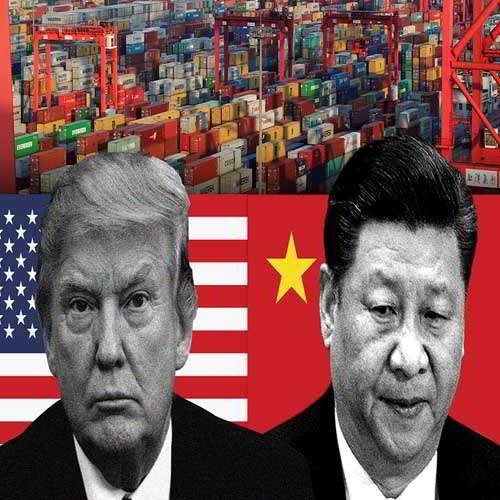
Trump gives final touches to his $200-bn bomb, and with this US-China trade war has entered a new phase. The trade war between the US and China has escalated with new tariffs imposed by both sides. The dispute began with US President Donald Trump’s complaints about the bilateral trade balance and access to China’s market that will profoundly reshape the global economy.
Washington has imposed 25% tariffs on $50bn (£38.5bn) of Chinese imports, including a second wave of levies worth $16bn (£12.3bn) that came into effect.
The door for compromise and restoring a functional relationship between the United States and China appears to have closed. The 10 per cent tariffs on US$200 Bn (£153.7bn) of Chinese goods rising to 25 per cent from January 1, is the final straw. US has threatened to eventually impose tariffs on all Chinese imports if Beijing does not agree to its demands.
Post the US and China slapped tariffs on $16 billion worth of goods on each other, both countries imposed tit-for-tat levies on $34 billion worth of each other's imports in July.
If China wants to play smartly, they could just shut off the export to the USA valve and empty America’s shelves and totally collapse America’s economy, exactly what Putin wants Trump to push China to do. But will the US-China trade war rivalry reverse the worst economic trends in both countries? If that happens, it will spur Beijing to take up more meaningful easing measures such as tax cuts and boosts to credit and liquidity in China's financial system.
The US’ point of argument is that China makes money from the US and is using it to push America out of Asia and elsewhere. It is difficult to see how the US could climb down from this position. To follow its rhetoric, it will try to cut off China from its market and block technology exchanges.
In Box: This short term issues will pain to both nations, and to the world, but it may prove beneficial to all in the long run.
The big cost will come if and when supply chains are moved out of China. The process is inflationary. It is not just inflating the US$500 Bn of imports from China, but imports from other countries will also rise, due to less competition from China. Inflation raises living costs for most Americans who live from pay cheque to pay cheque. The Chinese government will continue implementing measures in order to cushion its economy from the impact of the ongoing trade spat with the US.
US tariffs appear to be affecting the Chinese economy already as the latest manufacturing data show slowing export orders. Beijing is likely to cushion that impact in September and October through new bonds. But it will not cut interest rates or loosen property policies.
When you run through the history in EU (European Union) in 2017, exports from EU (the collective of 28 member countries ) to Asia was bigger than that to the US; and, more significantly, EU’s exports to Asia in the last decade have been growing almost twice as fast as its exports to the US While Asia’s exports to the EU in 2017 was still slightly lower than that to the US, but it is also growing fast, making the EU increasingly more important to Asia, according to the IMF's Direction of Trade data. From a simple perspective of market size, Asia today is far more important to the EU than the US, and it will soon be more important to Asia than the US.
Asia’s market size for imports reflects its vibrant and growing consumer markets that are increasingly prosperous. Asia today is just about as big as the US. China is now the largest market for an expanding list of countries, which includes Australia, Brazil, Russia, South Africa, South Korea and Indonesia, among others. Indeed, if the current growth rates of imports are matched, by 2021 China may surpass the US to become the largest market for imports in the world.
The big difference is, however, that private consumer expenditure in Asia is growing at twice the speed compared with the US. If Japan is excluded, Asia’s growth is three times faster. Even more striking is China where private consumer expenditure has been growing at an average of 13.8% a year in the last decade, over four times faster than in the US.
In 2017, China sold more than $500bn (£384.2bn) worth of goods to the US. By contrast, the US sold just $130bn (£101.4bn) to the Chinese.
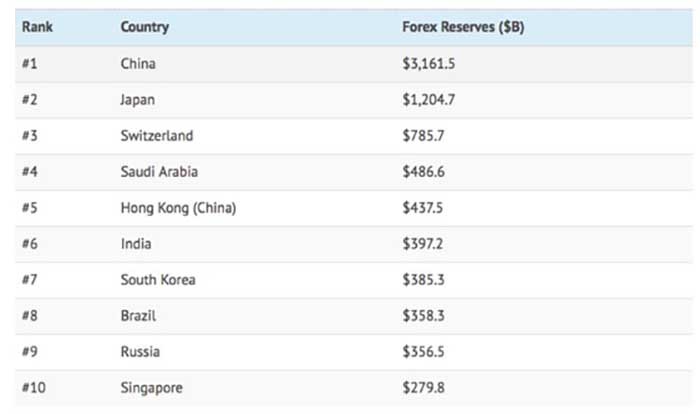
US dollar and the euro are the most common reserve currencies used in international transactions. As a result, United States do not need to hold as many reserves. Earlier this month, President Trump said the fall in China’s stock market this year is evidence that his tariffs are having the desired impact and that the US is winning the trade war.