
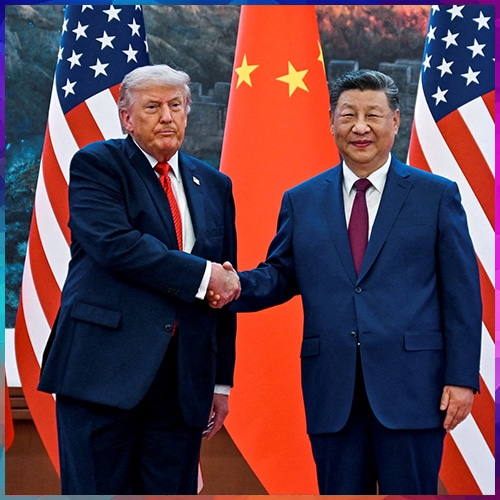
Chinese President Xi Jinping is due to visit Washington on September 24, 2026, for his second summit with President Trump this year, following their May meeting in Beijing. Beyond trade, the U.S.–China AI race, Taiwan, space capabilities, and broader technology competition are expected to form a significant geopolitical backdrop.
Ahead of the talks, access to Chinese rare-earth materials remains strategically critical. These minerals are essential to semiconductors, electronics, EVs, defense systems, and advanced manufacturing — making supply chains an increasingly central bargaining chip in the relationship.
Military AI is raising global alarm in parallel. At China's Beijing Xiangshan Forum, delegates warned that autonomous weapons and AI are compressing military decision times, while AI-generated misinformation threatens to undermine trust precisely when clear judgment matters most.
Calls are growing for meaningful human control over AI-enabled weapons systems.
Analysts caution against expecting a breakthrough. CSIS notes the relationship's deepest tensions — AI, cyber operations, export controls, digital sovereignty — remain largely unresolved even after May's summit, with trade dominating headlines while technological rivalry simmers underneath.
The Washington summit should be judged less by announcements made and more by whether it preserves U.S. leverage while securing genuine implementation of prior commitments.