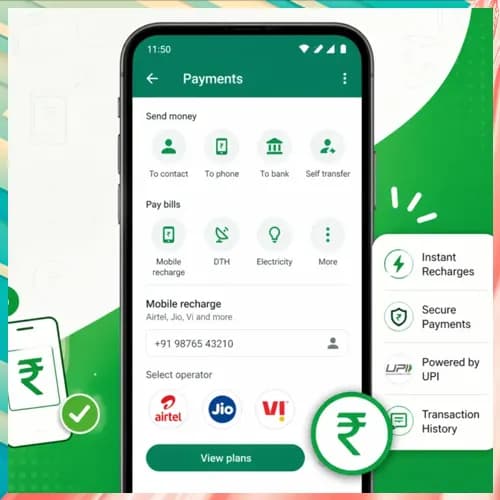
WhatsApp has rolled out a new feature in India that enables users to recharge prepaid mobile numbers directly within the app. The update, which is being introduced in phases, will gradually become available to both Android and iOS users across the country. The feature is powered through a partnership with PayU and supports major telecom operators such as Bharti Airtel, Reliance Jio, and Vodafone Idea.
With this addition, WhatsApp continues to expand beyond messaging, aiming to integrate multiple everyday services into a single platform. The app already offers Unified Payments Interface (UPI) transfers and metro ticketing in select cities, and the new recharge functionality further strengthens its push toward becoming a comprehensive digital services hub.
How the Recharge Feature Works
Users can access the recharge option through the payments section within the app, indicated by a rupee (₹) icon on the home screen. Once the feature is available, users can select the prepaid recharge option, enter a mobile number, browse available plans, and complete the transaction using UPI, debit card, or credit card. A confirmation screen is displayed after payment, and transaction details are stored within the app for future reference.
The feature is designed to offer convenience, allowing users to complete recharges without switching between multiple applications. This could be particularly appealing for those who already use WhatsApp regularly for communication and payments.
However, while the integration adds ease of access, it enters a competitive space already dominated by apps like Google Pay, PhonePe, and Paytm, which provide more detailed plan listings and promotional offers.
Despite this, WhatsApp’s massive user base in India could give it an advantage by simplifying routine transactions within a familiar interface. The move reflects a broader trend of digital platforms evolving into multi-service ecosystems, where communication, payments, and utility services converge to deliver a seamless user experience.