


WIITF 2026: Reiterating the role of VARs in shapiping the future of India’s Technology landscape

VARINDIA once again strengthened its position as a leading platform for knowledge exchange, innovation, and networking within Western India’s IT ecosystem with the successful hosting of the 16th edition of the Western India Information Technology Fair (WIITF), 2026. The VAR summit emerged as a dynamic forum for collaboration, insights, and inspiration, energizing the tech community and fostering industry growth.
The evening began with a warm welcome for guests and participants, underscoring the importance of collaboration and partnerships in the technology sector. Built around the theme, “Evolving BFSI Landscape,” the summit provided a platform to explore the latest trends and innovations in IT. It also celebrated the contributions of VARs in India’s ICT industry, recognizing their pivotal role in shaping the future of technology.
The summit began with the ceremonial lamp lighting, marking an auspicious start before the corporate presentations. The revered guests who graced the event included distinguished names like Abhay Mishra, Distribution Accounts Manager – Acronis; Sushil Kumar Patil, Accleration Solutions Engineer- Riverbed; Priyanka Arora, Solution Sales Lead – Microsoft; Dr. Arindam Sarkar, Chief Architect - FaceOff Technologies and Dr Deepak Kumar Sahu, Chief Editor – VARINDIA.
The keynote address was delivered by Dr. Deepak Kumar Sahu, Editor-in-chief, VARINDIA in which he highlighted the fact that India stands at a critical moment in its technology journey today, with the country building a $250 billion IT industry and becoming a global leader in software services. However, its domestic IT spending accounts for only about 1% of global technology investments. He further cited that bridging this gap will be essential if India wants to play a leading role in the emerging AI-driven economy.
The corporate presentations for the evening commenced with an insightful address by Abhay Mishra, Distribution Accounts Manager – Acronis, who spoke about data availability and integrity. With strong expertise in cybersecurity, data protection, and channel development, he spoke about The next speaker, Sushil Kumar Patil, Accleration Solutions Engineer- Riverbed presented his valuable perspectives on how Riverbed views technology, innovation, while also elucidating the company’s market growth.
Priyanka Arora, Solution Sales Lead- Microsoft was the next presenter to address the audience in which she emphasized on the growing menace of cybercrime and how cyber-attacks have grown 5x and at projected $10.5 trillion annual cost of cyber-crime, how it could become a third largest economy.
Dr. Arindam Sarkar, Chief Architect- FaceOff Technologies in his presentation specifically talked about how neuro-AI, quantum-safe cryptography, and cognitive security have become the need of the hour.
The event featured an insightful Panel Discussion Session moderated by Dr. Deepak Kumar Sahu, Editor-in-chief-VARINDIA. The panelists who joined the session were - Dr. Pawan Chawla, CISO & DPPO- Tata AIA Life Insurance; Sarita Padmini, Sr Director-Protiviti India Member Firm; Priyanka Arora, Solution Sales Lead- Microsoft; Dr. Puneet Kaur Kohli, CTIO - Generali Central Life Insurance and Bhaskar Rao, CISO - The Bharat Co-operative Bank.
-------------------------------------------------------------------------------------------------------------------------------------------
The world is entering a major investment phase in AI infrastructure
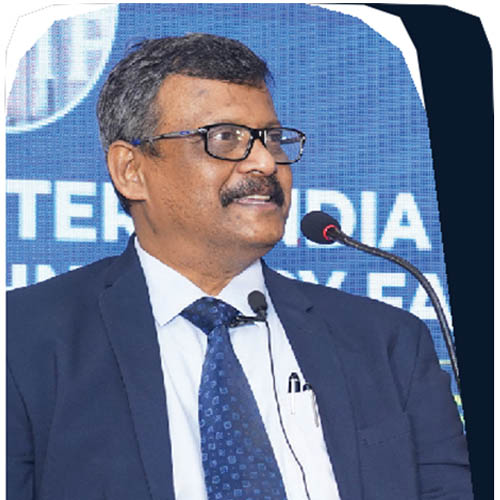 DR. DEEPAK KUMAR SAHU
CHIEF EDITOR – VARINDIA
“As cyberattacks become more sophisticated and humanlike, digital identity is emerging as the weakest link in enterprise security. Stolen credentials and outdated authentication methods remain the leading cause of data breaches, especially as attackers increasingly use AI to launch highly convincing phishing and social-engineering attacks. India stands at a critical moment in its technology journey. While the country has built a $250 billion IT industry and become a global leader in software services, its domestic IT spending accounts for only about 1% of global technology investments. Bridging this gap will be essential if India wants to play a leading role in the emerging AI-driven economy. One of the most important steps is investing in accelerated computing infrastructure, particularly GPU-powered systems that form the backbone of modern artificial intelligence. Unlike traditional computing, which improves gradually over time, accelerated computing dramatically increases performance and efficiency.
Cloud adoption, open banking, and remote work are transforming security in financial institutions. Identity has become the new security perimeter, making Identity and Access Management (IAM) central to modern banking cybersecurity. Banks must ensure that the right individuals have the right access at the right time. To address this, financial institutions are strengthening IAM frameworks with automated identity lifecycle management, role-based access controls, behavioral analytics, and risk-based authentication to detect anomalies and reduce insider threats while protecting sensitive financial data. The attack highlights the need for strict control over privileged access and stronger protection of enterprise management platforms through multi-layer authentication and continuous monitoring to detect intrusions early. Organizations must also prepare for destructive cyberattacks beyond ransomware by segregating critical systems, maintaining secure offline backups, and strengthening incident response, employee awareness, and proactive threat intelligence to respond quickly to large-scale disruptions.
India emerges as a new hotspot for cyber criminals with 4,168 crore calls in a year. Over 175,000 AI servers are currently exposed on the internet, many with weak or no authentication. Most run on GPU cloud instances with production models loaded. One open port can lead to massive cloud bills, stolen model weights, hijacked compute, or even poisoned models and remote code execution. We are also seeing how Tech companies are suddenly launching campaigns focused on adopting and promoting AI across their products and services.”
----------------------------------------------------------------------------------------------------------------------------------------------
Acronis ensuring not only Data Availability but also Data Integrity
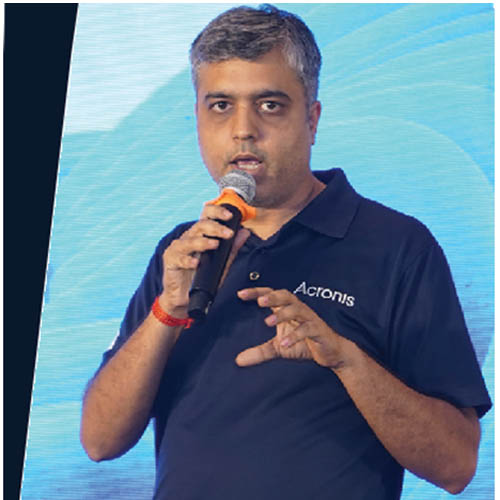 ABHAY MISHRA
DISTRIBUTION ACCOUNTS MANAGER – ACRONIS
“Considering the fact that we are running business organizations in an era of digitalization, each organization today wants to enhance their business excellence or operational efficiency. At the same time, organizations today are constantly on their toes to onboard new customers, and remain competitive in this competitive environment. Now, considering this, organizations are seen adopting multiple tools and technologies which generate a huge amount of structured or unstructured data. Now what is critical here for the organization is if there is any disaster kind of a scenario and still you need to ensure that the availability of that data is there. So, Acronis is dedicated to the mission where we ensure that not only the availability of the data is there, but we also ensure the integrity of that data. We are working on both part, whether it is related to the security of the data or the availability.
As an organization you might be securing your data in some secure location and keeping backup repository. But the main worry for the customer is to ensure that that backup does not get tempered, or does not get changed if in case there is any unauthorized access. So the question is - can Acronis secure that? The Acronis Cloud Platform provides you with that flexibility, which we called as immutability.
So if you are keeping your data on Acronis hosted storage, this functionality comes by standard, which is a standard feature. If there is any accidental deletion of that data, your data repository still will be available on Acronis Cloud, which you can restore at the time of disaster. Another case or scenario of worry for the customer can be any ransomware attack taking place. Acronis ensures that the data center is built on top of active protection, so whatever the backup repositories or data you are keeping on Acronis Cloud, it is protected from any type of ransomware attacks. If we see from an operational efficiency perspective, the Acronis Cloud platform is a single integrated platform which is our unique selling point. The backup here is basically integrated, either with the cybersecurity tools or remote management. We offer a functionality called ‘Do the scanning of a malware for the backups’. This will allow you to recover the clean files, besides also ensuring that the malware should not get spread into the devices which are connected into the network.
In other words, Acronis Cyber Cloud is a platform that enables service providers to deliver cyber protection in an easy, efficient and secure way. With a single platform, you and your customers gain access to hybrid cloud backup, disaster recovery, ransomware protection, file sync and share, and blockchain-based file notarization and e-signature services, all managed from a centralized console.”
----------------------------------------------------------------------------------------------------------------------------------------
GenAI helping threat actors create more sophisticated impersonation attacks
 PRIYANKA ARORA
SOLUTION SALES LEAD - MICROSOFT
“Both cyber security and AI complement each other today. Cybercrimes have grown 5x. If you look at the projected annual cost of cyber crime, it is $10.5 trillion. It could become the third largest economy for that matter. In fact, cybercrimes basically include data theft, compromised credentials, business losses, businesses getting disrupted, reputational damage of the organizations, and so on. This figure is very daunting at this point of time. Let us look at some other facts. The median time for an attacker to penetrate inside the customer environment has reduced even further. It was one hour 12 minutes but currently powered by Gen AI, it has come down to less than 32 minutes. If we compare the last two years, the password attacks per second has surged from a 4000 to a 7000. Threat actors which are being tracked by Microsoft has also increased from a 300 to a 1500+. During Operation Sindoor, there was an organization which was tracked down in Bihar which was committing phishing and ransomware attacks on organizations. And all of these threat actors are operating in the Indian sub-continent. Having said this, security has become a serious conversation today. Phishing and ransomware attacks are increasing as we speak.
Today, organizations are facing a challenge of disconnected tools. A typical organization is using between 6-15 different tools to protect every single thing - their endpoints, devices, data, cloud, and so on and so forth. Secondly, there is a dearth of cyber security professionals. Gen AI is certainly for good, but Gen AI is also supporting threat actors in terms of creating better impersonation attacks, and create malwares which can be embedded in an email or a link. This is why we need to be ahead of these threat actors as defenders and our defense mechanism has to be much quicker. So AI is certainly expanding the attack surface with Gartner estimating that by the end of 2026, Gen AI will basically account for 10% of all the data which is being produced, and all of that could become vulnerable if we are not protected adequately. It is important to defend our email endpoints, devices, apps, and cloud data. But do we introspect and realize that we are defending all of these in silos. Threat actors are approaching us in a very connected fashion, and they are traversing across our network. For example, a user gets a phishing mail or clicks on a link which has a malicious code, and then the identity gets compromised. The attack then moves towards their endpoint device before traversing across the network. The threat actor can literally remain in the network as much as they want without being identified. We literally suffer with alert fatigue because we have created silos.”
-----------------------------------------------------------------------------------------------------------------------------------------
A unified framework combining neuro-AI, quantum-safe cryptography, and cognitive security is imperative
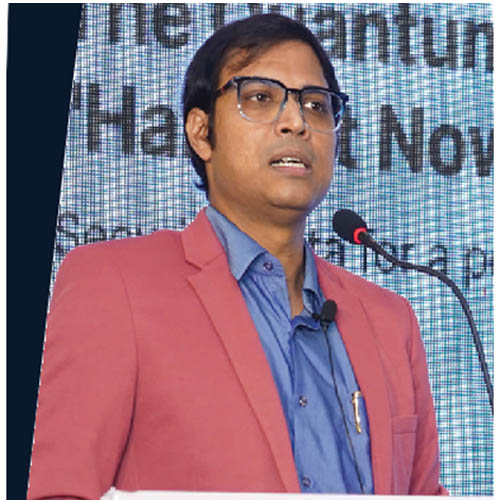 DR. ARINDAM SARKAR
CHIEF ARCHITECT - FACEOFF TECHNOLOGIES
“We are all talking about AI. Everyone is trying to design a system that should be AI based, but MIT says that 95% of Enterprise AI fails, with only 5% doing the right thing. So where lies the problem? Whenever we are considering any design, how do we decide how are we collecting and connecting the dataset? What about the poisonous data? Why the training and testing data ratio should be 80:20, 75:25, and not 60:40? We should also introspect and see whether we are using ZKP (zero knowledge proof), SMPC (Secure Multiparty Computation), differential privacy or for that matter post quantum cryptography. FaceOff has designed one engine called Adaptive Cognito engine (ACE). This ACE has 10 different avatars. In 10 different domains, ACE can serve you which is actually a multimodal AI engine. Now this Adaptive Cognito engine can give you different solutions. This multimodal trust- verification system fuses visual, audio, behavioral, and contextual intelligence to establish identity authenticity with cryptographic precision.
While legacy KYC and facial-recognition systems depend on probability models, FaceOff ACE delivers deterministic verification through neural cryptography and quantum-safe encryption. It analyzes more than eight physiological and behavioral signals — from deepfake detection and micro-expressions to voice sentiment, gaze tracking, and rPPG heart-rate — to generate a real-time Trust Score for every interaction. ACE doesn’t just authenticate — it learns, adapts, and detects anomalies before they escalate. ACE features an AI-orchestrated multi-cloud layer that autonomously reroutes workloads during outages — ensuring always-on verification across banking, telecom, and defense environments. Rooted in Indian innovation and designed for global scalability, FaceOff Technologies exemplifies the nation’s leadership in deep-tech identity intelligence. Its solutions — spanning FacePay, national e-KYC, border security, and enterprise onboarding — are redefining trust, transparency, and digital sovereignty in the era of synthetic intelligence.
As the world moves toward quantum computing, traditional encryption and conventional AI security models face an existential challenge: quantum systems can break today’s cryptographic standards in minutes, and adversarial attacks can manipulate machine learning systems with subtle digital distortions. RSA or ECC will not protect you anymore. So the tagline should be HAR BYTE MEIN BHAROSA. FaceOff’s Neuro-Quantum Safe technology represents the next evolution of secure intelligence—where neuroscience-inspired AI, post-quantum cryptography, and adversarial neural defense converge to protect global digital ecosystems from both present and future threats. At the core of this framework is Neuro-Cognitive Shielding, inspired by how the human brain performs pattern recognition, context reinforcement, and anomaly rejection. Instead of relying solely on static encryption or fixed decision boundaries, FaceOff’s system thinks like a human: it interprets data contextually, detects subtle manipulations, and adapts autonomously as attackers evolve.”
--------------------------------------------------------------------------------------------------------------------------------------------
Application performance is key to business success for any organization
 SUSHIL KUMAR PATIL
ACCLERATION SOLUTIONS ENGINEER- RIVERBED
“Today cybersecurity is paramount for any industry, especially the BFSI. The first word that comes in mind along with applications and adoption of digitalization and AI is cyber security. Apart from the cyber security aspect, applications which are there are becoming more and more smarter. So application acceleration as a solution is becoming very important. Riverbed is an organization which is two decade old, and is a leader in WAN Optimization or application acceleration solutions. We also have an observability portfolio. Along with the acceleration, the observability keeps an eye on your network, infrastructure and application and understands them. It monitors, collects all the data, and it ensures that all these data are logically put across into a report or an analytical format. As a result, the analyzers who are there can extract information out of it. In today's increasingly complex IT landscape organizations struggle to maintain peak performance across diverse environments. Application and data resilience is business is seen as resilience. Slow loading applications and network inefficiencies lead to frustrated users, lost productivity and business interruptions. With Riverbed Acceleration, your applications run faster, more reliably and securely, all through a comprehensive platform approach. The riverbed platform is dedicated to improving user experience by enabling IT to prevent, identify and resolve issues and to ensure applications run faster anywhere, over any network and on any device. Riverbed Acceleration enables business resiliency by delivering apps and data at peak performance. With Riverbed, IT teams can improve application performance, migrate to the cloud with confidence and deliver resilient data to the cloud and the edge to power AI.
SteelHead, our industry leading solution for over 20 years, optimizes application performance, reduces latency and transfers data securely at scale. This means faster response times delighted users and business results. Steelhead Cloud helps you overcome the latency and bandwidth challenges of cloud transitions, ensuring your apps run optimally in the cloud. The precision of your AI is only as good as your data. With SteelHead RS, you can move massive volumes of data between data center and edge efficiently and securely and with resilient networking at the edge, you can maintain local operations even when disconnected from the data center. The choice is yours – on premises, at the edge or in the Cloud without compromise, you can empower your IT teams to drive your business forward. So in essence, application performance governs your business performance. This is true for any sector – BFSI, manufacturing, or the healthcare sector.”
-----------------------------------------------------------------------------------------------------------------------------------------
WIITF: Witness Revenue Leak Roundtable
Many marketing teams hit lead targets but struggle to prove real revenue impact. Boards ask for ROI, while teams rely on activity metrics. Sales often blames “low-quality leads,” and pipeline gaps between MQL and closed deals remain unclear. A key issue is speed. Around 60% of pipeline is lost between initial signal and conversion, with most teams taking days to respond while top performers act within minutes.
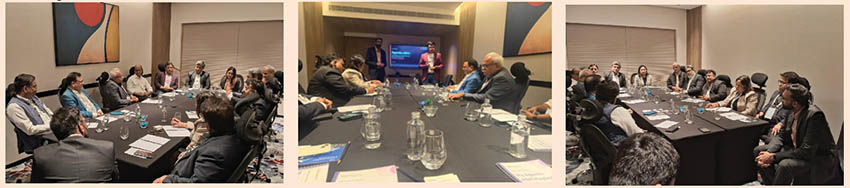 |
The exclusive session was organized by Wyzard, where Mr. Rahul Jain, Founder and CEO, addressed marketing leaders in the tech industry. Ms. Amita Bhowmick, Global Head of Alliances at Wyzard, spoke about how the industry is evolving and adapting.
This private roundtable brings together 15 senior marketing leaders for a focused 90-minute discussion. It covers practical ways to prove marketing’s revenue contribution, fix pipeline leaks, and improve attribution. Attendees gain a clear framework, real benchmarks, a 90-day action plan, and peer insights to drive measurable growth.
-------------------------------------------------------------------------------------------------------------------------------------------
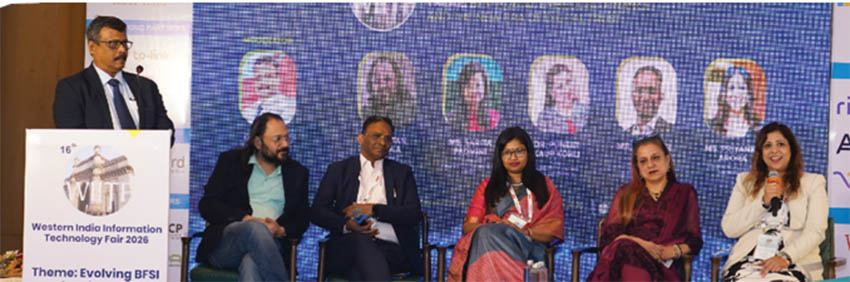 |
PANEL DISCUSSION : L to R: Dr. Deepak Kumar Sahu, Editor-in-Chief, VARINDIA; Dr. Pawan Chawla, CISO & DPPO, Tata AIA Life Insurance; Bhaskar Rao, CISO, Bharat Co-operative Bank (Mumbai) Ltd; Sarita Padmini, Senior Director, Protiviti India Member Firm; Dr. Puneet Kaur Kohli, CTIO, Generali Central Life Insurance; and Priyanka Arora, Solution Sales Lead, Microsoft |
BFSI 2026: AI, EMBEDDED FINANCE, AND THE NEW ERA OF DIGITAL TRUST
The panel discussion at the event, moderated by Dr. Deepak Kumar Sahu, Editor-in-Chief, VARINDIA, focused on the theme, “BFSI 2026: AI, Embedded Finance and the New Era of Digital Trust.” The session featured prominent industry leaders, including Dr. Pawan Chawla, CISO & DPPO, Tata AIA Life Insurance; Sarita Padmini, Senior Director, Protiviti India Member Firm; Priyanka Arora, Solution Sales Lead, Microsoft; Dr. Puneet Kaur Kohli, CTIO, Generali Central Life Insurance; and Bhaskar Rao, CISO, Bharat Co- operative Bank (Mumbai) Ltd.
The discussion explored how artificial intelligence is transforming the BFSI landscape through predictive fraud detection, hyperautomation, and enhanced customer experience. Panellists highlighted the growing role of embedded finance in integrating financial services into digital ecosystems, while stressing the need for robust digital trust. Key themes included real-time fraud management, data privacy, API security, and protecting human and machine identities, alongside the importance of responsible AI adoption and strong governance frameworks.
Dr. Pawan Chawla, CISO & DPPO, Tata AIA Life Insurance, emphasized that AI adoption in organizations is still evolving and must be approached cautiously, particularly from a security standpoint. While AI and hyperautomation hold promise for improving fraud detection, emerging risks such as deepfakes and AI-generated content misuse make detection increasingly complex. He noted that organizations must carefully evaluate, integrate, and control AI within their ecosystems before large-scale deployment. On digital twins, he stressed the need for a “privacy by design” approach, ensuring clear oversight of data collection, storage, and access. He highlighted the importance of least-privilege access, encryption, data classification, and strong governance, especially as data fiduciaries remain accountable for breaches under regulations. He concluded by advising a phased adoption strategy aligned with business needs, underscoring the dual focus on “AI for security and security for AI.”
Sarita Padmini, Senior Director, Protiviti India Member Firm, highlighted that while fraud detection has existed for years, the focus has now shifted from merely identifying fraud to improving the accuracy and efficiency of detection through AI-driven hyperautomation. She noted that earlier systems struggled with high false positives, but AI has significantly reduced these, enabling a more targeted approach to identifying critical fraud cases. She emphasized that banks must move beyond isolated deployments and adopt a holistic, ecosystem- wide security approach, even when solutions are hosted on private clouds or internal data centers. Stressing that data is a highly valuable asset, she called for strong data governance and “privacy by design,” with clear visibility into data flows. She reiterated that data fiduciaries remain ultimately accountable for protection, and highlighted eKYC and AML-driven fraud detection as key emerging use cases.
Priyanka Arora, Solution Sales Lead, Microsoft, noted that AI is transforming BFSI from a reactive to a predictive model, enabling real-time fraud detection and improved customer experience through hyperautomation. She explained that AI can instantly flag anomalies such as location mismatches and block suspicious transactions, significantly enhancing speed and scale. She added that leveraging customer data is key to improving experiences, but must be governed by responsible AI practices to ensure data security and trust. Arora also pointed to the growing importance of securing both human and machine identities, as organizations increasingly adopt AI- driven agentic architectures involving bots and automated systems handling sensitive data. Looking ahead, she underscored the role of AI in enabling hyper-personalisation, improving risk control, and supporting confident, data-driven decisions while ensuring safer digital transactions for customers.
Dr. Puneet Kaur Kohli, CTIO, Generali Central Life Insurance, said that while AI significantly enhances fraud detection, automation has long supported the process, with AI now improving precision and depth. In insurance, tools like video KYC help identify fraudulent claims, including AI-generated clones, though human oversight remains critical. She pointed out that AI can detect subtle indicators such as lip sync, behavioral patterns, and sentiment, aiding in validating authenticity. She also underlined AI’s role in hyper-personalisation, leveraging historical data to understand customer preferences, buying behavior, and risk profiles. On securing bots and APIs, she stressed rigorous pilot testing, correct parameter setting, and continuous evaluation of external integrations for compatibility. Kohli added that digital twins are gaining traction in BFSI for assisted financial planning, while AI is expected to drive automation, compliance, and budgeting efficiencies in the coming years.
Bhaskar Rao, CISO, Bharat Co-operative Bank (Mumbai) Ltd., stated that AI has become essential for banks, particularly in fraud risk management, as the industry shifts from a reactive to a proactive approach. He explained that with the rise in digital transactions, banks are deploying AI-based FRM solutions to detect fraud in real time, generate instant alerts, and automatically block suspicious transactions using predefined frameworks. He added that AI enables analysis of transaction behavior, geolocation patterns, and anomalies, which would be difficult to manage manually. Rao also highlighted the importance of “security by design” and “privacy by design,” especially given the extensive use of customer data and third-party APIs. He noted that banks are implementing API security and DLP solutions to monitor and control data flows, while AI also helps reduce false positives and efficiently manage large volumes of security alerts.
 |
 |
 |

See What’s Next in Tech With the Fast Forward Newsletter


Tweets From @varindiamag
Nothing to see here - yet
When they Tweet, their Tweets will show up here.


