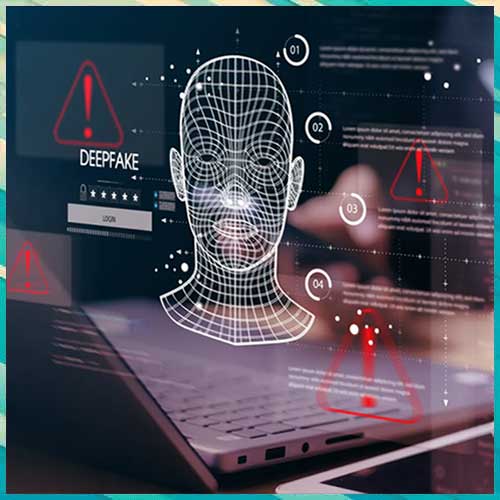
In 2025, synthetic media crossed a threshold. It stopped being an emerging threat and became an everyday operational reality. At Faceoff Technology, we watched this shift unfold in real time — and what we see ahead for 2026 is both sobering and, ultimately, hopeful.
The Death of Implicit Trust
The old cybersecurity maxim "trust but verify" has not merely flipped — it has shattered entirely. Because of the prevalence, advancement, and democratisation of deepfake creation and dissemination, if you cannot verify something instantly, you cannot trust it at all.
This is no longer a fringe concern. Real-time voice cloning was used in 2025 to impersonate executives and government officials at the highest levels, bypassing traditional verification methods with alarming ease. Job candidates were interviewed and hired under false pretences using deepfake overlays, forcing companies to physically fly out every new hire for in-person onboarding. KYC systems that global finance depends on are being defeated by synthetic identities, contributing to billions in losses in a single year.
By 2026, the question will no longer be "Is this content fake?" It will be "Can this interaction be proven real?" — asked not just by enterprises and governments, but by ordinary people in their daily lives.
The Problem Will Get Worse Before It Gets Better
The ease and falling cost of deepfake creation, coupled with increasingly realistic generative models, will deceive more people, faster, at greater scale. AI agents will amplify this further — enabling sophisticated one-to-many attacks with a fraction of the resources required even twelve months ago. Deepfake-driven scams in the crypto sector alone surged over 450% year-on-year, and voice phishing attacks in traditional finance rose sharply through 2025. These are not outlier incidents. They are the new baseline.
Crucially, even the most cautious and technically aware individuals are not immune. Internal stress-testing at Faceoff Technology has demonstrated that highly trained experts can be deceived by the latest generation of synthetic media. The uncanny valley, for all practical purposes, no longer exists as a reliable safety net.
Detection Is Keeping Pace — But Collaboration Is Everything
At Faceoff Technology, our detection models are built on a dual mandate: respond rapidly to new techniques seen in the wild, and anticipate where generative AI is heading before it arrives. The key insight driving our work is this — deepfakes are designed to fool humans, not well-trained machines. Even as generative outputs grow more convincing to human eyes and ears, robust, purpose-built detection systems can see through them.
But no single platform is sufficient on its own. Combating deepfakes at scale requires a layered, cross-industry approach — integrating detection capability into identity verification, contact centre infrastructure, voice security, financial onboarding, and content distribution systems simultaneously. This "defence-in-depth" model, borrowed from traditional cybersecurity practice, is the architecture the industry must embrace in 2026.
Regulatory momentum is also building. Based on our conversations with policymakers across multiple geographies, bipartisan appetite for proactive deepfake legislation is growing — and we believe meaningful frameworks will begin to take shape this year.
2026: A Growing-Pains Year With a Horizon Worth Fighting For
We do not believe this is a permanent condition. 2026 will be difficult — a year in which the full weight of the deepfake crisis lands on individuals, organisations, and institutions that have not yet built adequate resilience. The organisations that navigate it successfully will be those that invest now in detection, verification, and staff awareness rather than waiting for the crisis to arrive at their door.
At Faceoff Technology, our mission has always been straightforward: to give individuals and organisations the tools to trust what they see, hear, and experience online. That mission has never mattered more than it does right now.
The turning point is coming. We intend to help build it.

See What’s Next in Tech With the Fast Forward Newsletter






Tweets From @varindiamag
Nothing to see here - yet
When they Tweet, their Tweets will show up here.