

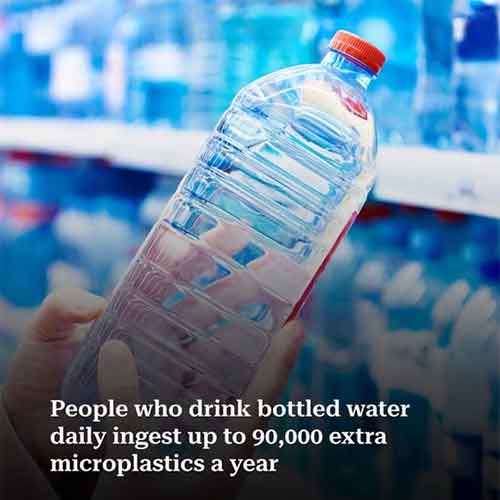
People who rely on bottled water every day may be ingesting significantly higher levels of microplastics than previously understood.
New research suggests that regular bottled water consumers take in up to 90,000 more microplastic particles annually compared to those who primarily drink tap or filtered water.
Microplastics are tiny plastic fragments—often invisible to the naked eye—that enter bottled water during production, packaging, and storage.
These particles can originate from the plastic bottles themselves, especially when exposed to heat, sunlight, or prolonged storage.
Over time, plastics degrade and shed microscopic fragments that mix into the water people drink daily.
Scientists warn that while the long-term health effects of microplastic ingestion are still being studied, early evidence raises concerns.
Microplastics have been found in human blood, lungs, and even placental tissue, suggesting they can travel through the body and potentially interfere with biological processes.
Some particles may also carry harmful chemicals or pathogens, compounding potential risks.
In contrast, studies show that tap water—particularly when filtered—generally contains fewer microplastics than bottled alternatives.
Experts recommend using high-quality water filters, reducing reliance on single-use plastics, and opting for glass or stainless-steel containers where possible.
Beyond personal health, the findings also highlight environmental implications.
Bottled water consumption contributes to plastic pollution, reinforcing the need for more sustainable drinking water choices at both individual and policy levels.

See What’s Next in Tech With the Fast Forward Newsletter









Tweets From @varindiamag
Nothing to see here - yet
When they Tweet, their Tweets will show up here.