
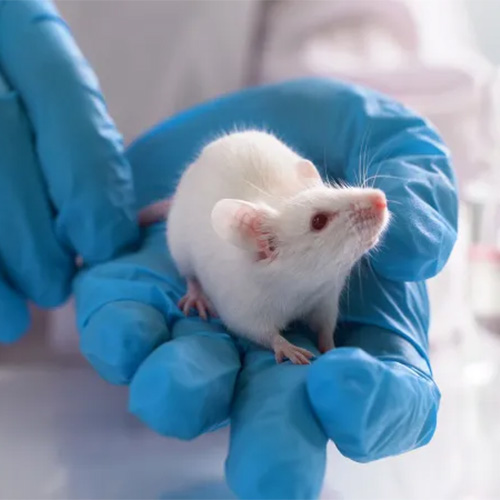
China has sent four mice—two male and two females—to its Tiangong space station aboard the Shenzhou-21 mission, marking its first-ever live mammal experiment in orbit. The week-long study aims to understand how microgravity and isolation affect mammalian behaviour, stress, adaptation, and reproduction.
Using advanced multidimensional video imaging, scientists will track the mice’s movements, eating patterns, and stress indicators while in space.
The experiment is expected to yield crucial insights into how small mammals, and by extension humans, adjust to the extreme conditions of space.
Researchers hope the findings will inform long-duration missions to the Moon and Mars by helping develop strategies to counteract the negative effects of space travel—such as muscle atrophy, bone density loss, and immune system weakening.
Beyond physiological data, this research will also help improve life-support systems essential for sustaining human life in extra-terrestrial environments, advancing China’s ambitions for interplanetary exploration and colonization.
By studying these tiny travellers, China takes an important step towards understanding the biological limits of life beyond Earth, strengthening its position in global space research and paving the way for healthier, longer human missions in deep space.

See What’s Next in Tech With the Fast Forward Newsletter







Tweets From @varindiamag
Nothing to see here - yet
When they Tweet, their Tweets will show up here.