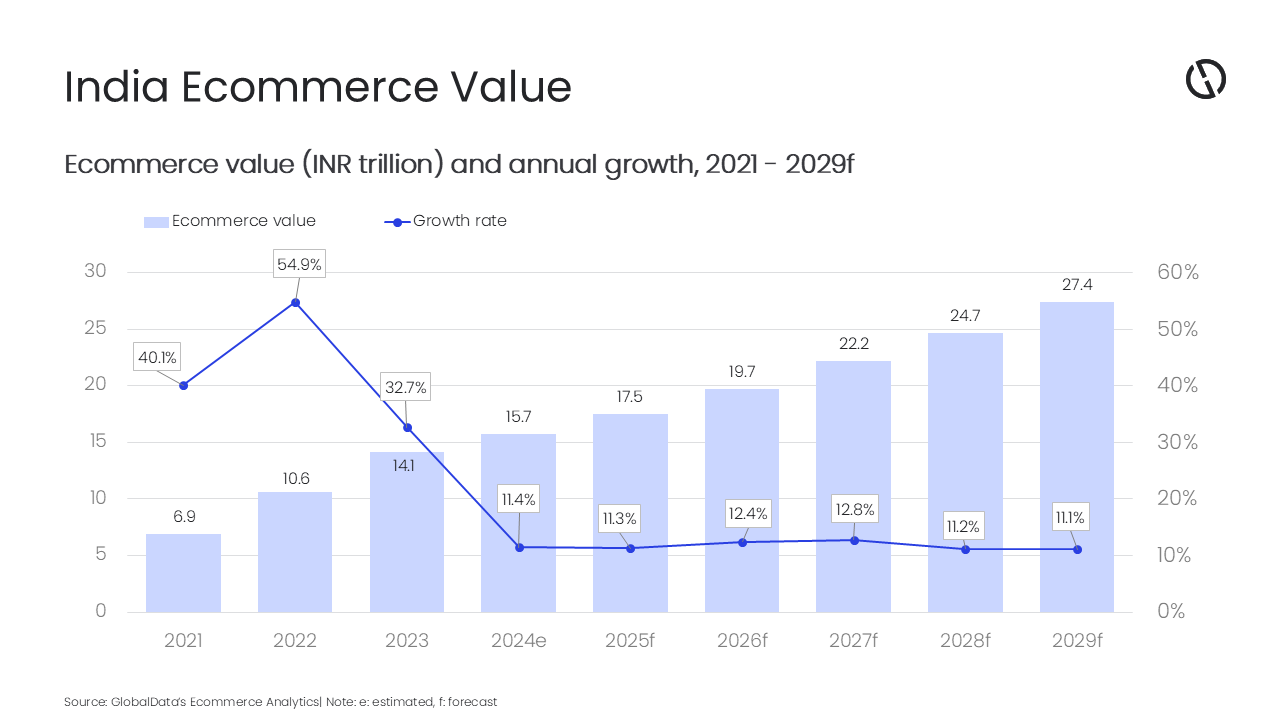
India’s e-commerce market is projected to grow 12.4% in 2026, reaching ₹19.7 trillion ($225.9 billion), according to GlobalData. This follows an estimated 11.3% expansion in 2025, when the market touched ₹17.5 trillion ($200.9 billion). The sector is forecast to climb further to ₹27.4 trillion ($314.5 billion) by 2029, underscoring sustained digital momentum.
The expansion reflects more than just consumer convenience. Rising internet and smartphone penetration, deeper digital payment adoption, and improved logistics infrastructure are reshaping retail behavior. As UPI, wallets, and secure payment gateways gain trust, friction in online transactions continues to decline—encouraging repeat purchases across urban and semi-urban markets.
AI-driven personalization is becoming a key differentiator. Platforms are increasingly using machine learning to refine product discovery, enable smarter comparisons, localize recommendations, and optimize pricing strategies. This shift toward intelligent commerce is improving conversion rates and customer retention.
Government policy has also played a catalytic role. GST rate reductions introduced in September 2025 across essentials, electronics, fashion, and wellness categories boosted discretionary spending. Campaigns such as the 100-day “GST Bachat Utsav,” supported by major retailers including Reliance Retail, Amazon, and Flipkart, improved price transparency and consumer confidence.
Meanwhile, Amazon’s collaboration with Startup India is expanding digital entrepreneurship, bringing more sellers into the ecosystem and widening product diversity.
India’s e-commerce growth signals a deeper transformation—where digital retail is no longer an alternative channel but a core pillar of the country’s consumption economy.
International and domestic companies are also entering the Indian e-commerce market to take advantage of the growth potential. For instance, in February 2025, Shein re-entered India via a partnership with Reliance Retail under the platform "Shein India Fast Fashion", initially operating in key cities. In the same month, Swedish furniture giant Ikea launched its e-commerce platform in Delhi-NCR region before launching its physical store in Delhi. In August 2024, international cosmetic brand Chanel launched its e-commerce platform in India.
In terms of payment tools, alternative methods are the preferred options, driven by the convenience and security of digital wallets and the strong preference for Unified Payments Interface (UPI)–based mobile payments among consumers and merchants. International brands such as Google Pay and Amazon Pay remain among the most widely used.
Credit cards are more preferred than debit cards due to the value-added benefits they offer, including interest-free instalment payment options, reward programs, cashback, and discounts. Their usage is set to increase further with banks offering discounts in partnership with online retailers.
Challa concludes: “India’s e-commerce market will continue its upward growth trajectory over the next few years with consumer appetite for online shopping showing no signs of waning. The country’s young, upwardly mobile demographic, growing popularity of alternative payment solutions, favorable regulatory initiatives, and technological advancements are converging to transform how Indians shop—creating new market opportunities, improving customer experiences, and attracting fresh investment.”

See What’s Next in Tech With the Fast Forward Newsletter







Tweets From @varindiamag
Nothing to see here - yet
When they Tweet, their Tweets will show up here.