

Securing Agentic AI: The Zero Trust Mandate
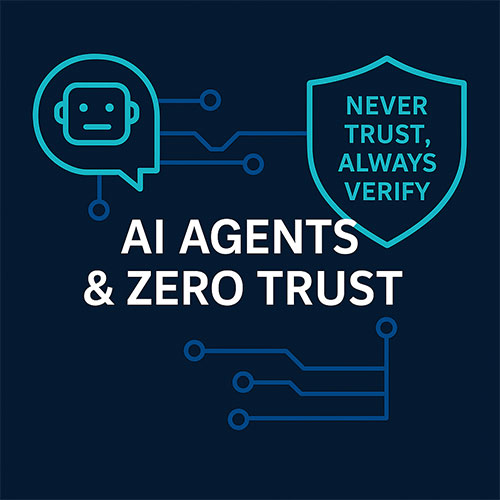
As enterprises accelerate the deployment of autonomous AI agents, a quiet but profound shift is occurring in corporate architecture: the explosion of non-human identities (NHIs). Unlike traditional user accounts, these machine identities—API keys, service tokens, and autonomous agent credentials—are growing at an exponential rate, often outpacing human identities by a factor of 10 to 1. This expansion is silently rewriting the attack surface, making traditional perimeter-based security obsolete. If Zero Trust is your roadmap, securing these digital workers is no longer a "future" objective; it is a critical, immediate necessity.
The Vulnerability of Autonomy
Agentic AI-systems capable of executing multi-step tasks without constant human intervention—introduces a unique risk profile. Because these agents operate with persistent permissions to access data, cloud infrastructure, and third-party SaaS applications, they become high-value targets.
● Credential Proliferation: Every agent requires credentials to function. Without robust management, these tokens often lack rotation, granular scope, or lifecycle monitoring.
● Privilege Creep: In the race to deploy, agents are frequently granted "broad" access permissions, allowing them to traverse networks far beyond their intended scope.
● The "Black Box" Problem: It is notoriously difficult to audit the internal decision-making path of an AI agent, making it nearly impossible to distinguish between legitimate automated behavior and a hijacked session.
The Zero Trust Imperative
In a Zero Trust environment, the philosophy is "never trust, always verify." For agentic AI, this must evolve into continuous, context-aware authorization. To secure these non-human entities, organizations must transition toward:
1. Identity-as-Code: Treat every agent identity like a piece of infrastructure. Implement automated lifecycle management that provisions, rotates, and revokes credentials in real-time, aligned with the agent’s task duration.
2. Granular Micro-Segmentation: Instead of giving an agent broad "admin" access, enforce the Principle of Least Privilege (PoLP). Use policy engines to ensure an agent can only interact with the specific data sets and APIs required for its current task.
3. Behavioral Baseline Monitoring: Traditional logging is insufficient for AI. Implement AI-driven security tools that monitor agent "behavior"—not just access. If an agent suddenly deviates from its established pattern of querying databases or communicating with endpoints, the system must automatically trigger a re-authentication or quarantine the process.
4. Hardware-Level Attestation: For the most critical agents, utilize secure enclaves or hardware-based identity modules to ensure that the code running the agent hasn't been tampered with or replaced by malicious actors.
The rise of agentic AI forces a reckoning with the fundamental assumptions of modern security. We are moving toward an era where the majority of enterprise "users" are, in fact, software agents. Securing this new frontier requires moving away from static password-and-access-list management toward a dynamic, automated identity ecosystem. Organizations that fail to bake Zero Trust into the fabric of their AI agent strategy will find themselves managing a massive, invisible attack surface. The goal is not to stifle AI innovation, but to wrap it in a framework of ironclad accountability, ensuring that our "digital coworkers" remain assets, not backdoors.

See What’s Next in Tech With the Fast Forward Newsletter








Tweets From @varindiamag
Nothing to see here - yet
When they Tweet, their Tweets will show up here.