Security
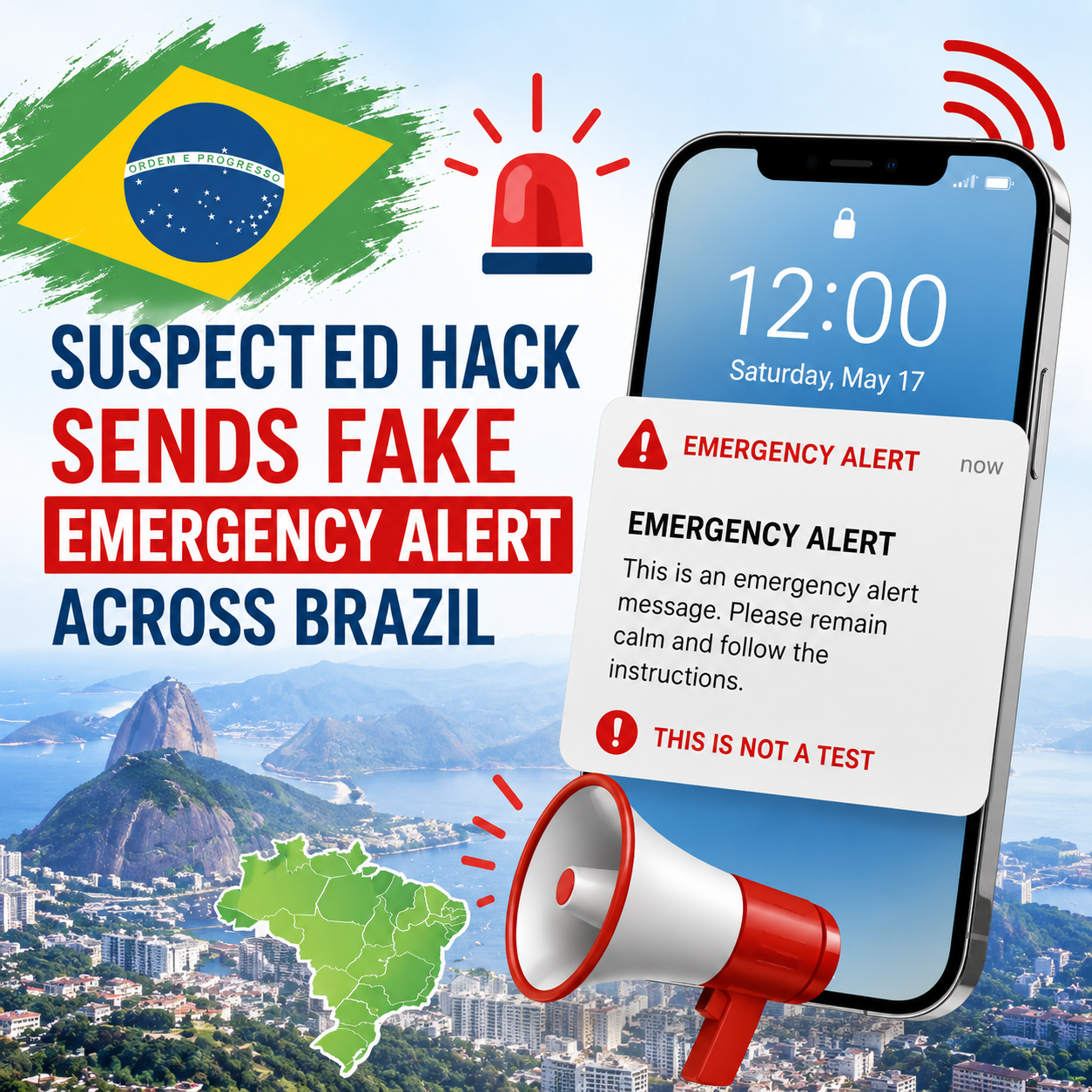
Brazilian authorities are investigating a suspected cyberattack after an unauthorized emergency alert was sent to mobile phones across several states, forcing the government to temporarily shut down the country's public warning system.
The alert, which appeared on phones early Saturday morning, was issued through Brazil's emergency notification platform and carried the word "misantropi4" — a variation of the Portuguese word for misanthropy, or hatred of humanity. The spelling style, which replaces letters with numbers, is commonly associated with hacker culture.
The message was transmitted as an "Extreme Alert," a notification category typically reserved for severe weather events and other major emergencies.
Authorities said the alert first appeared in the southern state of Paraná before spreading to users in major urban centers, including São Paulo and Rio de Janeiro.
In response, Brazil's National Civil Defense agency took its emergency alert platform offline at around 1:30 a.m. local time while investigators examined what officials believe was a hacker intrusion.
"The message sent was of the 'Extreme Alert' type and contained the word 'misanthropy.' It is probably a hacker attack," the agency said in a statement.
Government officials stressed that the alert did not originate from personnel within the National Civil Protection and Defense System and was triggered remotely by an unauthorized actor.
Civil defense agencies in São Paulo, Rio de Janeiro, and Paraná separately denied issuing the notification and said there were no natural disasters or public safety incidents that would have justified such an alert.
As a precaution, authorities temporarily disabled the Cellbroadcast platform used to distribute severe and extreme emergency warnings nationwide.
The incident has also raised questions about the alert's delivery method. While Cellbroadcast is typically used for emergency notifications, some residents reported receiving the message via SMS, suggesting the disruption may have affected multiple communication channels.
Officials in Rio de Janeiro attributed the incident to instability in the national alerting platform managed by the federal government, while authorities in Paraná similarly stated that the message was not generated by state systems.
The investigation is now focused on determining how the attacker gained access to the emergency notification infrastructure and whether any vulnerabilities exist within the platform used to distribute public safety alerts.
The incident highlights the growing cybersecurity risks facing critical public communication systems. Emergency alert networks are designed to deliver urgent information quickly during disasters, making them attractive targets for attackers seeking to spread misinformation, create confusion, or undermine public trust.
Brazilian authorities have not disclosed whether any suspects have been identified or when the emergency alert platform will be fully restored. For now, the government says the system will remain under review while forensic investigations continue.
The alert, which appeared on phones early Saturday morning, was issued through Brazil's emergency notification platform and carried the word "misantropi4" — a variation of the Portuguese word for misanthropy, or hatred of humanity. The spelling style, which replaces letters with numbers, is commonly associated with hacker culture.
The message was transmitted as an "Extreme Alert," a notification category typically reserved for severe weather events and other major emergencies.
Authorities said the alert first appeared in the southern state of Paraná before spreading to users in major urban centers, including São Paulo and Rio de Janeiro.
In response, Brazil's National Civil Defense agency took its emergency alert platform offline at around 1:30 a.m. local time while investigators examined what officials believe was a hacker intrusion.
"The message sent was of the 'Extreme Alert' type and contained the word 'misanthropy.' It is probably a hacker attack," the agency said in a statement.
Government officials stressed that the alert did not originate from personnel within the National Civil Protection and Defense System and was triggered remotely by an unauthorized actor.
Civil defense agencies in São Paulo, Rio de Janeiro, and Paraná separately denied issuing the notification and said there were no natural disasters or public safety incidents that would have justified such an alert.
As a precaution, authorities temporarily disabled the Cellbroadcast platform used to distribute severe and extreme emergency warnings nationwide.
The incident has also raised questions about the alert's delivery method. While Cellbroadcast is typically used for emergency notifications, some residents reported receiving the message via SMS, suggesting the disruption may have affected multiple communication channels.
Officials in Rio de Janeiro attributed the incident to instability in the national alerting platform managed by the federal government, while authorities in Paraná similarly stated that the message was not generated by state systems.
The investigation is now focused on determining how the attacker gained access to the emergency notification infrastructure and whether any vulnerabilities exist within the platform used to distribute public safety alerts.
The incident highlights the growing cybersecurity risks facing critical public communication systems. Emergency alert networks are designed to deliver urgent information quickly during disasters, making them attractive targets for attackers seeking to spread misinformation, create confusion, or undermine public trust.
Brazilian authorities have not disclosed whether any suspects have been identified or when the emergency alert platform will be fully restored. For now, the government says the system will remain under review while forensic investigations continue.

See What’s Next in Tech With the Fast Forward Newsletter






Tweets From @varindiamag
Nothing to see here - yet
When they Tweet, their Tweets will show up here.