MagazineCoverage
Taiwan has launched a major crackdown on alleged illegal recruitment of semiconductor and high-tech talent by Chinese companies, searching dozens of locations and questioning more than 100 people as it seeks to protect one of the island's most strategic industries.
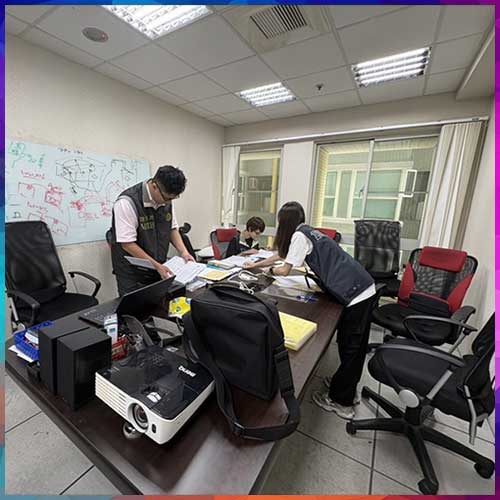
Taiwan's Investigation Bureau said it searched 64 locations and questioned 114 people between July 13 and Aug. 4 as part of coordinated investigations into 17 Chinese companies suspected of illegally recruiting Taiwanese engineers and operating unlicensed offices on the island.
The bureau said the investigation targeted companies believed to be attempting to recruit talent from Taiwan's semiconductor and high-technology sectors through unauthorized operations and concealed business structures.
Among the companies named were ACM Research Shanghai, Goke Microelectronics, Zhuhai CosMX Battery and Actions Technology.
According to the bureau, some Chinese companies allegedly disguised themselves as Taiwanese or foreign businesses, established offices without regulatory approval and deployed personnel to recruit local technology professionals.
"Countries around the world are devoting resources to AI research and development, and Taiwan has advantages built on a deep foundation," the bureau said in a statement. It added that the recruitment of core technology talent by Chinese firms could erode Taiwan's long-term competitive advantage in strategic industries.
Taiwan is home to many of the world's leading semiconductor companies and remains a critical supplier of advanced chips used in artificial intelligence, high-performance computing and consumer electronics.
The latest operation expands Taiwan's ongoing efforts to curb what authorities describe as illegal attempts by Chinese companies to gain access to semiconductor expertise. The government conducted similar investigations earlier this year as concerns over technology transfer and talent recruitment intensified.
Taiwanese law prohibits Chinese investment in parts of the semiconductor supply chain, including chip design, while requiring government approval for investment in other areas such as semiconductor packaging. Those restrictions have made it difficult for many Chinese semiconductor companies to establish operations on the island directly.
The investigation comes amid intensifying global competition for semiconductor talent as governments and technology companies increase investments in AI, advanced chip manufacturing and next-generation computing infrastructure. Beyond supply chains, access to experienced semiconductor engineers has become a strategic priority for countries seeking to strengthen domestic chip capabilities.
The crackdown also reflects broader technology tensions between Taiwan and China, where semiconductor expertise has become a key element of economic competitiveness and national security. Taiwanese authorities have increasingly treated the protection of engineering talent alongside intellectual property and manufacturing capacity as critical to maintaining the island's leadership in advanced semiconductor technologies.
Taiwan's Investigation Bureau said it searched 64 locations and questioned 114 people between July 13 and Aug. 4 as part of coordinated investigations into 17 Chinese companies suspected of illegally recruiting Taiwanese engineers and operating unlicensed offices on the island.
The bureau said the investigation targeted companies believed to be attempting to recruit talent from Taiwan's semiconductor and high-technology sectors through unauthorized operations and concealed business structures.
Among the companies named were ACM Research Shanghai, Goke Microelectronics, Zhuhai CosMX Battery and Actions Technology.
According to the bureau, some Chinese companies allegedly disguised themselves as Taiwanese or foreign businesses, established offices without regulatory approval and deployed personnel to recruit local technology professionals.
"Countries around the world are devoting resources to AI research and development, and Taiwan has advantages built on a deep foundation," the bureau said in a statement. It added that the recruitment of core technology talent by Chinese firms could erode Taiwan's long-term competitive advantage in strategic industries.
Taiwan is home to many of the world's leading semiconductor companies and remains a critical supplier of advanced chips used in artificial intelligence, high-performance computing and consumer electronics.
The latest operation expands Taiwan's ongoing efforts to curb what authorities describe as illegal attempts by Chinese companies to gain access to semiconductor expertise. The government conducted similar investigations earlier this year as concerns over technology transfer and talent recruitment intensified.
Taiwanese law prohibits Chinese investment in parts of the semiconductor supply chain, including chip design, while requiring government approval for investment in other areas such as semiconductor packaging. Those restrictions have made it difficult for many Chinese semiconductor companies to establish operations on the island directly.
The investigation comes amid intensifying global competition for semiconductor talent as governments and technology companies increase investments in AI, advanced chip manufacturing and next-generation computing infrastructure. Beyond supply chains, access to experienced semiconductor engineers has become a strategic priority for countries seeking to strengthen domestic chip capabilities.
The crackdown also reflects broader technology tensions between Taiwan and China, where semiconductor expertise has become a key element of economic competitiveness and national security. Taiwanese authorities have increasingly treated the protection of engineering talent alongside intellectual property and manufacturing capacity as critical to maintaining the island's leadership in advanced semiconductor technologies.

See What’s Next in Tech With the Fast Forward Newsletter
SECURITY






START - UP



Tweets From @varindiamag
Nothing to see here - yet
When they Tweet, their Tweets will show up here.