
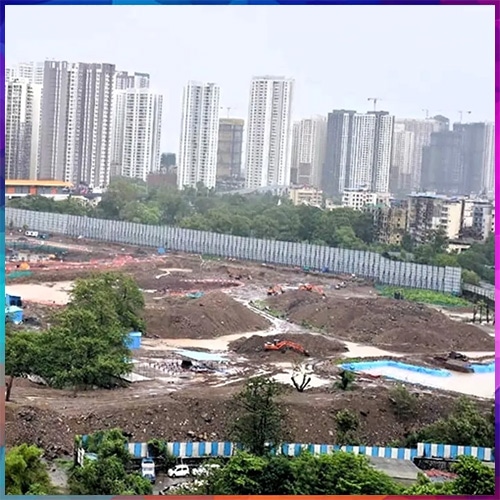
Amazon’s planned hyperscale data centre near Mumbai has become one of India’s most visible flashpoints in the clash between the AI boom and local communities. Residents of Thane’s Balkum area are protesting the facility over fears about water, electricity, noise and the felling of trees.
Key Highlights
- Amazon’s Thane (Balkum) data centre, on a 53-acre plot, is part of a $21 billion India AI push through 2030
- Over 1,000 residents, led by “Wake Up Thanekar,” demand relocation, citing water, power, noise and tree-loss fears
- Amazon counters with water-free cooling, a dedicated power supply and a 0.01 MLD water permit for staff use only
- Opposition leader Aaditya Thackeray has backed protesters, raising the political stakes
The project is a cornerstone of Amazon’s planned $21 billion investment in India’s AI infrastructure by 2030. Built on a 53-acre plot by Amazon Web Services, it is among the largest such facilities in the Mumbai Metropolitan Region, surrounded by dense housing complexes, schools and hospitals.
More than 1,000 residents say the project advanced without meaningful consultation. Organised under the group “Wake Up Thanekar,” they have demanded the facility be relocated, warning that an already strained, hyper-urbanised area cannot absorb further pressure on power, water and traffic.
Amazon and local authorities have pushed back firmly. The company says the centre will use water-free cooling, draw power from a dedicated supply separate from homes, and deploy noise-mitigation measures. It insists its approved water permit is just 0.01 million litres a day, for employee use only, and that all approvals are in place.
The dispute has gained political traction, with opposition leader Aaditya Thackeray joining protesters and pledging relocation if his party returns to power. It mirrors parallel resistance to Google’s project in Andhra Pradesh and reflects a global pattern as AI’s thirst for resources collides with neighbourhoods.
Consequences for Amazon’s roadmap
- Possible delays and cost overruns if approvals are reviewed or the site is contested further
- Pressure to adopt community consultation and transparency as standard for future Indian sites
- Reputational risk that could shadow Amazon’s broader AWS expansion across the country
- A likely precedent-setting case for how global tech navigates local resistance to AI infrastructure in India
For Amazon, the standoff is more than a local headache. It signals reputational and regulatory risk that could ripple across its India roadmap, inviting tighter scrutiny, slower approvals and demands for community buy-in on future sites.
Ultimately, how Amazon resolves Thane may set the template for whether India’s AI ambitions can expand without alienating the citizens living alongside them.