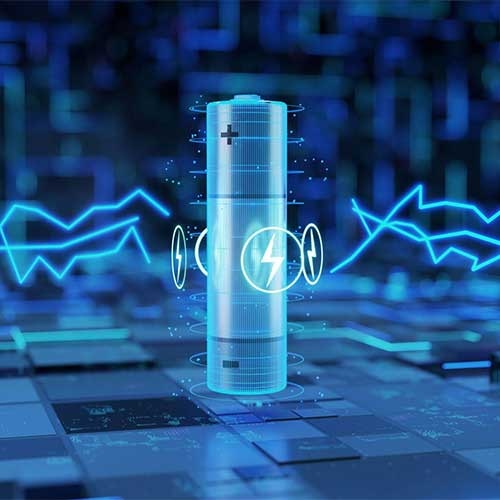
Scientists at the New Jersey Institute of Technology (NJIT) have used generative AI to discover five new porous transition-metal oxide structures that could serve as viable, sustainable alternatives to lithium-ion batteries. These materials are capable of transporting magnesium, calcium, aluminum, or zinc ions—multivalent ions that carry two or three charges—offering the potential for significantly greater energy storage than traditional monovalent lithium ions.
Conventional battery research requires testing millions of candidate materials in the lab, a time-consuming and impractical process. To overcome this, the NJIT team combined a Crystal Diffusion Variational Autoencoder (CDVAE)with a fine-tuned large language model. This AI-driven method rapidly explored vast chemical spaces, identifying thermodynamically stable candidates. The researchers then validated their findings through quantum-mechanical simulations and stability assessments.