Imagine a customer withdrawing consent from an enterprise with a single click. While the request may appear simple, executing it across hundreds of applications, databases, cloud environments, analytics platforms and third-party systems presents a formidable challenge. This is the new reality confronting Indian enterprises under the Digital Personal Data Protection (DPDP) Act.
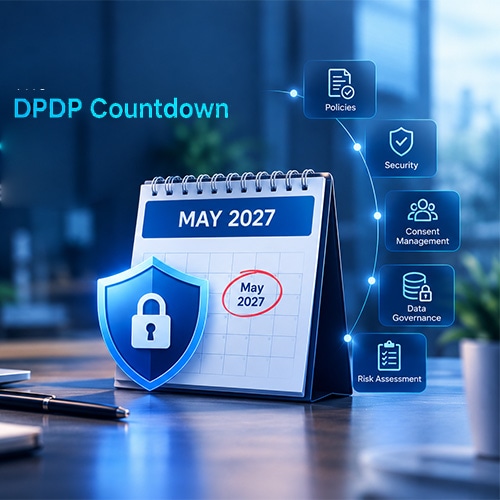
As India operationalizes its Consent Manager framework, enterprises must rethink their approach to data privacy, cybersecurity and governance. With major compliance obligations taking effect in May 2027, the challenge is shifting from collecting consent to demonstrating that every consent-related action has been effectively implemented.
Registered Consent Managers will empower individuals to give, review, manage and withdraw consent through interoperable platforms. However, the ultimate responsibility for obtaining valid consent and demonstrating compliance remains with the Data Fiduciary, irrespective of whether customers use a registered Consent Manager.
The fundamental question confronting CIOs is no longer whether consent has been collected, but whether it can be proven. Enterprises must establish who provided consent, when it was granted, for what purpose and how personal data was subsequently processed. The guiding principle is simple: Know it, Control it, Prove it.
The complexity intensifies when customers withdraw consent or request data erasure. While collecting consent is largely a front-end exercise, withdrawal and deletion extend deep into enterprise infrastructure, including data lakes, backups, SaaS applications and third-party ecosystems.
Enterprises will increasingly need centralized consent management, purpose-based data tagging, automated policy enforcement, digitally signed withdrawal receipts and tamper-resistant audit trails. These capabilities can help demonstrate that personal data is processed in accordance with applicable consent and regulatory requirements.
Governance must also extend beyond legal and privacy departments. CIOs, CTOs, CISOs and business leaders must collectively establish clear accountability. Designating a senior executive to coordinate enterprise-wide data protection could help eliminate fragmented ownership and strengthen operational compliance.
Cybersecurity readiness represents another critical dimension. A ransomware attack that renders personal data inaccessible can constitute a personal data breach even without data theft. Organizations must therefore connect security controls, incident investigation, breach response and auditable evidence.
The rapid adoption of AI further complicates the privacy landscape. Enterprises must ensure that personal data used in AI models, analytics pipelines and automated decision-making systems is processed lawfully, with appropriate safeguards, purpose limitations and governance mechanisms embedded from the outset.
The evolving DPDP framework is also creating significant opportunities for technology providers, VARs, system integrators and managed service providers. Demand for consent management, data discovery, automated erasure, privacy engineering, compliance auditing and AI governance solutions could reshape India's enterprise technology ecosystem.
Ultimately, DPDP readiness is not about purchasing software or maintaining compliance documentation. It is about building a culture of accountability, supported by technology that makes privacy measurable, enforceable and demonstrable. The future of enterprise data governance will belong to organizations that can not only protect personal data but also prove that they have protected it.