India's remarkable chess revolution has produced another extraordinary moment. Fifteen-year-old Delhi player Vandan Alankar Sawai defeated world No. 1 Magnus Carlsen, demonstrating how a new generation of Indian players is increasingly capable of challenging the world's established chess elite.
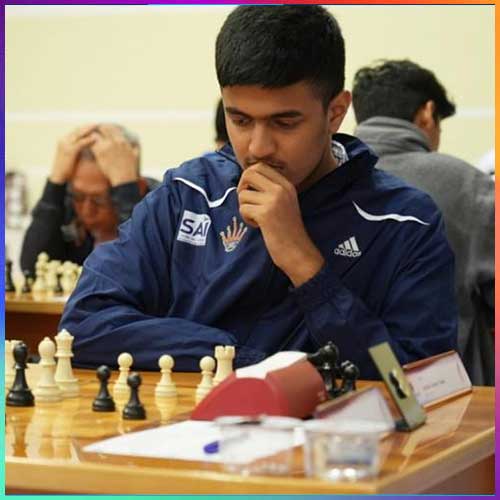
The victory came during Chess.com's Titled Tuesday online blitz tournament. Vandan, a Candidate Master with a classical rating of 2,288, faced Carlsen—rated 2,823—and defeated the Norwegian superstar in 50 moves.
What makes the story remarkable is Vandan's reaction. There was no major celebration. After completing his games, the Class X student simply went to bed without telling his parents that he had beaten arguably the greatest chess player of his generation.
His father discovered the result while checking Vandan's Chess.com profile. Even his coach learned about the victory only the following day. The teenager himself initially wondered whether Carlsen's decisive mistake had resulted from a mouse slip.
Behind the modest reaction lies a much bigger story about India's rapidly expanding chess ecosystem. Young Indian players are receiving professional coaching earlier, competing internationally and gaining constant exposure to elite opponents through online chess platforms.
The result also demonstrates how digital platforms are democratizing competition. Geography matters far less when a teenager sitting in Delhi can be paired directly against the world's highest-rated player and test his skills in real time.
Competition is consequently becoming tougher for established grandmasters. India's pipeline already includes internationally successful young players, and another generation is developing behind them. Vandan has been playing chess since the age of eight and has trained under professional coaches for several years.
The psychological barrier is also disappearing. Young players increasingly enter games against famous grandmasters with relatively little to lose. That freedom can make them aggressive, unpredictable and dangerous—particularly in rapid and blitz formats where a single mistake can completely change the game.
Vandan's immediate ambition is to become an International Master and subsequently a Grandmaster. Interestingly, he has not yet decided whether chess will ultimately become his full-time profession, reflecting just how young this emerging talent remains.
One victory does not establish a new champion, but it sends a powerful message. India is no longer producing occasional chess stars—it is developing a deep pipeline of fearless young competitors. For the world's established players, the next challenger may increasingly be an Indian teenager they have barely heard of.