
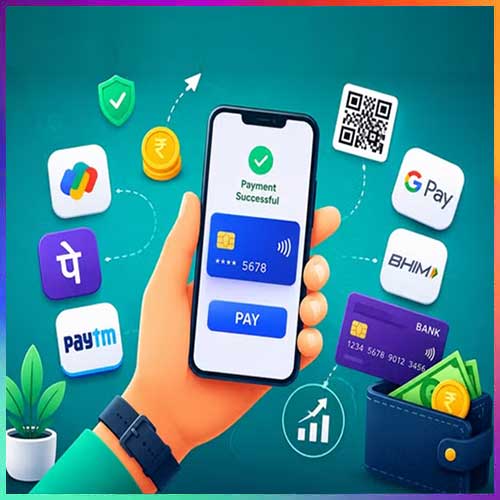
India led global digital wallet app downloads in 2025 with over 440 million installs, driven by UPI adoption and mobile-first users, even as the market shifts from rapid onboarding to deeper engagement and transaction-led growth.
India has reinforced its dominance in the global digital payments ecosystem by emerging as the largest market for digital wallet app downloads in calendar year 2025. According to Sensor Tower’s App Performance Insights: Digital Payments and Mobile Wallets report, the country accounted for more than 440 million downloads, outpacing all other global markets.
The strong performance has also elevated Indian fintech platforms on the global stage, with PhonePe emerging as the most downloaded digital wallet app worldwide in 2025. Government-backed BHIM also secured a position among the top five most downloaded wallet apps in India, reflecting continued adoption of digital payment infrastructure.
India maintains global leadership in wallet adoption
The report highlights that digital wallets and peer-to-peer payment applications collectively surpassed 1.8 billion downloads globally in 2025, registering a modest 3 per cent year-on-year growth. India alone contributed nearly a quarter of this volume, reinforcing its position as the leading driver of global wallet adoption.
However, the growth trajectory shows signs of moderation. Downloads in India declined by 12 per cent in 2025 compared to the previous year, following a strong 14 per cent surge in 2024. This indicates a natural stabilisation phase after years of rapid user acquisition.
Across the Asia-Pacific region, a similar pattern has emerged—rapid expansion followed by slower but steadier growth. Analysts suggest that high-adoption markets like India are transitioning from onboarding new users to improving engagement and monetisation within existing user bases.
UPI remains the backbone of digital payments
India’s digital wallet ecosystem continues to be driven by the rapid expansion of the Unified Payments Interface (UPI), which has become the foundation of the country’s digital transaction infrastructure. Unlike many global markets where wallets operate independently, Indian apps largely function as interfaces built on top of UPI.
A separate industry report indicates that UPI processed 228.5 billion transactions in 2025, marking a 33 per cent year-on-year increase, with total transaction value reaching ₹299.7 trillion. This highlights not only widespread adoption but also increasing usage intensity among existing users.
Despite slower app download growth, transaction volumes and values continue to rise, indicating that users are engaging more frequently and across a wider range of use cases, including retail payments, peer-to-peer transfers, and services.
From app downloads to daily financial behaviour
India’s digital wallet usage is increasingly defined by habit rather than occasional transactions. Sensor Tower data shows users in India open wallet apps nearly five times per day on average, significantly higher than global peers such as Indonesia and the United States.
This frequent engagement underscores a structural shift in behaviour, where digital payments have become integrated into everyday life. In contrast, traditional banking apps are used less frequently, reinforcing the centrality of wallets in daily financial activity.
The user base is also notably young, with nearly 70 per cent of users falling in the 18–34 age group. This demographic trend is shaping adoption patterns, with younger users more inclined toward mobile-first financial services, embedded credit, and digital commerce ecosystems.
Competitive landscape and market concentration
The Indian wallet market remains highly concentrated, with Google Pay and PhonePe together accounting for over 80 per cent of UPI transactions in early 2025. Paytm continues to maintain a strong presence, followed by emerging players and niche fintech apps.
While new entrants struggle to gain share, the ecosystem is evolving into a broader “super app” model, where payments are integrated with credit, insurance, investments, and commerce services.
Even as competition intensifies, India’s digital wallet market is expected to expand significantly, supported by increasing financial digitisation, infrastructure maturity, and continued innovation in mobile-first financial services.

See What’s Next in Tech With the Fast Forward Newsletter









Tweets From @varindiamag
Nothing to see here - yet
When they Tweet, their Tweets will show up here.