The 24th edition of the VARINDIA Infotech Forum Leadership Summit 2025 concluded on a high note, reaffirming its position as one of India’s leading platforms for thought leadership, innovation, and industry recognition across the ICT ecosystem. Organized by Kalinga Digital Media Private Limited, the summit brought together an eminent gathering of technology leaders, including CIOs, CTOs, CISOs, policymakers, industry veterans, marketing leaders, and senior executives representing the entire ICT value chain.
Held under the theme “Growth through Alliances in a Transformation Era,” the summit explored the intersection of digital transformation, responsible technology adoption, and ethical innovation, highlighting their collective role in shaping a resilient and future-ready digital economy.
The day-long summit featured a thoughtfully curated agenda spanning morning, afternoon, and evening sessions. Attendees engaged in insightful keynote addresses, thought-provoking panel discussions, exclusive research report launches, prestigious award ceremonies recognizing the industry's most trusted companies and distinguished CIOs and finally culminating in the grand unveiling of the annual Brand Book coffee table publication.
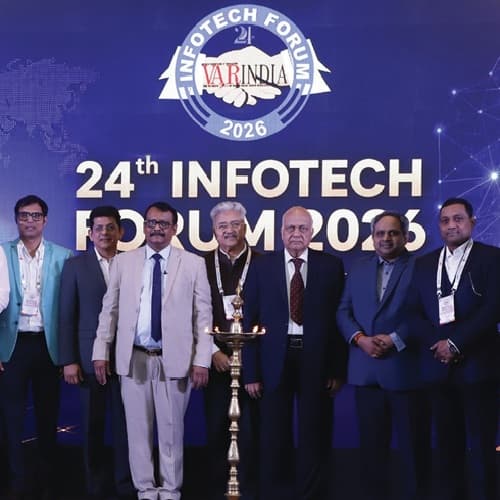
The proceedings began with a ceremonial welcome, marked by the traditional lighting of the lamp, in the presence of dignitaries like Savitur Prasad, Member- High Powered Enquiry Committee- Delhi Government; Prof. N K Goyal, President- CMAI Association Of India; Nitin Mehta, Digital Risk Leader, EY India (Knowledge Partner); Dr. Pavan Duggal, Chairman- International Commission On Cyber Security Law; Dr. Arindam Sarkar, Chief Architect- FaceOff Technologies; Mr. Mylaraiah J N, V.P., Enterprise Business Unit - CommScope, India & SAARC; Lt. Col. (Dr.) Santosh Khadsare (Retd), CEO-I defence Innovations Pvt. Ltd.; Mr. V V Jacob, Chief General Manager-IT- Malayala Manorama Company Pvt Ltd; Dr. Harsha Thennarasu, Founder & CISO-HKIT Security Solutions; Pankaj Mittal, Founder & CEO- Digizen Consulting; Dr. Deepak Kumar Sahu, Editor-in-Chief, VARINDIA and S Mohini Ratna, Editor- VARINDIA.
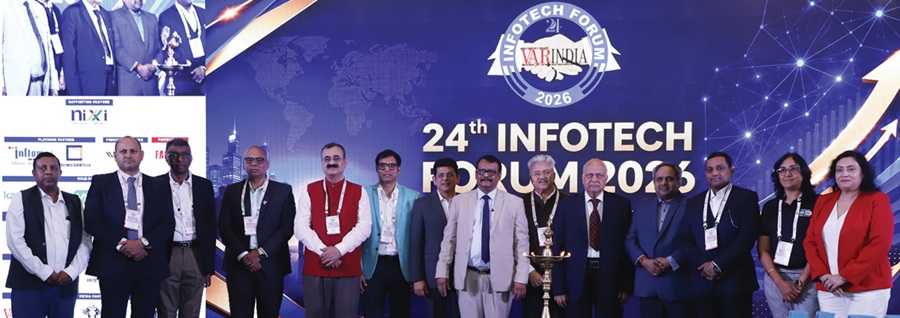 |
| (L-R): Mr. Pankaj Mittal, Founder & CEO- Digizen Consulting; Dr. Prince Joseph, Global CIO- SFO Technologies; Mr. V V Jacob, Chief General Manager-IT-Malayala Manorama Company Pvt Ltd; Lt. Col. (Dr.) Santosh Khadsare (Retd), CEO-I defence Innovations Pvt. Ltd.; Dr. Pavan Duggal, Chairman-International Commission On Cyber Security Law ; Dr. Arindam Sarkar, Chief Architect- FaceOff Technologies ; Mr. Nitin Mehta, Digital Risk Leader, EY India ;Dr. Deepak Kumar Sahu, Editor-in-Chief, VARINDIA; Mr. Savitur Prasad, Member- High Powered Enquiry Committee- Delhi Government ; Prof. N K Goyal, President- CMAI Association Of India ; Mr. Mylaraiah J N, V.P., Enterprise Business Unit - CommScope, India & SAARC ; Dr. Harsha Thennarasu, Founder & CISO-HKIT Security Solutions; Ms. Preeti Kela, Director- Net Protector Anti Virus; Ms. S Mohini Ratna, Editor- VARINDIA |
The opening address was delivered by Dr. Deepak Kumar Sahu, Editor-in-Chief of VARINDIA, in which he highlighted the current position of where India stands today in terms of IT spending vis-à-vis the global scenario. “India's IT industry is a $250 billion global powerhouse — and yet our domestic IT spending is just one percent of global technology expenditure. For a nation of our scale and ambition, that is not a statistic. That is a wake-up call. Global compute spending stands at $250 billion a year — a $1 trillion opportunity over four years. If India moves decisively into this space, the dividends go well beyond technology. We are talking about transforming healthcare, education, agriculture, and climate resilience, all riding on the renewable energy infrastructure we are already building.”
The welcome address was delivered by Savitur Prasad, Member- High Powered Enquiry Committee- Delhi Government, in which he emphasized upon governance, accountability, and institutional excellence.
Following this, Nitin Mehta, Digital Risk Leader, EY spoke on the current data trends in India and how this throws great opportunities for the private sector to work collectively with the government.
Dr. Pavan Duggal, Chairman- International Commission On Cyber Security Law outlined his deep insights into cyber law, cybersecurity, AI regulation, and the evolving legal landscape through a powerful presentation that gave the audience a valuable perspective on how to navigate the digital future responsibly.
The event progressed with a series of engaging corporate presentations, featuring insightful and thought-provoking sessions delivered by leading industry experts. Anuj Sharma, Presales Manager- Kaspersky shared his perspectives on today's evolving cyber threat landscape and the importance of proactive security, advanced threat protection, and cyber resilience.
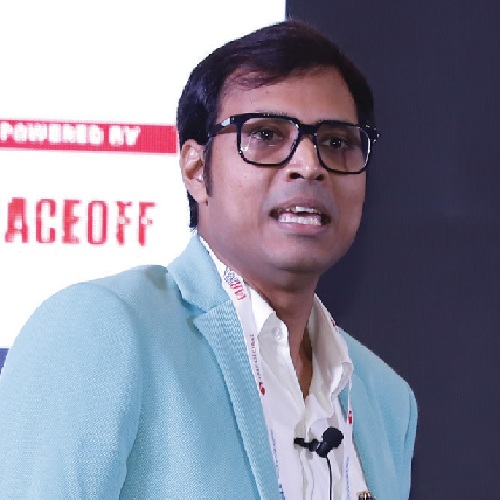
Through his presentation, Dr. Arindam Sarkar, Chief Architect- FaceOff Technologies, while giving a glimpse of how FaceOff works, also focused on how identity intelligence, fraud prevention and digital trust converge in the synthetic intelligence era.
Ankur Patial, Sr. Solutions Architect- VARONIS enlightened the audience on AI ethics, and how it is the need of the hour to take a safe, secure, humane, and environmentally friendly approach to AI.
The morning session concluded with a vibrant panel discussion moderated by Dr. Deepak Kumar Sahu, Editor-in-Chief, VARINDIA. Titled ‘From Digital India to AI India: The Next Leap’, the esteemed CIOs who joined the discussion as panelists include - Vijay Sethi, Chairman-Mentorkart; Golok Kumar Simli, President - Technology & Innovation- BLS International; Sujoy Brahmachari, CIO & CISO- Rosmerta Technologies Ltd.; Bharat B Anand, Global CITO- Contec Global; Lt Col (Dr) Santosh Khadsare (Retd), CEO-I defence Innovations Pvt. Ltd.; Dr. Prince Joseph, Global CIO- SFO Technologies and V V Jacob, Chief General Manager-IT, Malayala Manorama Company Pvt Ltd.
AFTERNOON SESSION
The afternoon session started with felicitating the “Most Promising VARs in India”, who have been recognized for their differentiation, excellence, and unwavering customer focus.
Jagbir Singh, Manager, Sales Engineering (Pre-Sales)- Check Point Software next came up on stage to share his perspectives on today's evolving cybersecurity landscape and best practices.
Sumeet Kela, Director at Net Protector AntiVirus through his presentation delved into the security offerings that his company offers, while also sharing his perspective on his research done in malware is helping drive innovations in endpoint security, ransomware prevention, and data protection.
Gaurav Saxena, Director – Channels & Alliances- VEEAM Software gave his presentation on The Convergence Era: Unified Platform; Winning with Alliances, in which he shared his insights on data protection, cyber resilience, and the importance of a strong partner ecosystem.
A panel discussion themed “Post Quantum Security: The Race Against Time” was moderated by Gyana Swain, Consulting, Editor, VARINDIA. The panelists who joined the session were Rohit Ponnapalli, CISO- Envoy Global; Dr. Rakshit Tandon, Founder- R T Cyber Academy; Sarita Padmini,Sr. DirectorProtiviti India; Jaspreet Singh, Partner and GCC Industry Leader- Grant Thornton Bharat; Dr. Harsha Thennarasu, Founder & CISO-HKIT Security Solutions and Garvit Sharma, CTO- Athenian Tech.
The third and the last panel discussion for the day was moderated by S Mohini Ratna, Editor-VARINDIA and the theme of the discussion was "Geopolitics Reshaping Marketing Budgets". The panelists for the discussion included Ankesh Kumar, Chief Marketing Officer- Ingram Micro India Pvt. Ltd.; Pranab Mohanty, Chief Business Officer- Data Safeguard Inc.; Dr. Mithilesh Singh, Marketing Head- Commscope India Pvt Ltd. Debraj Dam, Chief of VAD, Supertron VAD Venture and Sanjay Chaudhary, Head of Marketing Enterprise, SAP India.
VARINDIA then announced the Most Influential CMO's in India 2026-27 awards. The awards felicitated the marketing leaders and CMOs who are spearheading digital transformation, highlighting their efforts in redefining brand engagement and customer experience in the digital age.
This was followed by the felicitation of Eminent CIOs, CTOs, and CISOs from across industries for their role in driving enterprise transformation and digital excellence and guided their organisations through complexity and disruption.
EVENING SESSION
The evening session commenced with a welcome address by S. Mohini Ratna, Editor, VARINDIA, who summarized the key highlights of the day while reflecting on the central theme that shaped the summit's discussions and deliberations. “Every conversation today points to the same truth - closing the response gap is the defining cybersecurity challenge of our time. That is where the future of cybersecurity lives — intelligent systems are acting at machine speed, because that is the only speed that matters.”
The evening session featured inspiring speeches and insightful presentations by distinguished industry leaders whose vision and expertise continue to shape the future of the industry. Among them are eminent policymakers and influential thought leaders who play a pivotal role in formulating policies and driving India's digital and technology agenda.
While Arun Kumar Sharma, Director- Cypress Solutions Pvt. Ltd. presented his ideas on Techfluential Edge and the Way Forward through an insightful presentation, Atul Kumar, Director-Global Trade, Cyber Diplomacy, Government Initiative- DSCI offered his perspectives on cyber diplomacy, global trade, and building trusted digital ecosystems.
Dr. Gulshan Rai, India's first National Cyber Security Coordinator, Government of India delivered the keynote address for the evening in which he shared his visionary perspectives on cybersecurity, digital resilience, and India's evolving cyber ecosystem.
In his address to the audience, Dr. Amar Patnaik, Former Member of Parliament, Rajya Sabha, shared inspiring insights on data security, privacy, and the transformative potential of quantum innovation.
The next speaker was Prof. Charru Malhotra, Professor, Indian Institute of Public Administration (IIPA), who has made significant contributions to Digital India. She gave her presentation on Responsible AI, digital governance, cybersecurity, and data privacy.
KEY HIGHLIGHTS OF THE EVENT
• A significant highlight of the evening session was the grand launch of the 15th edition of the Brand Book 2026. As a trusted industry resource, the Brand Book offers in- depth white papers, CXO interviews, and expert analysis of evolving market dynamics.
• Dr. Ajai Chowdhry, Co-Founder of HCL was presented with the Lifetime Achievement Award 2026 to, in recognition of his extraordinary vision, pioneering leadership, and an enduring legacy that shaped the Indian technology industry.
• The signing of an MoU between FaceOff Technologies and NACOF (National Federation of Farmers Procurement, Processing and Retailing Cooperative of India Ltd.) was yet another defining moment. Ram Iqbal Singh, Founder & Chairman, NACOF, Dr. Deepak Kumar Sahu, Founder & CEO, FaceOff Technologies, and Dr. Arindam Sarkar, Chief Architect, FaceOff Technologies participated in the signing ceremony.
• VARINDIA also took the opportunity to recognize the Most Promising VARs in India, Eminent CIOs of India, Most Influential CMOs in India 2026-27, Most Promising VARs in India25, Most Trusted Companies followed by 50 Most Admired Brands of India’s ICT ecosystem. These organizations were selected through rigorous evaluation of brand performance, market reputation, and customer trust.
-------------------------------------------------------------------------------------------------------------------------------------------
Rethinking Imperialism in a Technology-Driven Era: The rise of Digital Dependence
 SAVITUR PRASAD,
MEMBER- HIGH POWERED ENQUIRY COMMITTEE,
DELHI GOVERNMENT
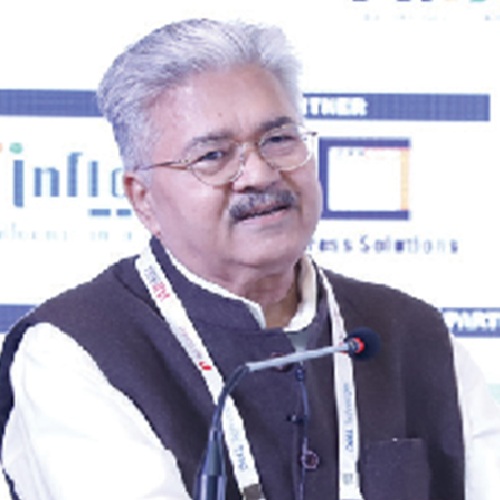
The future is increasingly uncertain, making it difficult to predict what the next few years may hold. I would like to take you back to the history - we all have read Karl Marx, and he had predicted long back third world imperialism. This concept offers an interesting lens through which to view today's global landscape. Rather than territorial occupation, as witnessed in the colonial era, the argument is that influence is now exercised through the global reach of corporations headquartered in economically advanced nations. In expanding their markets, these enterprises can create new forms of economic and technological dependence. Marx had rightfully argued
that as capitalism will expand, it will inherently create a global system of exploitation where core industrial nations will extract surplus and resources from the less developed, colonized, or "Third World" peripheries.
In today’s time, this holds true for technologically less developed countries that are completely dependent on countries both economically and technologically strong. Talking about India, our contribution in technology is still comparatively less. While the country has made significant strides in technology, there remains considerable scope to strengthen its indigenous innovation and technological leadership to reduce dependence and enhance global competitiveness. The country continues to rely heavily on imports and foreign technology in several strategic domains, including semiconductor manufacturing, advanced chip design, high-performance computing, specialized electronics, and certain cybersecurity and AI platforms. Reducing this dependence requires sustained investment in research and development, stronger collaboration between academia, industry, and government, and the creation of a robust ecosystem that nurtures deep-tech startups and product innovation.
--------------------------------------------------------------------------------------------------------------------------------------------
As Deepfakes grow more convincing, Quantum Security becomes a Strategic Priority
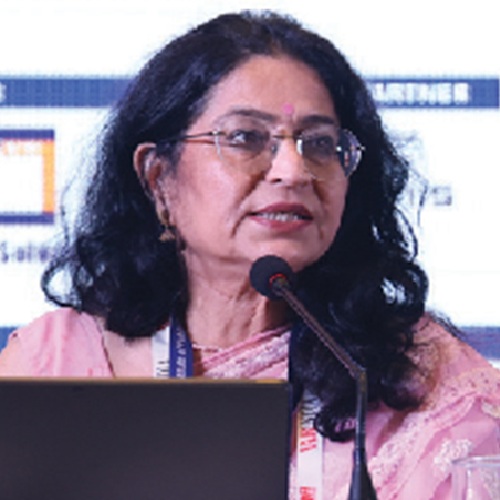 PROF. CHARRU MALHOTRA,
PROFESSOR,
INDIAN INSTITUTE OF PUBLIC ADMINISTRATION (IIPA)
Thanks to the Government of India's vision through Digital India, the country is well prepared through IndiaAI Mission, National Supercomputing Mission, and India Semiconductor Mission.
AI has transformed organizational spaces and citizen expectations, but trust remains the biggest challenge in the digital domain. Synthetic media can support entertainment, education, capacity building, library sciences, information sharing, or student empowerment. However, when combined with mal-intention and wrong information, it can create deepfakes capable of damaging the sanity of a country through social media.
Deepfakes create two major problems. One is fabricated content designed to spread misinformation to spoil community harmony. The other is the liar's dividend, where politicians or celebrities make a statement and, after the damage is done, disown it by claiming it was a deepfake. Synthetic media itself is not harmful if handled responsibly. This is where responsible AI becomes essential. Citizens who actively use UMANG, DigiYatra, DigiLocker, UPI, and other digital initiatives increasingly question the authenticity of online content. Quantum computing adds another dimension. It is not to be dreaded but prepared for because it can process multiple possibilities far faster than traditional systems and may challenge current verification and encryption mechanisms. India launched the National Quantum Mission in April 2023 with an approved outlay of Rs. 6,365 crore, aiming to develop quantum computers, secure quantum communication networks, advance quantum sensing technologies, build indigenous quantum systems, strengthen India's global competitiveness in quantum technologies, and enhance telecom security. India must prepare for post-quantum cryptography (PQC), as it is a strategic necessity.
--------------------------------------------------------------------------------------------------------------------------------------------
Harnessing AI effectively requires a calibrated approach balancing Innovation, Responsibility, and Impact
 DR. PAVAN DUGGAL,
CHAIRMAN,
INTERNATIONAL COMMISSION ON CYBER SECURITY LAW
Today we are all into AI. When we talk of this growth through alliances in a transformative era, you have to start realizing that your approaches to growth will have to be substantially different. Because somewhere down the line AI will be an integral part of this.
So, when we start using AI for growth, for transformation, for alliances, we have to keep in mind certain broad things that are not yet existing on the ground. First, the technology is moving far, far more rapidly than law. Second, India doesn't have a dedicated law on artificial intelligence yet. But that's not new. India didn't even have a dedicated law on cyber security. The only law that India has in place is the Indian Information Technology Act 2000 which is a 26-year-old legislation. The IT Act 2000 happened when wanted to focus on coming up with a new legal framework for electronic governance, and we came up with this law. The law was one of the best in the world. India was the 12th nation in the world to have enacted a cyber-law. We based ourselves substantially on the UNCITRAL model law on electronic commerce. But those were the.com boom days, and things have now changed completely. I reiterate that what you were thinking of, or what you were doing in 2021 is absolutely obsolete today. Whether we realize it or not, while we were sleepwalking, we rode a new ‘Tiger’ and that ‘Tiger’ is AI. The tiger has started running very, very fast, and we are just about beginning to wake up from our slumber.
---------------------------------------------------------------------------------------------------------------------------------------------
Future of Trust depends on Strong Data, Governance and Quantum Preparedness
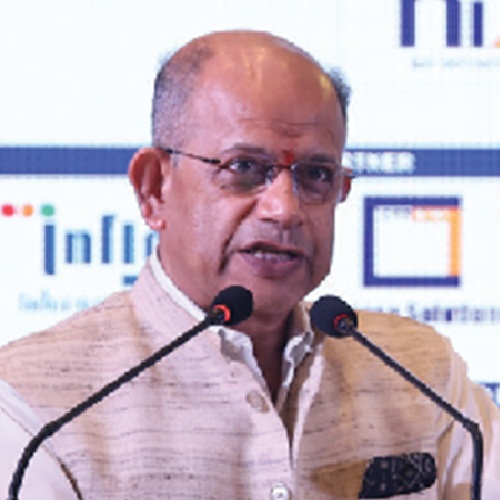 DR. AMAR PATNAIK,
FORMER MEMBER OF PARLIAMENT,
RAJYA SABHA
Data security has been fundamental to technology since digital systems first emerged. However, it is important to distinguish between data security and data privacy. Data security protects all forms of data, while data Privacy applies only to personal data.
Data security acts as the outer protective wall or vault of an organization's digital assets. Effective security requires strong IT controls, continuous monitoring, and regular audits. Data privacy applies only to personal data, which includes permissions, consent, and purpose.
India has a well-established data privacy regime. Protecting personal data is important because the penalties are significant under the new data law. This ensures trust in the future of systems.
Privacy is part of Article 21 of the Constitution, the Right to Life. Auditability, traceability, and reasonable restrictions are all part of our fundamental rights. Regardless of how advanced a technology solution you have developed, you must adhere to this.
The future of trust depends on preparedness to handle the advent of quantum computing, which will challenge the encryption architecture built to safeguard data, business, goals, and trust. If you want to retain trust in your product, technology, or offering, you must be prepared to face this onslaught.
The future of trust will depend on strengthening data security and privacy policies. Whether it is quantum computing or not, the principles of privacy remain the same because they are part of our Constitution.
------------------------------------------------------------------------------------------------------------------------------------------
AI and Quantum are expanding India’s Digital Opportunity
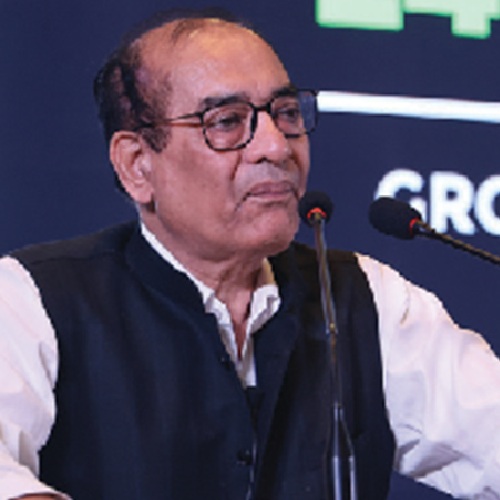 DR. GULSHAN RAI,
INDIA'S FIRST NATIONAL CYBER SECURITY COORDINATOR,
GOVERNMENT OF INDIA
Today’s era is totally different from earlier. Digitization is scaling up. Every sector is digitization, implementing applications and different kinds of technologies in place. We are observing transformation in digital technology, not digital transformation.
AI has become the underlying fabric of every technology. Every technology implemented for any application has a layer, whether it is AI or quantum computing. We are creating and implementing very complex technology with multiple interfaces and layers together. Hence, the threat surface has increased. Handling these areas requires
a 360-degree approach with four pillars - governance, technology, crime, and diplomacy. Governance includes regulations, legislation, and legal frameworks. Technology focuses on secure implementation. Crime covers the evolving spectrum of cyber threats, while diplomacy has become increasingly important as geopolitics now plays a critical role in cybersecurity.
AI operates across four layers: hardware infrastructure, AI models and tools, data, and applications. Building a trustworthy AI ecosystem requires expertise, collaboration, and ethical standards across all these layers. No single country is self-sufficient across the entire AI stack. The same challenge exists with quantum computing. Legacy and modern systems will coexist. That is why RSA algorithms can be easily broken today. The ultimate result is the demand for equipment and manpower that can configure these systems will rise. AI, post- quantum, and other new technologies will soon reach MSMEs and SMEs. This will create manpower requirements and increase overall market strength. The future is bright, but it depends on how we prepare ourselves.
------------------------------------------------------------------------------------------------------------------------------------------------
As Tech Geopolitics reshapes the world, India eyes a bigger Strategic Role
 ATUL KUMAR,
DIRECTOR-GLOBAL TRADE, CYBER DIPLOMACY,
GOVERNMENT INITIATIVE- DSCI
Geopolitics is changing the whole paradigm of technology. In the last few months, sovereignty has become a central theme, driven by wars, export controls, sanctions, and restrictions on frontier technologies. AI model access, rollout delays, acquisitions, and government interventions highlight that technology usage is increasingly influenced by state-level decisions. The global conversation has shifted toward AI geopolitics, sovereign AI, sovereign compute, and control over frontier technologies. Massive capital investments in AI, rapid advancements in physical AI and device-level AI, and tighter government oversight are creating a complex technology landscape, and India must determine how to maintain its strategic edge.
The global technology order is being rewired. Supply chains are moving from cost optimization to trusted ecosystems. Internet governance has expanded into AI, cloud, telecom, and data governance, while cybersecurity has evolved from compliance to real-time resilience. The strategic drivers behind this shift include AI chips, semiconductors, quantum computing, cyber tools, regulatory frameworks such as the EU AI Act, and global technology standards.
Technology has also become the new geopolitical choke point. Critical minerals, semiconductors, GPUs, cloud infrastructure, firmware, and Electronic Design Automation (EDA) tools now shape national competitiveness, making supply chain diversification and trusted partnerships essential. India has already established global leadership through Digital Public Infrastructure and digital payments. The next phase is building resilience across critical infrastructure, trusted technology ecosystems, startup innovation, regulatory participation, and international collaboration, to strengthen Brand India as a trusted technology and cybersecurity leader.
---------------------------------------------------------------------------------------------------------------------------------------------
India following the right AI path with indigenous LLMs and SLMs
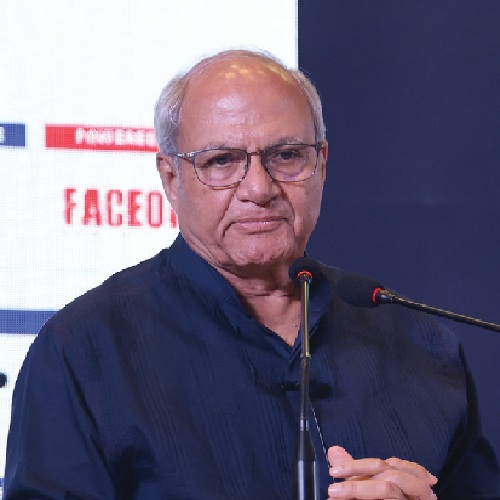 DR. AJAI CHOWDHRY
CO-FOUNDER
HCL
Everyone says that India is doing nothing in AI. This is a typical narrative, but it is absolutely incorrect because what we need to see is what our requirement is in this country. Is a Large Language Model (LLM) a requirement for this country or not?
All the LLM companies were present during the AI Summit and wanted to be part of what India is doing. Why did they come here? They came because India is a very big market and their LLMs are doing so well in this country, consumers are lapping them up. But the real impact of LLMs will be in other areas. If we look at the enterprise or SME market, when you start to use LLMs, you will realize how expensive they are.
India has taken the right route. India has realised that we must have our own LLMs. Sarvam and few other companies have come up, and a range of voice-based LLMs has emerged. Therefore, we are going to be self-sufficient in LLMs if we truly believe in our own products.
The real application of AI will come through Small Language Models (SLMs). SLMs will be developed for different areas like agriculture, education, climate, and more, and these are going to be made in India.
The good news is that a research institute was set up just four months ago at GIFT City in Gujarat, where we have brought some Indians back from the US to get it started. The whole idea is that if we look at our capability in AI, it is at the lower end. At the higher end, we do not have the experience today. So, to gain that experience, it is absolutely essential that we bring some of our diaspora back. The whole strategy was that the AI Mission, the Gujarat government, and the Pharma Association got together and invested ₹300 crore budget through which this AI research institute could be established. The whole objective of this AI research institute is to create SLMs for India so that we can actually solve India's problems.
SLMs will be very critical, and one of the first SLMs being introduced is the industrial AI SLM, which will be used by factories to reduce downtime. These are the kinds of applications where this research institute will work, create products, and collaborate with start-ups to take them to market.
So, do not think that India is doing nothing in AI. We have already created great LLMs, we have also created many voice-based LLMs, and now we are working on SLMs.
--------------------------------------------------------------------------------------------------------------------------------------------
Foresight, Resilience, and Proactive Risk: The keys to navigating the Digital Future
 NITIN MEHTA
DIGITAL RISK LEADER, EY
Navigating the digital landscape requires foresight, resilience and a proactive approach to risk. Only then can we unlock the true potential of technology. I was reading a research report, and it said that 20% of data globally is generated in India, but only 3% of that data is hosted in India. So, India is the data source, but it is not the data infrastructure for the world. If you look at AI in India, the problem is, we are still adapters, we are not creators. If you look at industrial revolutions, right from steam engine through electricity, and then ERPs and the technology beyond, India is known to have jumped revolutions. We never went into mainframes, we directly jumped into mini computers and then into client server technology. But we always had time in all the previous industrial revolutions.
In the era of the Fourth Industrial Revolution and the rapid rise of AI, India no longer has the luxury of time to adapt at a gradual pace. Unlike previous technology shifts, the current AI-driven industrial revolution leaves little time for Indian organizations to adapt before the next disruption arrives. I won’t say that India is lagging behind the world, simply because we don't have our sovereign elements yet. We continue to depend on technology superpowers such as the United States, where access to some of the most advanced AI models—including those developed by companies such as Anthropic and others—is subject to restrictions, limiting their availability outside the country. So we have a dependency on them, but I believe it's not about where we are lagging behind, but it's about the potential and the opportunity that all of us together have. I think there is a phenomenal opportunity for the private sector to work with the government and have a strong public private collaboration to build on this.
All the current emerging trends that we hear today – semiconductor, AI, advanced analytics, data center & cloud infrastructure, cyber security, quantum computing. - all these elements are not really separate, isolated, segregated, different trends, but this is one full stack that forms a part of interdependent layers. This is how I look at it. If we start at the fundamental foundation of this four-layered structure, there is the compute. We all understand the government is pushing to promote and incentivize the semiconductor industry or the data centers, and unless we have that foundation, none of the other three layers will work. The second layer built is around cybersecurity, which serves as the foundation for protecting every other layer of the technology stack. The third layer focuses on intelligence, encompassing automation, advanced analytics, and AI-driven capabilities. The fourth and final layer is trust—the cornerstone that enables secure, reliable, and responsible digital transformation.
----------------------------------------------------------------------------------------------------------------------------------------------
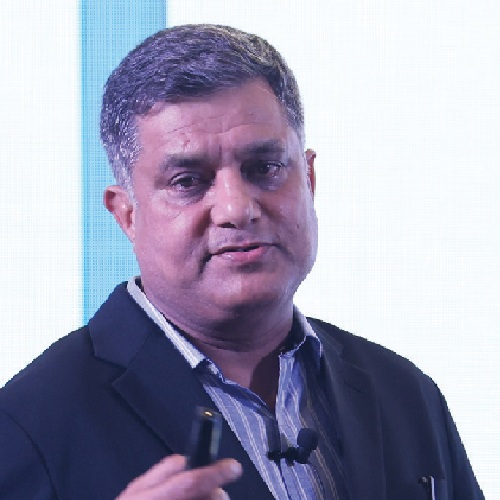
Cypress Solutions & Inflow simplify enterprise infrastructure with single-window support
 ARUN KUMAR SHARMA
DIRECTOR,
CYPRESS SOLUTIONS PVT. LTD.
When Inflow Technologies and Cypress Solutions joined hands, we started analyzing how a data center is designed and built. While setting up a data center, the customer begins with a business plan, defining what the data center is meant to support. As both management teams discussed how to create value and build a strong ecosystem for customers, we mapped the complete journey of building a DC.
The first step is the customer's business plan. It is supported by applications, which define the number of users, transactions per day, hour, and minute, along with compute, storage, and bandwidth requirements. These requirements are converted into a hardware plan, determining the number of servers, storage systems, and other infrastructure required year by year.
Once the hardware plan is ready, it is integrated into a network with the required security. These systems need conditioned power to ensure 24x7 availability. Since powered equipment generates heat, the conditioned power plan naturally leads to the cooling plan. Together, these components create a perfectly synchronized and customized solution, where the business plan is systematically converted into infrastructure requirements.
The cooling systems, conditioned power, and utility spaces determine the total raw power requirement, which is backed by alternate sources. Every component also has a physical footprint, enabling accurate planning for racks, UPS systems, cooling equipment, substations, and the overall building space. The result is a complete building plan derived directly from the business plan. During execution, the process works in reverse, first the building, then power, cooling, network, hardware, and finally the applications that run the business.
While analyzing this process, we also identified the specialized expertise customers require, including architects, structural engineers, IGBC-certified professionals, etc. We also recognized the need for data center-specific certifications covering design, construction, operations, and ratings. Additional certifications apply to network, security, hardware, and business governance, including relevant ISO standards. Inflow already delivers the complete infrastructure with a strong OEM ecosystem and extensive execution capabilities. Together with Cypress Solutions, we realized we could offer customers a true single-window solution. With this alliance, every aspect of the data center lifecycle, from planning and design to execution, certification, and operations, is delivered seamlessly, leaving no component for the customer to worry about. That is the value we have created for our customers.
---------------------------------------------------------------------------------------------------------------------------------------------
Embracing Synthetic Intelligence through integrated audio, video, and text modalities
 DR. ARINDAM SARKAR
CHIEF ARCHITECT,
FACEOFF TECHNOLOGIES
Talking about Anthropic Claude, it has managed to write 80% of the codes. We are expecting Anthropic Claude to write 100% of these codes. We are also expecting whatever codes are written by Claude, it should check and verify by Claude itself. And then we are asking: what about Mythos and the Fable 5? Whenever we are training our data and our model, this data is actually the fuel. Whenever we have a data crunch, we readily generate it, which we call it synthetic data. So, whenever we are training our data, we are using synthetic intelligence, and we are generating synthetic identity or Frankenstein Identity. We are talking about machine learning that is just a statistical representation. We are talking about predictive intelligence - your algorithm should be such that it can give you predictive intelligence, or in other words prediction. But the challenge is that deep learning is a complete black box.
The five capabilities that ordinary AI does not have are: multimodal fusion, agentic reasoning, neuro-symbolic explainability and privacy-native cognition. When we watch any video, your AI should be able to tell you everything about the audio, video, lip sync, the text, and so on and that is multimodal fusion. Synthetic intelligence is the future, where we use every modality: audio, video, lip sync, and the speech. FaceOff Technologies is a deep-tech company pioneering the future of digital trust through AI-powered multimodal verification. Another aspect at FaceOff is data privacy. When we say that our AI is trained with our data, we are talking about data privacy, data encryption algorithms, and securing our data using post quantum cryptography. It deploys a "Neuro-Quantum Safe" architecture that integrates AI-powered identity verification with Post-Quantum Cryptography (PQC).
Whenever you train your machine learning algorithm how do you feed your data? Is your data encrypted or is it plain data? How can you guarantee that the data privacy model you are using is not actually leaking your data? Will you be able to erase data from your AI model that has already been trained on that data?
So AI is right now in a situation where we have to think it as a complete engine, and this is what we are doing at FaceOff. Powered by its proprietary Adaptive Cognito Engine (ACE), Faceoff goes beyond traditional biometrics by combining behavioral intelligence, visual signals, voice sentiment, and contextual analysis to generate real-time Trust Scores from video interactions. a proprietary multimodal AI. It is a deep-tech architecture developed to combat deepfakes, synthetic identity fraud, and AI impersonation. Rather than acting as a single AI chatbot, it acts as a dynamic security framework combining visual, audio, behavioral, and contextual analysis to establish human authenticity in real time.
------------------------------------------------------------------------------------------------------------------------------------------------
AI transforming the very foundations of research, knowledge creation, and professional excellence
 DR. DEEPAK KUMAR SAHU
PUBLISHER & EDITOR-IN-CHIEF,
VARINDIA
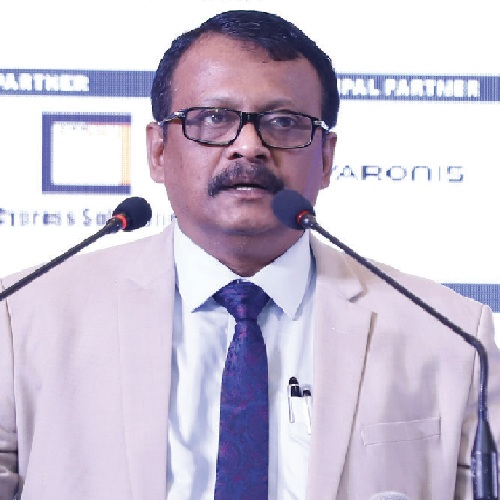
India's IT industry is a $250 billion global powerhouse and yet our domestic IT spending is just one percent of global technology expenditure. For a nation of our scale and ambition, that is not a statistic. That is a wake-up call. Global compute spending stands at $250 billion a year — a $1 trillion opportunity over four years. If India moves decisively into this space, the dividends go well beyond technology. We are talking about transforming healthcare, education, agriculture, and climate resilience, all riding on the renewable energy infrastructure we are already building. The opportunity is here. The question is whether we are ready to claim it. We live in a moment that history will remember. Not because of a single invention, not because of one breakthrough — but because of something far more profound: the quiet, relentless, and accelerating transformation of how human beings think, discover, and create. Artificial Intelligence is no longer a promise on the horizon. It is here. It is now. And it is reshaping everything we thought we knew about research, knowledge, and professional excellence. The world you trained for five years ago is not the world you work in today. The tools have changed. The pace has changed. And the expectations — of institutions, of employers, of the public — have changed dramatically. We are living through what many are calling the Fourth Industrial Revolution. But unlike those that came before it — this one is driven by intelligence itself. Machine intelligence, Adaptive intelligence, Intelligence that learns, evolves, and, increasingly, surprises even its own creators.
Data analytics is unlocking patterns in human behaviour, climate, disease, and economics that no human mind could process alone. Digital verification tools are redefining what it means to establish truth in an era flooded with information. And AI — the engine powering all of this — is breaking boundaries that once seemed permanent.
Artificial Intelligence is not merely a tool. It is a paradigm shift. It is reading medical scans with greater accuracy than specialist physicians. It is predicting crop failures before they happen. It is translating languages in real time, writing code, generating research hypotheses, and analyzing decades of academic literature in minutes. For researchers and academics, this is not a threat — it is an invitation. An invitation to go further, ask bigger questions, and produce work of greater depth and rigour than any previous generation could achieve.
But with that invitation comes responsibility. Because AI is only as powerful as the judgement of the person wielding it. And in a world where AI can generate convincing content at extraordinary speed, the ability to verify, validate, and exercise critical thinking is not diminishing in importance — it is becoming the most essential skill of our time.
---------------------------------------------------------------------------------------------------------------------------------------------
UNVEILING OF THE 15TH BRAND BOOK 2026
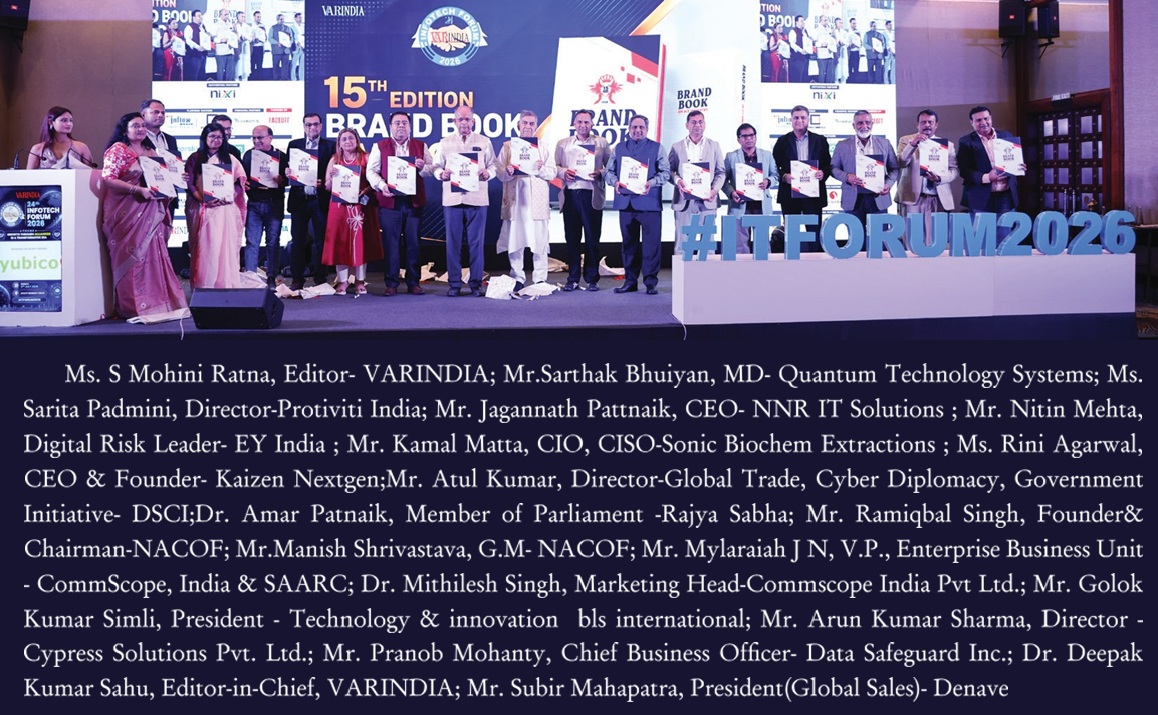
The Brand Book brought out annually by VARINDIA is dedicated to helping brands carve out a distinctive identity and position themselves effectively in today’s crowded, tech- driven landscape. The 15th edition of the BRAND BOOK, inaugurated at the Infotech Forum offers an in-depth overview of the Indian tech industry, covering the latest trends, innovations, and key players.
This essential resource is the go-to guide for anyone seeking insights into the dynamic Indian tech landscape. We believe brands thrive by understanding and connecting with people on a deeper level, recognizing their needs, desires, and aspirations. Personalization is key; without it, a brand loses its purpose. This philosophy is embodied in the annual unveiling of the Brand Book at the 24th Infotech Forum, celebrating innovation and customer-centricity.
The Brand Book remains the ultimate platform for corporates to showcase their innovation & offerings, standing out as a powerful media vehicle. With a focus on people, it reflects a unique identity through careful design and impactful messaging, embodying connection and trust.
----------------------------------------------------------------------------------------------------------------------------------------------------------
WELCOME NOTE
Cybersecurity, AI integration & data analytics are today’s reality of every technology leader
 S MOHINI RATNA,
EDITOR- VARINDIA
For over 27 years, VARINDIA and the Brand Book — the flagship publications of Kalinga Digital Media — have been a constant presence in India's ICT industry. Not just as publications, but as trusted partners to every segment of this ecosystem. VARINDIA has earned its place as the number one source for technology news and insight in this country — not by chance, but through an unwavering commitment to quality, credibility, and genuine industry relevance.
The Brand Book is something special in its own right. Each edition captures the leadership, vision, and strategic journeys of India's most influential technology brands — the companies and the people who have quietly, and sometimes not so quietly, shaped the nation's IT story. Our survey of India's Eminent CIOs tells a clear story - priorities have fundamentally shifted. Cybersecurity, AI integration, data analytics, and talent management are no longer items on a future agenda — they are the day-to-day reality of every technology leader. On security, Zero Trust is the new baseline. Leaders are moving fast on compliance, and investing in proactive threat intelligence — including dark web monitoring — to get ahead of threats before they land. On AI, the debate has moved on. It is no longer about whether to adopt — it is about adopting responsibly, with real ROI discipline and automation that actually simplifies rather than complicates. Every conversation today points to the same truth - closing the response gap is the defining cybersecurity challenge of our time. That is where the future of cybersecurity lives — intelligent systems are acting at machine speed, because that is the only speed that matters.
-----------------------------------------------------------------------------------------------------------------------------------------------
CORPORATE PRESENTATION
Secure enterprise data before accelerating AI adoption
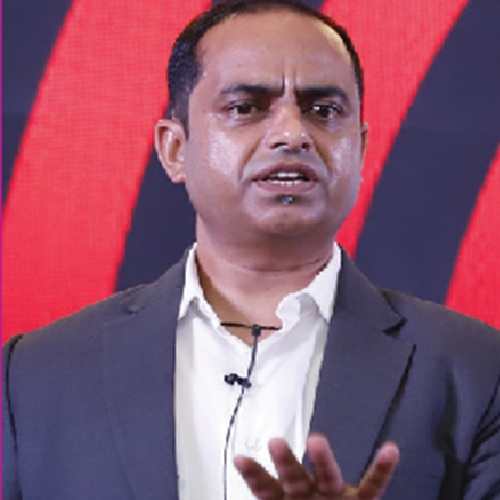 ANKUR PATIAL,
SR. SOLUTIONS ARCHITECT,
VARONIS
Despite significant investments in cybersecurity technologies over the years, data breaches continue because attackers have shifted their focus from breaking into systems to exploiting legitimate identities. Once credentials are compromised, attackers can often access sensitive enterprise data without triggering traditional security controls. At the same time, the growing use of cloud collaboration platforms has expanded the 'blast radius', making it essential for organisations to understand where their sensitive data resides, who has access to it and whether those permissions are still appropriate.
The rapid adoption of AI has further increased the importance of data security. AI systems inherit user permissions and can surface information across multiple repositories much faster than humans, which makes strong data governance a prerequisite for responsible AI adoption. Many organisations remain cautious
about deploying enterprise AI because of concerns around overexposed data, shadow AI, limited visibility and the shortage of specialised security skills required to manage these environments effectively.
At Varonis, we believe organisations should secure their data before accelerating AI adoption. Our focus is on helping customers gain visibility into their data, identify excessive access, automate remediation and detect abnormal user behaviour through behavioural analytics. By combining data-centric security with AI visibility, automated remediation, guardrails and governance, organisations can reduce risk and confidently accelerate AI adoption, recognising that successful AI deployment begins with securing the underlying enterprise data.
---------------------------------------------------------------------------------------------------------------------------------------------------
Meaningful AI outcomes depend on trusted, well-governed data
 GAURAV SAXENA,
DIRECTOR - CHANNELS & ALLIANCES,
VEEAM SOFTWARE
Digital transformation has significantly expanded the enterprise data landscape, with organisations today managing workloads across physical, virtual, cloud, SaaS, containerised and AI environments. At the same time, ransomware, AI-enabled threats and evolving regulatory requirements have made data resilience a strategic business priority rather than just an IT function. In this rapidly changing environment, a strong partner ecosystem plays a vital role in helping organisations adopt technologies at scale, strengthen cyber resilience and deliver uninterrupted business outcomes.
At Veeam, we have evolved from being a backup and recovery company to enabling cyber resilience and, now, AI resilience. As enterprises accelerate AI adoption, the focus is shifting beyond protecting data to ensuring that the data powering AI models is secure, governed and trusted. Meaningful AI outcomes depend on trusted, well-governed data, making visibility into enterprise data, governance, compliance and the right trust layer between data and AI applications increasingly important for secure and trusted AI adoption.
Our focus is to help customers protect, recover and govern their data through an integrated platform that combines data protection, security, governance and resilience across diverse workloads. By providing greater visibility into the complete data lifecycle and helping organisations understand how data is created, accessed and protected, we aim to strengthen cyber resilience, support business continuity and enable customers to embrace AI-driven innovation with confidence while maintaining trust in their enterprise data.
--------------------------------------------------------------------------------------------------------------------------------------------------
AI demands a prevention-first approach to cybersecurity
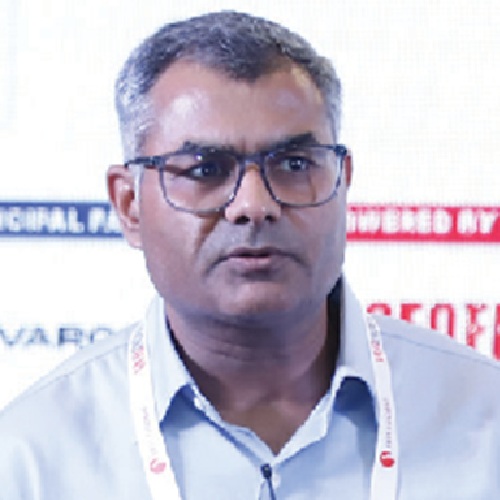 JAGBIR SINGH,
MANAGER, SALES ENGINEERING (PRE-SALES),
CHECK POINT SOFTWARE
Cybersecurity has become significantly more complex as organisations operate across hybrid environments spanning data centres, cloud, edge, remote workforces and AI-powered applications. At the same time, AI is transforming both enterprise operations and the threat landscape. While organisations are using AI to improve productivity and automation, threat actors are also leveraging it to accelerate attacks, reducing the response window and making traditional security approaches less effective. This makes it essential for organisations to continuously reassess their security posture and adopt a prevention-first approach to address evolving cyber risks.
At Check Point, our focus is on securing the entire enterprise rather than addressing isolated security challenges. As organisations deploy multiple security solutions, operational complexity can increase and visibility may become fragmented. We believe security should be integrated across networks, cloud, endpoints, workspaces, exposure management and AI-powered environments, enabling customers to simplify operations while strengthening prevention and resilience. As AI adoption accelerates, organisations must also secure AI usage, AI agents, AI applications and the underlying data that powers them, ensuring innovation is accompanied by governance, resilience and trust. Our approach combines AI-driven threat prevention, exposure management and comprehensive security services to help organisations strengthen cyber resilience across diverse environments. By embedding AI into security while continuing to prioritise prevention, visibility and operational simplicity, we aim to help customers protect critical assets, securely embrace AI-driven transformation and remain prepared for emerging threats in an increasingly dynamic digital landscape.
-----------------------------------------------------------------------------------------------------------------------------------------------
Leveraging intelligence-led cyber defense
 ANUJ SHARMA,
PRESALES MANAGER,
KASPERSKY
If we see over 10-15-year period, most of the organizations and enterprises have adopted best of the breed security solutions comprising of the best firewalls and VPNs. At the same time, certain companies that have come up with services like darker services, credential surveillance, brand monitoring, and so on. Now, despite having best for the breed security and spending crores of money on security, why are there still breaches and leakages. There appears to be a gap somewhere and we need to understand that even if those security solutions are competent enough, there will be some human factors and misconfigurations because of why these breaches are still happening.
In order to bridge that gap on a real-time basis, we have to move forward with AI-based threat intelligence.
So at Kaspersky, we have AI security; we have multiple sources from where we enrich our threat intelligence that includes bot farms, spam traps, and sensors. We have billions of sensors for the users which are providing real-time intelligence to us on a nearly real-time basis. We do have a dedicated research team – GreAT (Global Research and Analysis Team). The moment we receive the data, it goes to the team, they churn out the data, and then forward it to respective threat intelligence products.
We also have multi-layered AI-based threat detection combines machine learning (ML), behavioral Endpoint Detection and Response (EDR), and global threat intelligence to proactively block ransomware, zero-day exploits, and Advanced Persistent Threats (APTs). In other words, Kaspersky has been using AI and ML technologies from past 30 years. We have a legacy of databases, which we are trying to consolidate into our threat intelligence.
----------------------------------------------------------------------------------------------------------------------------------------------
Identity security requires phishing-resistant authentication
 RAHUL DANI,
PRESALES ENGINEER,
YUBICO
As organisations continue to accelerate digital transformation, identity has become one of the most critical aspects of cybersecurity. Attackers are increasingly relying on phishing and credential theft rather than exploiting technical vulnerabilities, making traditional password-based authentication progressively less effective. Even conventional multi-factor authentication methods, including SMS-based codes, one- time passwords and push notifications, can be vulnerable to sophisticated phishing attacks when users unknowingly authenticate malicious sessions. This highlights the need for authentication approaches that reduce dependence on passwords while strengthening protection against evolving identity-based threats.
At Yubico, our mission is to help make the internet safer by enabling phishing-resistant authentication.
Through the FIDO standards, advanced in collaboration with the broader industry, and YubiKey hardware security keys, we enable phishing-resistant authentication based on public key cryptography rather than shared secrets. By securely storing private keys on dedicated hardware, binding credentials to legitimate domains, and requiring user verification and physical presence, this approach helps reduce common credential theft risks while improving trust in the authentication process.
As organisations continue expanding cloud adoption and digital services, strengthening identity security has become a critical element of cyber resilience. Our focus is on helping customers adopt passwordless, phishing-resistant authentication that combines strong security with a seamless user experience. By reducing reliance on passwords and strengthening identity protection, organisations can better secure users, applications and digital assets against an increasingly sophisticated threat landscape.
----------------------------------------------------------------------------------------------------------------------------------------------
Building enterprise cyber resilience through Made-in-India innovation
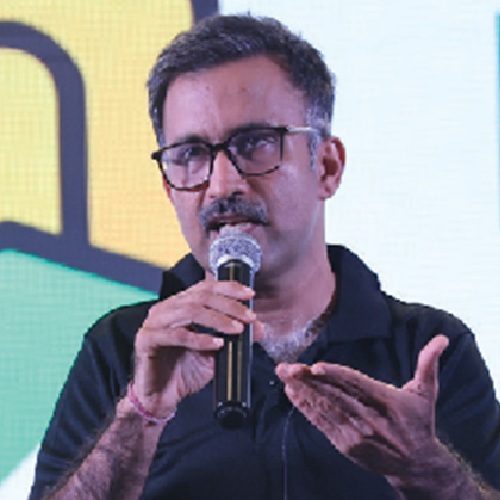 SUMEET KELA,
DIRECTOR,
NET PROTECTOR ANTIVIRUS
As organisations continue to strengthen their cybersecurity posture, identity protection, data security and controlled access have become increasingly important. Password-based authentication alone is no longer sufficient, while AI adoption and expanding digital ecosystems have introduced new challenges around data leakage, insider risks and regulatory compliance. At Net Protector AntiVirus, our focus is on delivering comprehensive cybersecurity solutions that help organisations strengthen resilience across endpoints, networks, users and critical business applications. With over three decades of cybersecurity experience and a 100% Make in India approach, we continue to develop technologies that address evolving enterprise security requirements.
Our portfolio includes solutions such as Krypton Secure MFA, AI Insight, Zero Trust Network Access (ZTNA), Endpoint Data Loss Prevention (DLP), XDR, EDR, MDR, PAM and compliance-focused security capabilities. These solutions are designed to support stronger authentication, AI-aware data protection, least-privilege access, continuous monitoring, intelligent threat detection and secure governance while helping organisations balance security with operational productivity. We also place significant emphasis on supporting regulatory and compliance requirements across sectors, including BFSI, government and large enterprises.
We believe cybersecurity is most effective when advanced technology is combined with strong customer support, continuous innovation and close collaboration. Our commitment is to provide reliable, enterprise-grade security solutions backed by responsive service while contributing to India's growing cybersecurity ecosystem. As organisations accelerate digital transformation, our objective remains to help customers securely protect their users, data, infrastructure and critical digital assets against an increasingly dynamic threat landscape.
-------------------------------------------------------------------------------------------------------------------------------------------------
Forging a National Alliance for Trusted AI and Digital Security
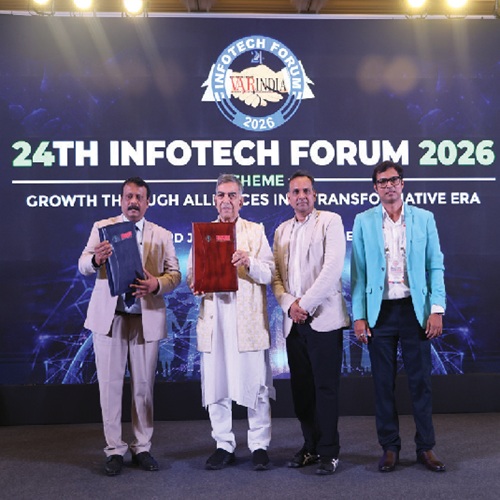 Mr. Ram Iqbal Singh, Founder & Chairman of NACOF; Dr. Deepak Kumar Sahu, Founder & CEO of FaceOff Technologies; and Dr. Arindam Sarkar, Chief Architect at FaceOff Technologies, sign an MoU aimed at strengthening cybersecurity solutions for India's banking sector.
There is landmark moment in India's journey toward secure and trusted digital transformation. The Memorandum of Understanding (MoU) between FaceOff Technologies and NACOF (National Federation of Farmers Procurement, Processing and Retailing Cooperative of India Ltd.) marks the beginning of a strategic partnership dedicated to strengthening cybersecurity, digital trust, and fraud prevention across Cooperative Banks and other institutions.
Through this collaboration, FaceOff's Sovereign AI platform, powered by Post-Quantum Cryptography, will help organizations detect and prevent deepfakes, synthetic identities, cloned voices, and AI-generated fraud while supporting privacy-first digital verification and regulatory compliance. This partnership reflects a shared commitment to protecting India's digital economy with homegrown innovation and next- generation security technologies.
--------------------------------------------------------------------------------------------------------------------------------------------
Honouring Dr. Ajai Chowdhry: Lifetime Achievement Award 2026–27
 Dr. Deepak Kumar Sahu, Editor-in-Chief of VARINDIA, and Dr. Gulshan Rai, India's first National Cyber Security Coordinator, Government of India, present the Lifetime Achievement Award to Dr. Ajai Chowdhry, Co-Founder of HCL.
The Lifetime Achievement Award 2026–27 is the highest recognition presented by VARINDIA to celebrate an extraordinary individual whose vision, leadership, and lifelong contributions have transformed India's technology landscape. This prestigious honour recognizes not only professional excellence but also a legacy of innovation, institution-building, and nation-building that continues to inspire generations.
Today, we proudly honour Dr. Ajai Chowdhry, Co- Founder of HCL and Padma Bhushan awardee, whose pioneering leadership has been instrumental in shaping India's IT, electronics manufacturing, startup ecosystem, and digital transformation journey. His unwavering commitment to technological self-reliance, policy advocacy, and the National Quantum Mission has strengthened India's position as a global technology powerhouse, making him a true architect of the nation's digital future and an inspiration to the entire ICT industry.