
Techarc projects mounting memory cost pressure on smartphones in 2027, with entry-level devices facing the greatest strain as manufacturers weigh higher prices, reduced specifications and fewer launches against weakening demand and constrained global memory supplies.
Smartphone manufacturers in India could face further pressure to raise prices, reduce memory specifications and narrow their product portfolios in 2027 as higher memory costs carry over from this year, according to a new outlook from technology market research firm Techarc.
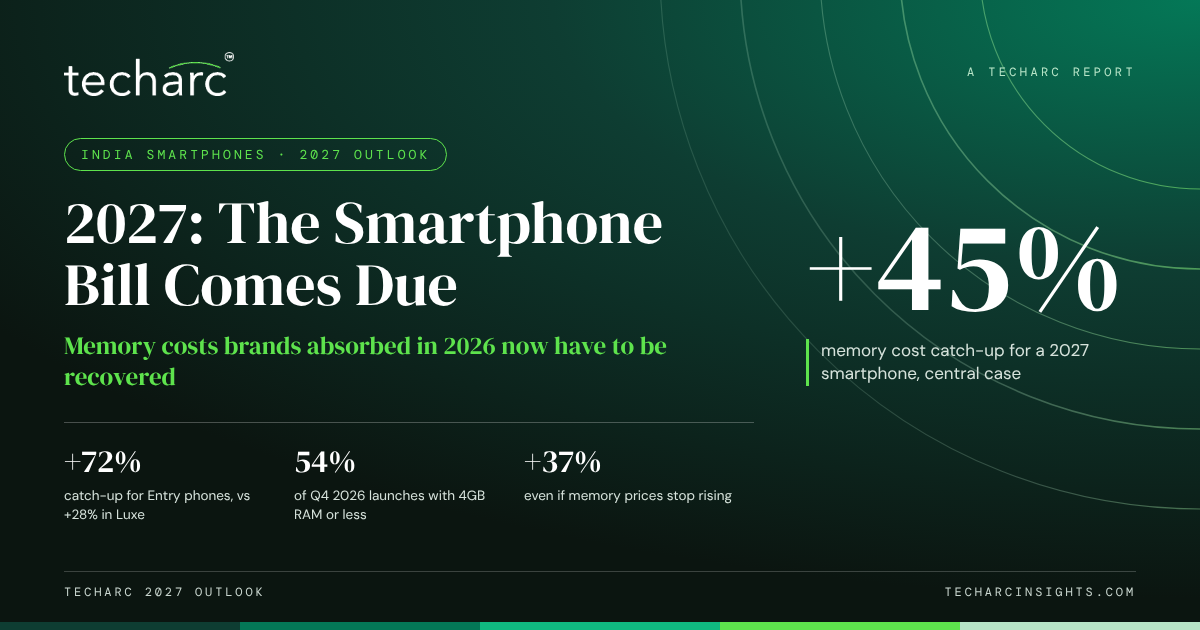
The report, 2027: The Smartphone Bill Comes Due, estimates a 45% price adjustment would be needed for comparable successors to smartphones launched in 2026 to recover the modelled memory cost burden under its central scenario. Even if memory prices stop increasing after the fourth quarter of 2026, the estimated gap would remain at 37%.
Techarc stressed that the calculation measures memory cost pressure carried into 2027 and should not be interpreted as a forecast of an equivalent increase in retail prices.
The analysis covered 115 smartphones launched in India during 2026 by 10 brands with more than a decade in the market, using their highest-variant launch prices. Techarc modelled memory costs against publicly available disclosures from Samsung, SK Hynix and Micron, including reports, investor calls and media coverage.
Entry-level smartphones face greatest pressure
According to Techarc, memory cost increases alone would have justified prices approximately 28% higher than predecessor models in 2026, compared with the roughly 24% increase brands implemented. The firm estimates smartphone unit sales will decline by 27–28% during the calendar year.
The projected cost adjustment varies considerably by price segment. Smartphones priced up to ₹12,000 face an estimated 72% catch-up, compared with 28% for devices costing above ₹1 lakh. Memory could account for 76% of an entry-level smartphone’s build cost in 2027, the report said.
Across the ten brands studied, the estimated catch-up ranges from 28% to 74%, depending largely on the price composition of their portfolios. Techarc also expects limited supply relief, citing indications from the three major memory manufacturers of tighter availability in 2027, with much of their new capacity committed to long-term customers.
“2026 was the year smartphone brands absorbed the shock. 2027 is the year the bill comes due,” said Faisal Kawoosa, Chief Analyst, Techarc. “Even if memory prices flatten tomorrow, phones launched next year cost far more to build than the ones they replace, and the burden falls hardest on the phones most Indians buy. Brands will not pass all of it on. Expect less memory for the same price, fewer launches and thinner entry-level choice before you see a 45% jump on the price tag.”
Lower memory configurations gain ground
Signs of specification reductions are already emerging, according to the report. Among smartphones launched in the fourth quarter of 2026 so far, 54% offered base RAM of 4GB or less, compared with 21% a year earlier. The share of launches with storage of 64GB or less increased from 8% to 36%.
Techarc expects 4GB RAM and 64GB storage configurations to become more common as base variants in entry-level and mid-range smartphones during 2027. It also anticipates rising average launch prices and fewer new devices priced below ₹10,000.
“For buyers, this means waiting longer between upgrades and looking harder at refurbished and older models,” Kawoosa added. “For retailers, it means fewer models, slower sell-through and more reliance on financing to close a sale. The brands with scale in memory buying will hold their price points and gain share.”
Based on its 2026 analysis, Techarc said each 1% price increase was associated with an approximately 1.1% decline in unit sales. The extent to which manufacturers pass higher costs to buyers will therefore be an important factor in determining whether the market experiences another year of declining volumes in 2027, the firm said.