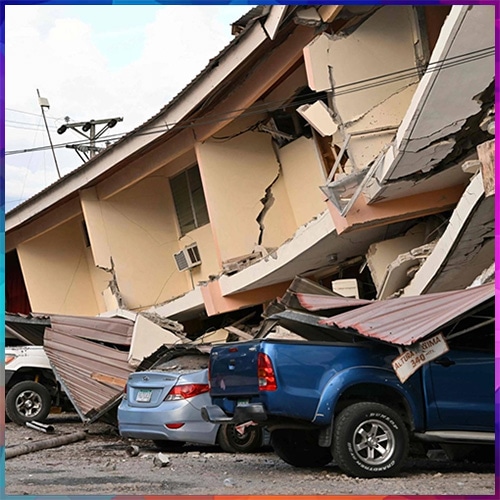
A powerful magnitude 7.7 earthquake struck southern Panama on Friday, October 9, causing widespread panic, damaging buildings and collapsing roads. Despite its intensity, the country largely escaped mass casualties and catastrophic destruction, according to initial reports.
Key Highlights
- Magnitude 7.7 quake hit southern Panama on October 9, at a depth of 12.6 km
- Epicentre about 200 km from Panama City; shaking lasted nearly a minute
- Several roads collapsed; over 40 aftershocks recorded
- Tocumen Airport flights briefly halted; power cuts in six provinces
- Panama Canal and Cobre Panama mine unaffected
- No mass casualties reported
According to the US Geological Survey, the quake struck at a depth of 12.6 km, with its epicentre in a sparsely populated area about 200 km from Panama City. The shaking lasted nearly a minute, forcing thousands to evacuate homes, offices and high-rise buildings. Residents described the experience as terrifying, as such strong quakes are rare in Panama.
President José Raúl Mulino confirmed that several roads had collapsed, while structural damage was reported in affected communities. More than 40 aftershocks followed, prolonging uncertainty as authorities assessed buildings, roads and essential services.
Flights at Tocumen International Airport were briefly suspended before resuming, and Naturgy reported power outages across six provinces. Crucially, the Panama Canal and the Cobre Panama copper mine continued operating normally, sparing global trade from disruption.
The disaster highlights the need for earthquake-resistant infrastructure, resilient telecommunications, reliable power and effective emergency response to protect lives, economies and global supply chains. Though Panama avoided widespread devastation, the quake is a warning that preparedness cannot be neglected.