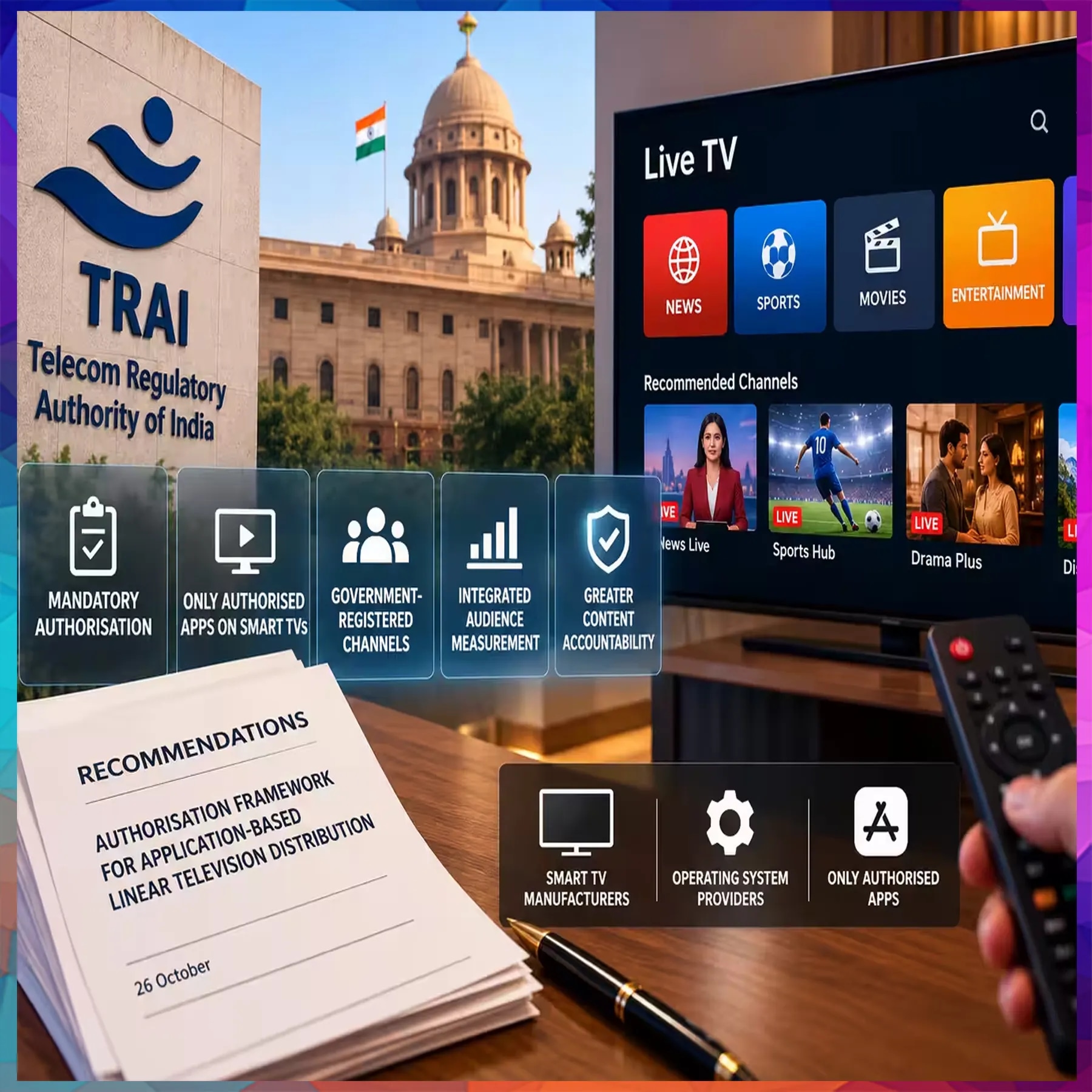
The telecom regulator wants a light-touch licensing regime for application-based linear TV services, with a Rs 1 lakh entry fee and 20-year validity, while making OEMs, OS providers and broadcasters carry only authorised apps.
The Telecom Regulatory Authority of India (TRAI) has recommended that platforms and apps allowing users to watch live television channels on smart TVs, mobile phones and other personal devices should be brought under a mandatory government authorisation regime.
The recommendations, titled “authorisation framework for application-based linear TV distribution (ALTD) services,” were released on Monday. They would require device makers (OEMs), operating system providers and broadcasters to ensure that only authorised ALTD applications operate on their platforms.
A light-touch framework
TRAI has proposed a light-touch model for the sector. Under it, an applicant would pay a one-time entry fee of Rs 1 lakh and an application processing fee of Rs 10,000. The first authorisation would stay valid for 20 years.
The framework also includes safeguards for consumers. In addition, TRAI wants viewership on ALTD platforms to be counted within the television audience measurement system, so that streaming-based consumption is reflected in ratings.
The apps in question aggregate and deliver scheduled TV channels to viewers in several ways. Some come pre-installed on television sets and other devices, others are downloadable mobile or smart TV applications, and some are accessed through web browsers.
How the process unfolded
The process began last December, when the information and broadcasting ministry asked TRAI to study and suggest a regulatory structure for free ad-supported streaming TV (FAST) services, citing the changing broadcasting environment. The regulator released a consultation paper on the subject in April and has now finalised its recommendations after that exercise.
In a statement on Monday, the ministry of communications said the recommendations lay out the terms and conditions for granting authorisation and for providing ALTD services. It added that the aim is to support the orderly growth of internet-based linear television distribution by offering an enabling authorisation framework.
The proposals now go to the government, which will decide whether to accept them in full or in part. If adopted, they would for the first time place app-based live TV distribution under a formal licensing structure, a space that has so far operated without a dedicated regulatory framework.