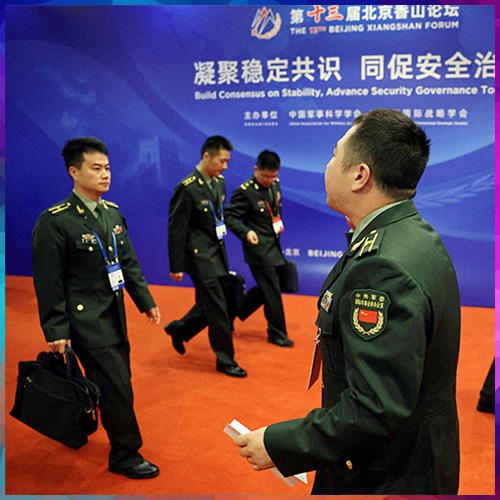
AI has dangerously compressed decision-making for governments and their militaries, just as misinformation shreds public trust before leaders can respond — that was the sobering consensus among panelists at the 13th Beijing Xiangshan Forum, China's flagship security conference, held September 15–17, 2026.
Around 2,000 military officers, diplomats, and academics from roughly 100 countries attended the three-day event, including a notably diverse mix of delegates: regional defense officials, a North Korean representative, a senior Pentagon official, Russian academics, and Taliban representatives.
Thailand's Defence Minister Adul Boonthumjaroen framed the stakes starkly: "Today, the world is at a critical turning point. Strategic competition among major powers is becoming more pronounced, conflicts in many regions continue." As AI and other technologies transform warfare, he argued, the central question isn't which country becomes most powerful, but how the world builds an international order capable of managing that power.
The most pointed warning on autonomous weapons came from International Committee of the Red Cross vice-president Jurg Lauber, who said that as weapon systems become increasingly autonomous, the need to preserve human judgment and control over the use of force becomes more pressing — a direct call for maintaining meaningful human oversight as machines take on greater roles in lethal decision-making.
Notably, the forum revealed rare common ground between rival powers: despite deep disagreement on most issues, American and Chinese defense experts agreed that unchecked AI development is making the world more dangerous, with neither side offering a clear solution. Chinese State Security Minister Chen Yixin went further, warning AI poses direct threats to political stability and represents a pivotal front in the broader strategic contest between major powers.
Both countries did affirm one shared principle: humans must remain in the loop on nuclear decisions, reaffirming a 2024 US-China agreement on human oversight over nuclear command and control. Proposals floated at the forum included dedicated hotlines for managing AI-related military incidents.
The warnings arrive just weeks before China and the US hold bilateral summit talks, where the two nations remain divided on how to govern AI's use in military systems — making Xiangshan less a resolution than an urgent preview of unresolved tension.

See What’s Next in Tech With the Fast Forward Newsletter









Tweets From @varindiamag
Nothing to see here - yet
When they Tweet, their Tweets will show up here.