Visa's $2.4B Bet on Behavioral Biometrics

Visa has agreed to acquire Israeli behavioral biometrics company BioCatch from funds advised by Permira in a $2.4 billion all-cash deal, marking one of the payments giant's largest fraud-prevention investments to date.
BioCatch operates a suite of AI and machine learning products that analyze thousands of application, behavioral, device, and network signals — including keystrokes, touch gestures, and device handling — to detect fraud and distinguish legitimate users from fraudsters in real time. The company currently protects 1.8 billion devices and 760 million users globally, serving more than 350 banking clients across 21 countries, including over 100 of the world's largest banks.
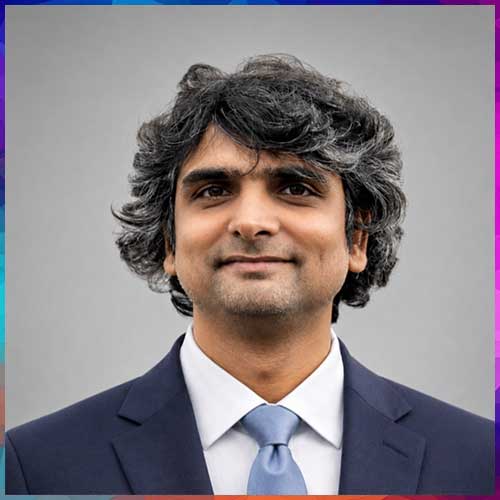
BioCatch CEO Gadi Mazor framed the deal as validation of a decade-long thesis: that behavioral signals are uniquely effective at distinguishing criminal activity from legitimate use, and that real-time intelligence-sharing networks between customers can amplify that behavioral intelligence even further.
The acquisition extends Visa's aggressive fraud-prevention spending — the company has invested more than $13 billion in technology and infrastructure over the past five years to combat rising payment fraud. Andrew Torre, Visa's president of value-added services, said account takeovers and scams now cost the global economy over $1 trillion annually, with AI enabling these attacks at unprecedented scale. He positioned BioCatch as a way to help Visa's clients stop fraud "before it reaches the point of payment," calling it part of a broader strategy to intercept cyber threats upstream and build trust into every transaction.
This deal is a clear signal of where fraud prevention is heading — and it validates a thesis we've discussed repeatedly in the FaceOff Technologies/Secret Manager context: identity verification is shifting from "what you know" (passwords, OTPs) to "who you actually are" (behavior, biometrics, device signals).
A few things stand out:
Scale as the moat. BioCatch's value isn't just its algorithms — it's the network effect of protecting 1.8 billion devices across 350+ banks in 21 countries. Behavioral fraud detection improves with more data; a criminal's behavioral fingerprint looks different across contexts, but a system that's seen fraud patterns across hundreds of banks can catch novel attacks faster than any single institution working alone. This is the same "intelligence-sharing network" advantage Mazor referenced.
Visa is moving upstream, not just downstream. Torre's framing — stopping fraud "before it reaches the point of payment" — is a meaningful shift. Traditional card-network fraud tools largely operate at transaction time (declining suspicious charges). Behavioral biometrics operate earlier, during login and account access, meaning Visa is now positioning itself to catch account takeovers and synthetic identity fraud before a fraudulent transaction is even attempted — closer to where FaceOff's Sovereign AI or Norton Genie-style tools operate.
$1 trillion in annual losses is the real driver. With AI dramatically lowering the cost of running scams, phishing, and deepfake-enabled social engineering (as we discussed with the AI-phishing integrations in ChatGPT and Claude), traditional static authentication — passwords, OTPs, even basic biometrics — is increasingly insufficient on its own. Behavioral biometrics offer continuous verification rather than a one-time gate, which is precisely the model gaining traction industry-wide.
Consolidation signal for the broader market. A $2.4 billion acquisition by a payments giant is likely to accelerate consolidation in the identity-verification and fraud-detection space, and it raises the competitive bar for standalone behavioral biometrics vendors — reinforcing why homegrown, sovereign alternatives (like FaceOff's approach in the Indian banking context) matter for markets that don't want core fraud infrastructure controlled by a handful of global players.

See What’s Next in Tech With the Fast Forward Newsletter







Tweets From @varindiamag
Nothing to see here - yet
When they Tweet, their Tweets will show up here.