

The company introduced a new AI-driven customer service vision featuring specialised AI agents, unified service intelligence and outcome-based pricing aimed at transforming support operations across enterprises and digital platforms.
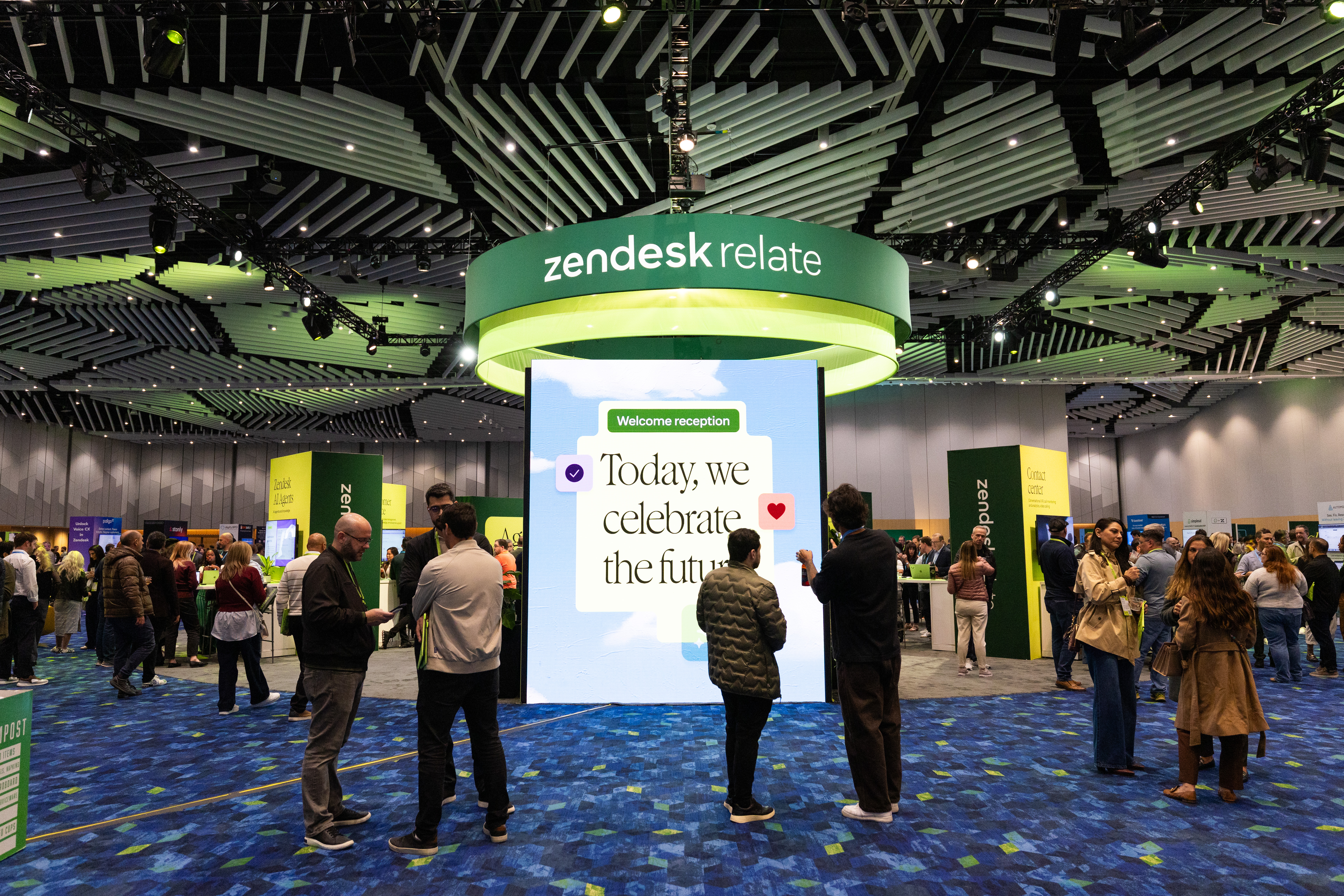
At its annual Relate conference, Zendesk unveiled a new strategy centred on what it calls the “Autonomous Service Workforce,” a platform-driven approach designed to reshape customer service operations through specialised artificial intelligence agents.
The company said the initiative moves beyond traditional chatbot systems that largely focus on ticket deflection and limited automation. Instead, Zendesk aims to enable AI agents capable of handling customer interactions across multiple communication channels while maintaining context, continuity and operational oversight.
At the core of the strategy is the Zendesk Resolution Platform, a unified system that combines customer data, workflows, governance, analytics and AI intelligence. The platform has reportedly been trained using nearly 20 billion customer support interactions to improve response quality and automate service workflows more effectively.

“The era of the chatbot – the era of frustration and deflection – is over. We are entering the age of the Autonomous Service Workforce," said Tom Eggemeier, CEO, Zendesk. "We believe every business will soon run on specialised AI agents that work alongside human experts as one unified team. These agents will be more than just code; they will be team members, held to the same high standards of accountability as any human. Our vision is to put the power to build this workforce into the hands of every enterprise, on one elegant platform. Whether those agents are crafted by Zendesk, by our partners, or by your own teams, they will all speak with one voice. We are providing a future where AI is the foundation, and human experts are the architects."
AI agents designed for multi-channel customer support
Zendesk announced a series of new AI capabilities designed to automate front-office, back-office and employee service operations. Among the key announcements was Agent Builder, a no-code platform that allows enterprises to create and customise AI agents according to internal workflows, policies and business requirements.
The company also expanded the capabilities of Zendesk AI Agents, which can now operate across messaging platforms, email, voice systems and external AI environments such as ChatGPT and Gemini. Zendesk said these agents are designed to preserve customer context across channels to improve continuity in customer interactions.
The company further introduced enhanced Voice AI Agents with multilingual support across more than 60 languages. The upgraded system can reportedly switch languages during conversations while retaining full interaction history and contextual understanding.
Bikram Mazumdar, Vice President, Asia, Zendesk, highlighted the relevance of the technology in India’s rapidly evolving digital service ecosystem. “In India, service has to keep up with a customer journey that rarely stays in one place. A single issue can move from an app chat to WhatsApp to voice in minutes, and customers expect the context to travel with them. Many Indian businesses I’ve spoken to have strong digital ambition, and consumers are quick to reward brands that can match that pace. That is exactly why Zendesk’s autonomous service workforce matters now: it helps companies resolve issues faster and more accurately, carry context across every interaction, and raise the quality of service without adding more complexity for teams.”
Focus on governance, analytics and outcome-based pricing
Zendesk also introduced new AI-powered tools for administrators, analysts and knowledge management teams. These include Admin Copilot for workflow optimisation, Analyst Copilot for trend analysis and Knowledge Copilot for identifying outdated or missing support content.
The company announced a new feature called Quality Score, designed to continuously evaluate both human and AI interactions to help organisations monitor customer service quality in real time.
In addition, Zendesk revealed support for Model Context Protocol (MCP), enabling AI systems to securely connect with external enterprise platforms and data environments.
The company is also expanding its outcome-based pricing strategy, under which customers are charged only for customer issues that are fully resolved and independently verified by AI evaluation systems.
Industry analysts said the company’s latest announcements reflect a broader shift toward integrated AI-driven service operations where automation, analytics and governance work together to improve customer support efficiency and scalability.

See What’s Next in Tech With the Fast Forward Newsletter





Tweets From @varindiamag
Nothing to see here - yet
When they Tweet, their Tweets will show up here.