Working through vast genomic datasets, Anthropic's AI flagged an uncharacterised system called ART. Its function is unproven and human scientists ran the experiments, but the company says it shows AI's promise for biology.
Anthropic said that its Claude AI system identified a previously undescribed enzyme system with features reminiscent of CRISPR. The company stressed that no gene-editing function has been demonstrated, and researchers are still working out what the system actually does.
Named array-associated reverse transcriptases, or ARTs, the system is found mainly in bacteriophages, viruses that infect bacteria. It combines a reverse transcriptase, an enzyme that copies RNA into DNA, with a neighbouring partner gene and a long array of regularly spaced DNA repeats. That repeat structure drew Claude's attention because it resembles arrays linked to CRISPR.
Anthropic researchers first asked Claude to search a large database for unusual reverse transcriptases. About 950 Claude agents worked in parallel for roughly 21 hours, consuming around 210 million tokens. They catalogued more than 200,000 reverse transcriptases, shortlisted about 3,500 candidate systems and narrowed those to 20 strong contenders. One agent then noticed a tandem repeat array beside a reverse transcriptase that had not been recognised as part of a biological system. Claude counted the repeats, examined their spacing, compared the structure with known systems and checked the literature before handing the candidate to human scientists.
Humans did the lab work
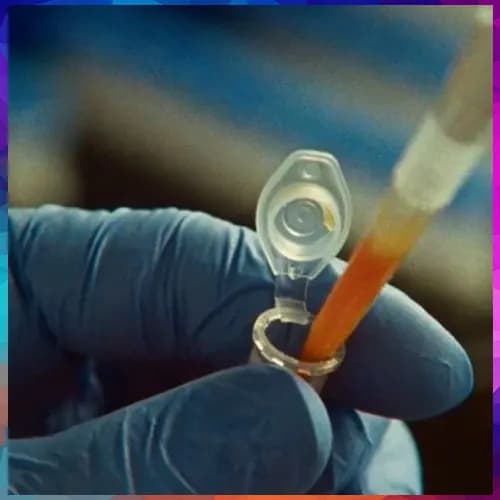
Anthropic says its scientists performed all laboratory experiments, in facilities operating at BSL-1 and BSL-2 levels that do not handle pathogens capable of infecting humans. Early results suggest the repeat array is transcribed into short RNAs, hinting at a functional role loosely analogous to repeat components of CRISPR. Feng Zhang, a CRISPR pioneer at MIT and the Broad Institute, called RNA-repeat arrays tied to reverse transcriptases intriguing and worthy of further study.
CEO Dario Amodei said the work was done "mostly, though not entirely, by Claude": researchers supplied a broad direction, and Claude searched literature and genomic data, found the system and proposed experiments.
Why the CRISPR comparison matters
CRISPR began as an observation of odd repeated sequences in bacteria before scientists learned they were part of a defence system and adapted them into programmable editing tools. Restriction enzymes and Taq polymerase, now central to PCR, followed similar paths. Anthropic argues AI could widen the search for such useful systems by reading genomic data at a scale individual teams cannot match.
The company is building a life sciences organisation and has launched a Life Sciences Verification Program giving vetted professionals access to models with biology-specific safeguards. Still, Anthropic has not established what ART does, whether it can be programmed, or whether it could ever become a practical gene-editing tool.