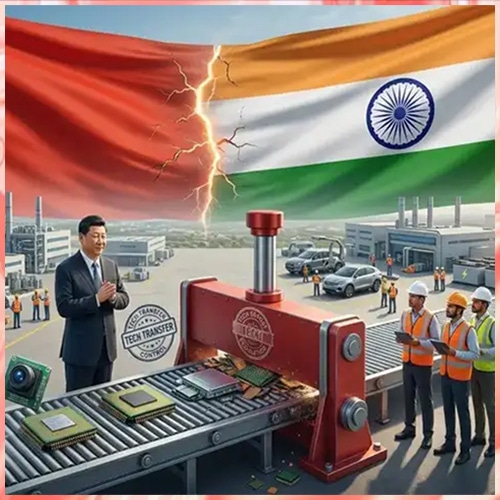
China’s proposal to restrict exports of 40 strategic technologies signals a significant shift in global economic competition. Artificial intelligence, biotechnology and solar manufacturing are increasingly becoming instruments of technological sovereignty, national security and geopolitical influence.
The proposed restrictions cover 23 AI technologies, including large language models, intelligent agents and computing clusters; five biomedical technologies involving advanced therapies; and 12 photovoltaic technologies spanning polysilicon, wafers, solar cells and manufacturing equipment.
The deeper concern is China's potential control over critical technological know-how. Unlike conventional restrictions on physical exports, technology-transfer controls could affect licensing, engineering expertise, intellectual property sharing and overseas manufacturing partnerships, making global supply chains more vulnerable.
For multinational corporations, the implications extend beyond procurement. Cross-border research collaborations, joint ventures and technology-transfer agreements could face additional scrutiny, regulatory approvals and compliance costs. Businesses may need to reassess their dependence on Chinese expertise.
India faces a strategic dilemma. Restrictions could accelerate domestic innovation under Make in India and Atmanirbhar Bharat, particularly in AI infrastructure, biotechnology and solar manufacturing. However, limited access to specialised technology could increase production costs and delay industrial expansion.
The bigger opportunity lies in building indigenous intellectual property, strengthening research institutions and creating globally competitive manufacturing ecosystems. India must also diversify technology partnerships while investing in skilled talent, advanced computing and commercialisation of domestic research.
The key takeaway is that technology self-reliance cannot be achieved through manufacturing incentives alone. It requires sustained innovation, intellectual property ownership and supply-chain resilience. As these restrictions remain proposals, their ultimate impact will depend on implementation, licensing exemptions and international responses.