CIOs and leadership teams must crystallize what they mean by digital strategy and work with a small subgroup from the executive team to define what “digital” means and how it manifests in the broader business strategy. They must ensure all elements of the digital strategy link clearly to the core business strategy, and that they do not form an independent, possibly distracting, programme of change.
Business leaders intend to change the mix of leadership talent needed to make that change – with Chief Data Officers, Chief Digital Officers and new heads of innovation on the way. A recent survey found that 19 per cent of the business leaders expect to see a Chief Digital Officer by 2014 and 17 per cent expect to see a Chief Data Officer. CIOs should embrace growing digital data and innovation needs, and not stand back from them. Also, CIOs who intend to stay with their firms for more than two years should be developing digital business, business information governance and innovation leadership capabilities in themselves and in their teams. CIOs who intend to retire or step back into other roles should help their organizations by incubating next-generation talent in the areas of digital media, information exploitation, and digitally enabled product and service innovation. This can be done inside as well as outside the IT department.
 |
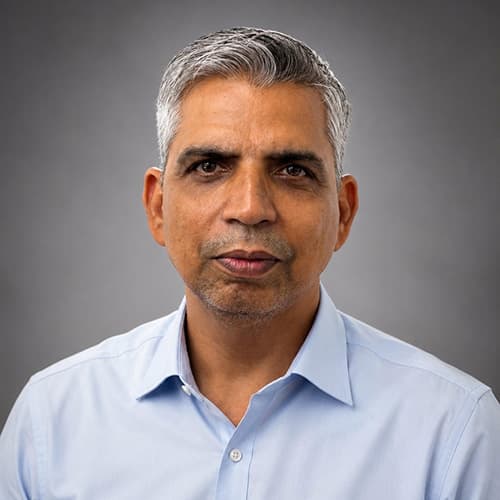
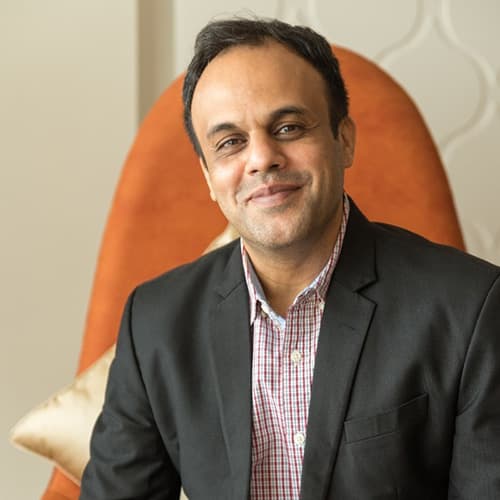
Shabir Momiin
CTO & MD
Zenga TV
"The role of CIOs has become so critical in this changing and dynamic world"
"The role of CIOs has become so critical in this changing and dynamic world where data, analytics, automation, right information at the right time, behaviour pattern, predictive analysis of user behaviour, cost optimization, moving to cloud and born on cloud, scalable architecture not keeping in mind the local market but the global market in mind have become key foundations of a successful business and not just a great business model or industry," said Shabir Momiin, CTO & MD, Zenga TV.
 |
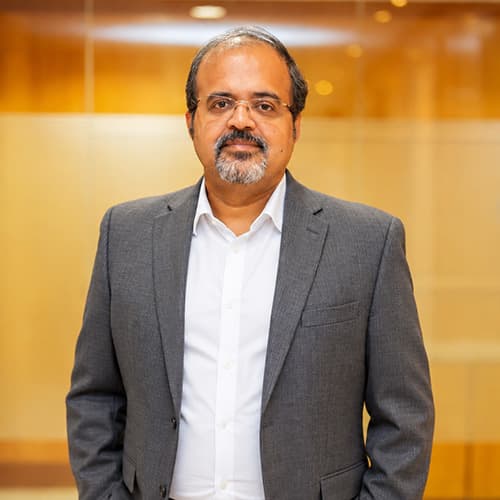
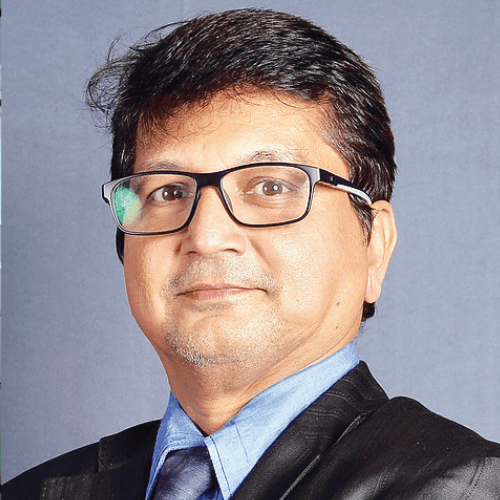
Amit Gautam
Founder & Director of Technology Solutions
Upside Learning
"Today organizations also have a parallel digital entity for efficient information handling"
From the days when CIOs had limited system storage and controlled information generation, to a time where all business processes are using some sort of Information System, the challenge has grown bigger. The reason is the increasing volume of information that is now being generated and processed within a company, and from external entities like suppliers, partners, customers, etc. Amit Gautam, Founder & Director of Technology Solutions, Upside Learning, has expressed his views. He says, “While the volume of information may still be handled efficiently, it is a fact that today organizations also have a parallel digital entity [or a more integrated entity]. This entity generates information in an unplanned, unexpected and mostly unpredictable manner. Thus, a holistic approach has become a necessity today. And to achieve better results, this approach has to be outside-in, instead of inside-out.”
 |
Bipul Parua
CTO & Co-Founder
Knowlarity
"Cloud Technologies along with smartphone will play a very important role in future"
Major Challenges faced by IT Organizations
The good and bad thing about business dynamics is that it keeps evolving constantly. However, the internet and now the mobile revolution have made this evolution much faster than can be kept pace with using traditional approaches and tools. Today, we need a very agile, quickly-adaptable-to-change kind of approach to handle the challenges posed by the changing technological landscape. Major challenges faced by IT include: Mobility, BYOD work Culture, Social Footprint and Cloud.
 |
Sudhir Rao
Chief Technologist, Enterprise Services
HP India
"There is a very thin balance between Information Sharing & Information Security"
Today, everything is mobile, which also means that office work and staff is mobile too. The complexities of a device in the hands of employees and one that is always ON are mind-boggling. The BYOD (Bring Your Own Device) concept also brings with it the need and challenges of Enterprise Information Security and Data Handling. The focus needs to be high on BYOD, but in the context of strong MAM (Mobile Applications Management) and MDM (Mobile Devices Management) secure and hassle-free access to information on own devices has to be ensured. Like any other organization, IT organizations also need to grapple with their social footprint. The challenge is to leverage the social media, ensuring that it is used in the context of information security and other business principles. Placing restrictions on social media for employees tends to rebound adversely and giving a free hand also may result in risky situations. The balance is critical and challenging.
 |
Mustafa I. Rampurawala
Head
AV Projects at Solutions India Systems (P) Ltd
"Everyone wants everything but very seldom they care for security"
Industry, at large, is moving to cloud technologies which offer numerous benefits over conventional on-premise installations. CIOs should have a concrete plan over adopting cloud technologies without compromising information security and choose among Private Cloud or Public Cloud or combination of both depending upon the application and security. Bipul Parua, CTO & Co-Founder, Knowlarity, has expressed his views on this. He says, “Increasingly, Cloud technologies are accessible over mobile either via mobile application or via mobile browser and with increasing penetration of smartphones, Cloud technologies along with smartphones will play a very important role in future technologies in the industry.”
The Biggest Challenge: Information Sharing Vs Information Security
Besides the above mentioned challenges, IT managers also have to create a balance between Information sharing and Information security. Information sharing is the call of the day. Everyone in today’s business circles wants to be updated and flooded with information from all the sources. The same information is then shared by the leaders to their team and so on. But the major factor is to strike a perfect balance between how much information has to be shared and with what level of security? Sudhir Rao, Chief Technologist, Enterprise Services, HP India, commented, “There is a very thin balance between the two terms. CIOs have to see the security posture and the kind of information that can be shared. For instance, if I am an enterprise, I can have my core ERP in private network or in traditional ecosystem and if I am a mobility user I can have both the Public and the Private Cloud. It is difficult to define security. Actually, it depends on the risk that we have to perceive.”
 |
Aman Mittal
Deputy-Director
Lovely Professional University
"Proper security arrangements are deployed to ensure hassle-free, safe and secured access to internet in LPU Campus."
For an IT or any other company, Information Security is a constant and underlying threat that cannot be compromised. All policies around Information need to be designed with this understanding. “Everyone wants everything but very seldom they care for the security of that Information rather the information overflow does not impact the Security. This can be achieved by putting up the required Information to the relevant and concerned people with alerts and threats of security lapse of that information,” Mustafa I. Rampurawala, Head – AV Projects, Solutions India Systems (P) Ltd, opined.
For information sharing, Lovely Professional University has deployed equipments of Cisco and Ruckus and has configured it with Juniper. They are using software like LDAP and Active Directory. The entire system is powered by 40 servers from HP/IBM for 100% redundancy backed by 30 Km fibre backbone for providing seamless connectivity. For information security, they have put in place some of the best security solutions available that have led to increased safety of university’s internal data and records. “Proper security arrangements, which are upgraded from time to time to beat the ever-new genre of threats, are deployed to ensure hassle-free, safe and secured access to internet, in the LPU campus,” said Aman Mittal, Deputy Director, Lovely Professional University.
 |
Ganesh.S
CEO
Dun & Bradstreet Technology and Data Services Pvt Ltd
"CIOs need to develop an information value chain which converts raw data into actionable insights."
Risk Analysis
CIOs are playing a significant role in areas like financial services where speed and accuracy in decisions is one of the most important ingredients for success. Throwing more light on this, Ganesh.S, CEO, Dun & Bradstreet Technology and Data Services Private Ltd, said, “CIOs need to develop an information value chain which converts raw data into actionable insights which can be integrated in key decisions for mass customization of products to create differentiated offerings for better product adoption and lower costs while reducing business risks and improving capital deployment.”
 |
Technology Archiving Vs Technology Architecture
Technology Archiving is simply a way by which we store the records to be used for future references. Usually, they are compiled and preserved to be accessed later on, while the Technology Architecture is the process of development of methodical information technology specifications, models and guidelines, using a variety of Information Technology notations, for example UML, within a coherent Information Technology architecture framework, following formal and informal Information Technology solution, enterprise, and infrastructure architecture processes.
Final Words….
CIOs play a more strategic, integrated and proactive role to help their organizations meet their vision and goals. They are expected to be aware of the business strategy, key business drivers, competitive landscape, emerging trends and shift in customer preferences to formulate and implement the technology roadmap that can build capabilities required to attain and sustain competitive advantage.
For More Contact:
satinder@varindia.com