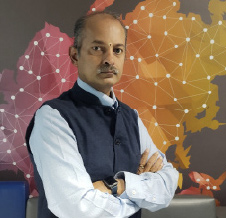

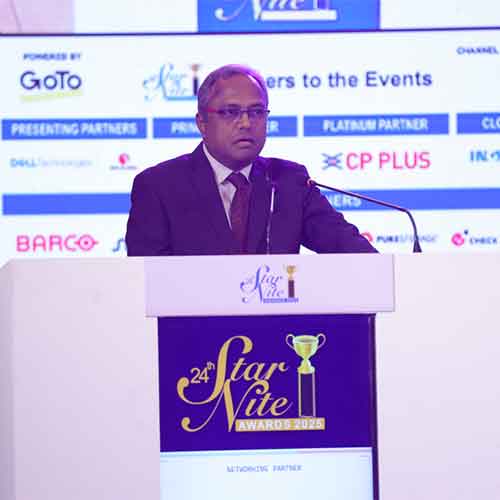
K. SUBRAMANIAM, IAAS,
DIRECTOR GENERAL,
COMPTROLLER AND AUDITOR GENERAL OF INDIA
“The Indian digital economy today constitutes about 20% of our GDP, which is about 65 lakh crores of rupees. If we want to become a $7 trillion economy by 2030, we need to have a very robust digital ecosystem. We have an eCommerce market of about $200 million. India also has the 3rd largest start-up pool of about 1, 20,000. So with this kind of an ecosystem, collaboration and partnership are the key. But, despite having this enormous digital ecosystem, we face a lot of challenges which we need to identify and overcome.
India still has a digital divide, as internet penetration is only about 60%. There are at least 500 million people who are devoid of IT services or IT connectivity. Much of our government programs and service delivery happens through digital modes, for instance digital payments to the beneficiaries. So we have a bottleneck there. With cybersecurity threats, and deepfake incidents rising, data privacy & sovereignty are at risk. I believe this cannot be regulated alone by a mere Act, but it is more a matter of mindset and culture. In India today, even medical reports are sent through WhatsApp. They are all openly available and there is no confidentiality. Besides, there is other such information within the public purview which circulates on the WhatsApp platform everyday, and there's very little concern for confidentiality. That is something which we need to resolve. We talk about innovation and Research, but in reality we spend only about .7% of our GDP on R&D whereas most of the other developed countries are spending about 2.5% of their GDP on it. We are talking about startups, but funding remains a major issue. To carry forward a startup idea, right from inception to the last mile, you need collaborations with various partners and players in order to have an impact. Again, Intellectual Property (IP) protection remains an issue. We have very few patents, as compared to China or any other developed nations. It is again a matter of culture and mindset.
Most importantly, government regulatory frameworks need continuous reform, fine-tuning, and updating. These reforms need to be both institutional as well as regulatory. For instance, take the issue of refurbished hard disks being sold in India. This issue can be tackled through government action—by preventing it at the entry point and enforcing checks during government procurement. We need to have some pre-qualifications on our end to stop vendors from being able to sell such products, or at least have some restrictions on these. These are some of the challenges to which we need to bring certain regulatory changes.”

See What’s Next in Tech With the Fast Forward Newsletter









Tweets From @varindiamag
Nothing to see here - yet
When they Tweet, their Tweets will show up here.