
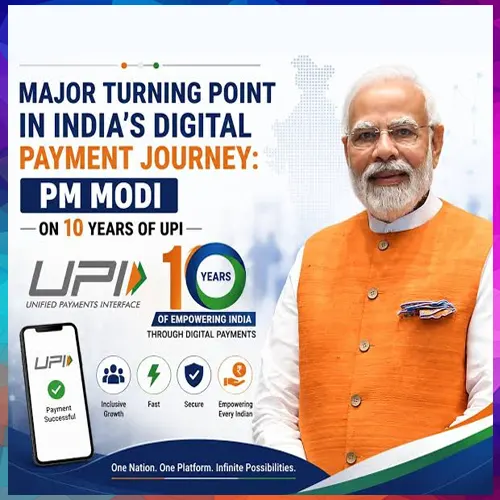
India is preparing to take its digital payments revolution global. At the Global FinTech Fest 2026 in Mumbai, Prime Minister Narendra Modi called for UPI to be connected directly with payment systems in more countries, building on the successful India-Singapore linkage.
UPI completed 10 years on August 25 and processed more than 24 billion transactions in August 2026 alone. It is now live in 11 countries, demonstrating how an infrastructure originally designed for domestic financial inclusion is evolving into an international payments platform.
The next ambition is deeper interoperability. Modi wants India to prioritise countries with large Indian populations, significant bilateral trade and governments willing to collaborate on digital payments. Singapore's PayNow-UPI connection provides a working model for this expansion.
The economic implications could be significant. India is the world's largest recipient of remittances, and direct payment-system integration could reduce intermediary costs while making cross-border transfers faster for Indians working overseas. It could also simplify payments for travellers and businesses.

Strategically, globalising UPI is about more than payment convenience. India has an opportunity to export its Digital Public Infrastructure model, influence international payment standards and reduce dependence on traditional global payment networks.
However, international expansion will require strong cybersecurity, fraud prevention, privacy protection, regulatory interoperability and trusted cross-border data governance. Modi specifically identified cybersecurity and ethical data protection among India's next fintech priorities.
The larger opportunity is clear: after transforming domestic payments, UPI's second decade could turn India from a digital-payments success story into an exporter of global financial infrastructure.