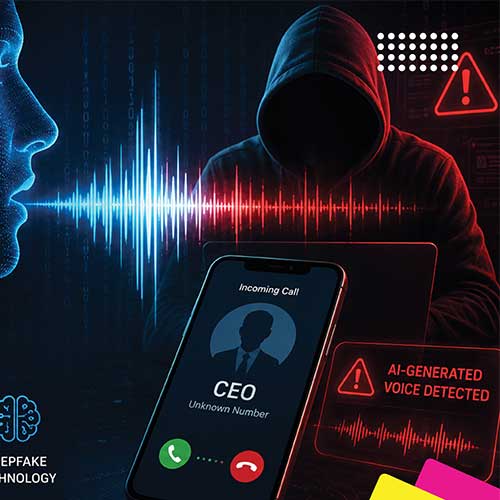
A chilling new attack vector is emerging in enterprise security: AI-generated voice clones impersonating senior executives to manipulate junior staff into bypassing critical controls.
In one scenario, a "CEO" call to a junior IT helpdesk executive—urgently instructing them to open specific URLs and modify firewall rules—can unravel an organization's entire security posture in seconds.
This is "human hacking" at its most dangerous.
No malware, no exploit code, no brute-force attempts—just a convincing voice and a sense of urgency exploiting basic human trust and hierarchy.
The consequences are immediate and severe.
Multi Factor Authentication, encryption, OAuth protocols, Identity & Access Management, data security frameworks, and privacy controls—technologies organizations invest millions in—become irrelevant the moment a trusted insider unknowingly opens the door.
This highlights a critical truth: technology alone cannot solve a human problem.
Voice authentication, callback verification protocols, and zero-trust principles applied to "urgent" requests—regardless of seniority—are now essential.
As deepfake technology becomes more accessible, organizations must train employees, especially junior staff handling sensitive access, to question authority when procedures are bypassed.
The weakest link isn't the firewall—it's the phone call.
Deepfake
Voice Deepfakes: The New Frontline of Cyberattacks