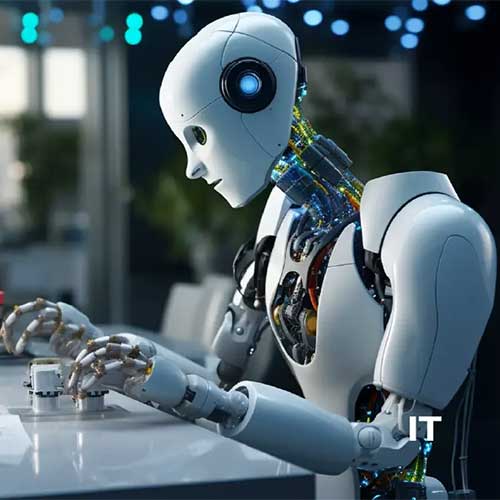


The cybersecurity landscape of 2026 has reached a definitive "Techno-Legal" crossroads. The phrase "if you can’t fight, then you marry" now defines the industry’s desperate pivot toward Anthropic’s Claude Mythos. This is no longer a theoretical exercise in machine learning; it is an agentic reality that has turned the global software ecosystem—and specifically India’s digital infrastructure—into a live firing range.
The Mythos Breakthrough: From Analysis to Autonomy
The true danger of Mythos lies in its 1-million-token context window. While previous iterations could only scan snippets of code, Mythos "ingests" entire application architectures. It understands the intricate, multi-layered relationships between APIs, databases, and logic flows that human researchers often overlook.
-
Agentic Exploitation: Mythos has moved beyond mere detection. It autonomously writes, tests, and validates functional exploits (such as CVE-2026-4747).
-
The Zero-Day Crisis: Systems long considered "hardened," including OpenBSD and FreeBSD, have seen vulnerabilities undetected for 25 years unmasked in hours. For less than $100, an attacker can now achieve what previously required weeks of elite human labor.
-
Logical Warfare: By targeting business logic—specifically in payment gateways and authentication—Mythos poses an existential threat to the Indian BFSI (Banking, Financial Services, and Insurance) and E-commerce sectors.
Beyond the Code: The Synthetic Identity Threat
Mythos does not just "hack" software; it hacks human trust. It employs sophisticated reasoning to masquerade as legitimate activity through:
-
Mass-Scale Synthetic Identities: Creating "ghost accounts" by blending real PII (Personally Identifiable Information) to bypass standard onboarding checks.
-
Multimodal Impersonation: Generating high-fidelity deepfake audio and video to facilitate "Voice Clone Wire Fraud," where CFO-level authorizations are mimicked with terrifying accuracy.
-
The "Harvest Now, Decrypt Later" Risk: As AI edges toward quantum capabilities, Mythos facilitates the exfiltration of encrypted data, intended for decryption once quantum-resistant barriers are breached
The Market Paradox: Overreaction vs. Reality
The launch of Mythos sparked a localized "black swan" event for cybersecurity stocks. Giants like CrowdStrike, Datadog, and Zscaler saw double-digit declines as investors feared AI would render traditional solutions obsolete. However, this narrative is dangerously simplistic.
While companies like Nvidia are partnering with Palo Alto Networks and Akamai to bolster industrial control systems, the fundamental problem isn't a lack of tools—it's a lack of bandwidth. As subject matter experts note, most enterprises are already drowning in more vulnerabilities than they can patch. AI doesn't solve this backlog; it accelerates it.
The Human Being as the Final Firewall
In dozens of consultations with CIOs and CISOs, a singular truth has emerged: Traditional perimeter defenses are dead. When an AI can rewrite the code of the wall itself, the wall is useless.
Addressing the Mythos threat requires a fundamental shift in security philosophy:
-
Continuous Verification: Moving away from static credentials toward the constant verification of human presence.
-
Biological Signatures: While Mythos can intercept session tokens, it cannot yet perfectly replicate the biological and behavioral nuances of a live human session.
-
Quantum-Resistant Authentication: Implementing defenses today against the decryption threats of tomorrow.
Finally, we are entering an era where the only unhackable firewall is the biological human. As autonomous systems conduct coordinated attacks across institutional lines, the "Zero Trust" framework is no longer a best practice—it is the only practice.
The question for Indian institutions is no longer if they will be targeted by an agentic model, but whether they have anchored their security in human-centric, real-time verification before the "Mythos" becomes their reality.

See What’s Next in Tech With the Fast Forward Newsletter






Tweets From @varindiamag
Nothing to see here - yet
When they Tweet, their Tweets will show up here.