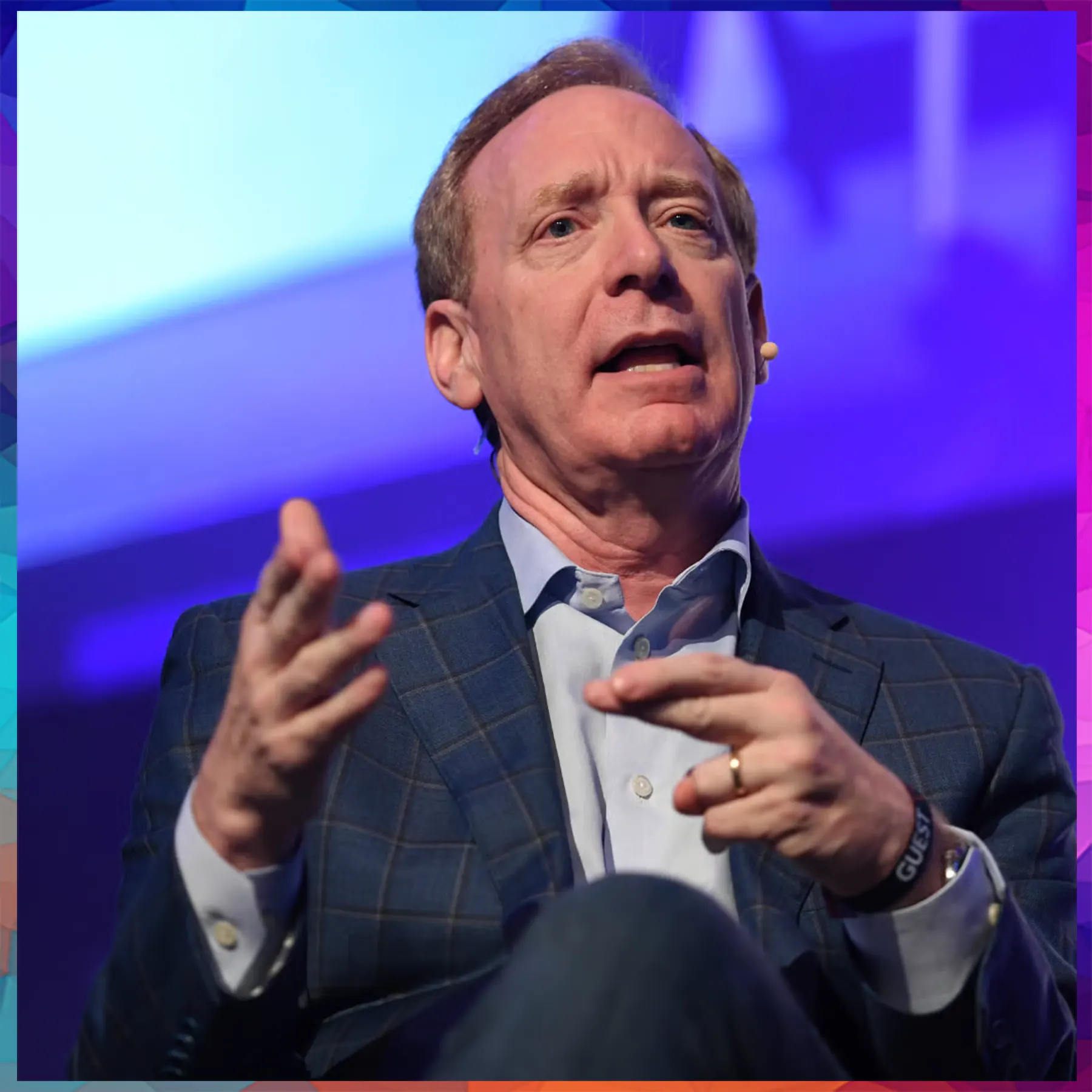
Microsoft President Brad Smith has rejected the White House’s H-1B abuse allegations as “completely off base,” cautioning that curbs on skilled immigration could push top AI and software engineers toward rival nations and weaken American technology.
Microsoft President Brad Smith has cautioned that the Trump administration’s move against green cards for skilled foreign workers could damage the American technology sector for more than a generation. His remarks, as per reports, set up a major confrontation over immigration and the global contest for engineering talent.
Smith dismissed the accusations of H-1B misuse as “completely off base.” He argued that restrictive policies could send leading artificial intelligence and software specialists to competing countries, leaving the United States poorer in expertise at a critical time for the industry.
Microsoft defends its hiring and pay record
Responding to charges that foreign workers depress wages and displace local staff, Smith said Microsoft applies a single pay structure to all employees, whatever their immigration status. He also pointed to the company’s domestic hiring, saying it took on more than 9,000 US-born workers in the past year, a contribution he felt the White House had ignored.
According to Smith, most of Microsoft’s green-card applications are filed for established, long-serving employees rather than fresh recruits. He attributed the backlogs mainly to delays in government processing, not to company practices. He also suggested the administration had been given inaccurate figures and urged it to rethink its stance in light of how firms actually hire.
The dispute sharpened after Vice President JD Vance announced that Microsoft and seven other large companies would be barred from sponsoring skilled foreign professionals for permanent residency.
What the PERM suspension means
The policy stems from an October 8 decision by the Trump administration to suspend the Permanent Labour Certification (PERM) programme for several major technology firms. The eight companies named are Microsoft, Adobe, Cognizant, Infosys, Tata Consultancy Services, Wipro, HCL Technologies and Capgemini.
The freeze stops the processing of pending applications and prevents the affected companies from filing new certifications. That closes off the main route by which skilled professionals secure permanent residency in the United States.
Vance has accused firms of using foreign workers to replace laid-off Americans and hold down wages. He described H-1B workers as “foreign indentured servants,” arguing that their dependence on employers leaves them open to exploitation.
The announcement has alarmed Indian IT professionals, many of whom rely on employer sponsorship to obtain permanent residency in the US.