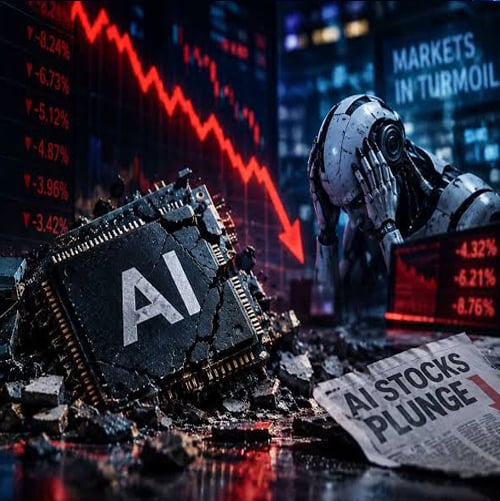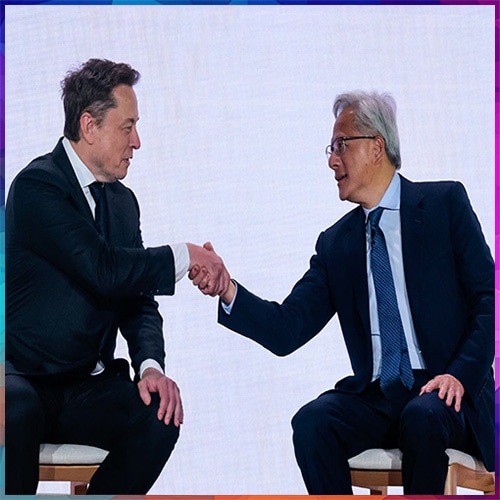
An online petition seeking Jensen Huang's return as Nvidia CEO has reignited questions about corporate governance, leadership accountability, and the future of the AI chipmaking giant.
An online campaign seeking Jensen Huang's reinstatement as Nvidia CEO has reportedly attracted more than 175,000 signatures following his November 12 resignation, highlighting concerns about leadership stability at the world's leading AI chipmaker.
Key Highlights
-
175,000+ signatures: The petition reportedly demands Huang's reinstatement.
-
High-profile supporters: Elon Musk and other technology leaders are named among signatories.
-
Employee participation: Thousands claim Nvidia employment, without independent verification.
-
Governance concerns: Leadership accountability and succession planning face scrutiny.
-
Strategic implications: Nvidia's AI dominance depends on innovation beyond individual leadership.
The petition, titled “Thirty-three Years Deserve an Answer,” urges Nvidia's board to reconsider Huang's departure and provide greater transparency regarding the circumstances surrounding the leadership transition.
Prominent technology figures reportedly supporting the campaign include Elon Musk, Epic Games CEO Tim Sweeney, former Uber CEO Travis Kalanick, and YouTube co-founder Steve Chen, demonstrating Huang's influence across Silicon Valley.
Hosted on standwithjensen.com, the initiative describes itself as independent of Nvidia and Huang. Its reported signatories include 8,745 current employees and 1,576 former employees, although these affiliations remain self-reported and unverified.
The controversy follows reports concerning Huang's alleged relationship with Alice Huang, who has faced scrutiny over suspected connections to Chinese intelligence. Importantly, allegations and personal associations do not establish wrongdoing, and reported intelligence claims require independent verification.
Huang's leadership transformed Nvidia from a graphics processor manufacturer into a dominant AI infrastructure company. Its GPUs, CUDA software ecosystem, and networking technologies underpin substantial portions of global AI development.
His departure, therefore, raises strategic questions about succession planning, customer confidence, semiconductor export restrictions, and Nvidia's ability to sustain its technological advantage amid intensifying competition.
Supporters argue that Huang's entrepreneurial vision, engineering expertise, and industry relationships remain difficult to replace. However, corporate governance requires boards to balance exceptional leadership contributions against institutional accountability.
The petition also reflects growing concerns about geopolitical tensions involving advanced semiconductor technologies, particularly restrictions on Chinese access to sophisticated AI computing infrastructure.
For investors, the central issue is whether Nvidia can maintain innovation, operational continuity, and strategic independence without its longtime architect directing the company's next growth phase.
Ultimately, Nvidia's future cannot depend exclusively on one individual. Whether Huang returns or not, transparent governance, credible succession planning, and sustained technological leadership will determine investor confidence and long-term competitiveness.