VARINDIA
Breaking

TVS Family Dispute Escalates Over Wealth

17 Nov 20262 min read
TVS Family Dispute Escalates Over Wealth

A fresh family dispute has emerged within the TVS Group , with Lakshmi Venu seeking a formal partition of joint family assets belonging to the Venu Srinivasan branch, raising questions about inheritance rights, family governance, and succession planning. Lakshmi has reportedly issued a legal notice to her father, industrialist Venu Srinivasan, demanding her lawful share in the family's wealth under the Hindu Succession Act, 1956, as amended in 2005. The dispute centres on whether the 2020 TVS family arrangement adequately addressed the distribution of assets within Venu Srinivasan's immediate family. Lakshmi maintains that the earlier settlement did not resolve her individual inher…

Read full story →

VARINDIA

eMagazines

View all →

Latest News

View all →

Editorial

Opinion & Round About

View all →
Editor - VARINDIA

Editor Speak

From Gpus To Gigawatts: The AI Infrastructure War Reshaping Global Power

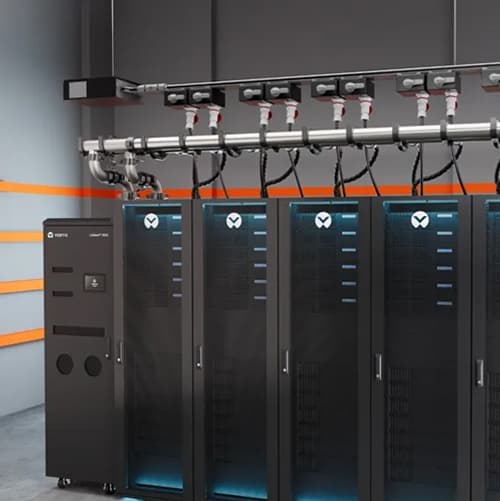
S. Mohini Ratna Editor, VARINDIA The $3 trillion race to build AI infrastructure is transforming data centers into strategic national assets, redefining economic competitiveness, digital sovereignty, and the future of global intelligence. The world is entering a defining technological era where artificial intelligence is no longer merely an innovation tool but a fundamental driver of economic power, national competitiveness, and industrial transformation. At the heart of this revolution lies an unprecedented global race to build the computing infrastructure that will power the intelligence economy. THE $3 TRILLION INFRASTRUCTURE REVOLUTION An estimated $3 trillion investment in AI data centers by 2029 is transforming global computing infrastructure. Traditional facilities are evolving into AI-native powerhouses equipped with advanced GPUs, high-speed networking, and liquid cooling. As the industry shifts from megawatt to gigawatt-scale campuses, demand for electricity, water, and infrastructure is surging, making computing capacity a strategic driver of economic competitiveness and technological leadership. AMERICA LEADS THE GLOBAL COMPUTE RACE The United States dominates global AI infrastructure, with Microsoft, Amazon, Google, Meta, and Oracle investing heavily in hyperscale data centers. Initiatives such as OpenAI's Stargate, CoreWeave, and xAI's Colossus are accelerating the AI computing race. However, future leadership will depend not just on computing capacity but also on affordable energy, advanced chips, skilled talent, and sustainable infrastructure. THE MIDDLE EAST EMERGES AS AN AI POWERHOUSE Saudi Arabia and the UAE are emerging as major AI infrastructure hubs, leveraging energy resources, strategic investments, and global technology partnerships. Saudi Arabia's Humain initiative and the UAE's proposed 5-gigawatt AI campus in Abu Dhabi highlight their ambitions to become global computing powerhouses. The Middle East is rapidly transitioning from an energy exporter to a potential leader in sovereign AI and digital infrastructure. FROM H100 GPUS TO GB300-CLASS INFRASTRUCTURE AI infrastructure is rapidly evolving from NVIDIA H100 and H200 GPUs to advanced GB200 and GB300 systems, delivering greater computing power and efficiency. This transition demands higher power capacity, liquid cooling, and advanced thermal management. Organizations must redesign data centers with integrated computing, networking, energy management, and intelligent orchestration to support next- generation AI workloads.Token Economics Will Determine AI Profitability While infrastructure investment is accelerating, the next major industry challenge is monetization. Every AI interaction consumes computing power, increasing infrastructure costs and energy demand. As autonomous AI agents drive higher token consumption, optimizing inference efficiency, model routing, and workload management becomes critical for profitability. Organizations must also strengthen API security to prevent token abuse, unauthorized consumption, and agent-driven financial risks. QUANTUM READINESS BECOMES A STRATEGIC PRIORITY Tomorrow's data centers must also prepare for emerging quantum technologies. Quantum-ready data centers must support future hybrid computing, secure connectivity, and post-quantum cybersecurity. While quantum computing is still emerging, organizations must invest in flexible infrastructure, post-quantum cryptography, and secure data exchange to ensure long-term resilience and protect sensitive information against evolving quantum threats. INTELLIGENCE, TRUST AND AGENCY: THE NEW AI EDGE The next competitive frontier will be defined by three interconnected forces: intelligence, trust, and agency. Intelligence determines how effectively organizations convert computing power into innovation and business value. Trust establishes whether AI systems can operate securely, transparently, and responsibly across critical industries. Agency defines how humans and autonomous systems make decisions, execute tasks, and remain accountable for outcomes. As AI agents gain greater operational independence, identity verification, authorization, continuous monitoring, and containment become indispensable. The challenge is no longer simply building intelligent systems. It is ensuring that intelligence operates within trusted boundaries. INDIA'S OPPORTUNITY IN THE GLOBAL AI ECONOMY India's AI infrastructure revolution presents significant opportunities in sovereign cloud, domestic computing, and secure digital services. However, success depends on reliable energy, advanced cooling, semiconductor access, connectivity, and skilled talent. India must move beyond data center hosting to build a self-reliant AI ecosystem driven by indigenous innovation, cybersecurity, and digital sovereignty. THE FUTURE BELONGS TO TRUSTED COMPUTE The global AI race is shifting toward scalable, cost-efficient, and trusted computing infrastructure. Leadership will depend on AI-native architecture, energy efficiency, digital sovereignty, and quantum readiness. Data centers are no longer just the backbone of the internet—they are becoming the engines of the intelligence economy, shaping the future of global technological leadership. Looking ahead, as the Great Cyber Pandemic intensifies, cybersecurity and data protection will become critical corporate priorities. AI-native data centers powered by advanced GPUs must train intelligent security models to combat deepfakes, financial fraud, and cyberattacks. Real-time threat intelligence, predictive defense, and automated containment will be essential to building a secure and trusted digital ecosystem.

By Editor - VARINDIA02 Nov 2026
Read opinion →
VARINDIA

Round About

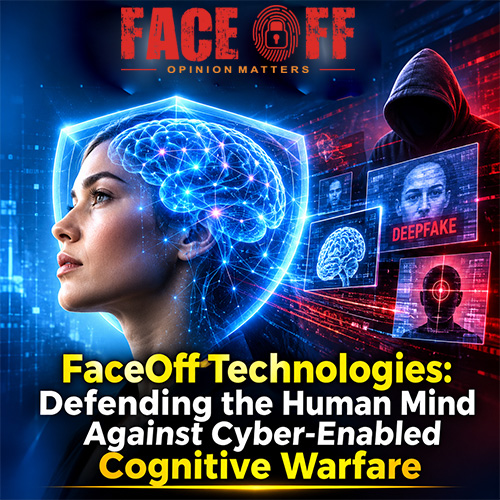
Cognitive Warfare: The New Battle for Human Trust

AI-powered deepfakes, disinformation, and psychological manipulation are transforming cyberattacks into a battle for human perception, institutional credibility, and decision-making. Cyber warfare is entering a dangerous new phase. The objective is no longer limited to stealing sensitive data, disrupting networks, or compromising critical infrastructure. Increasingly, adversaries are targeting something far more valuable: human perception, decision-making, institutional credibility, and public trust. This emerging threat is known as Cyber-Enabled Cognitive Warfare (CECW), where artificial intelligence, social engineering, deepfakes, disinformation, and coordinated cyber operations are used to manipulate what people see, hear, believe, and ultimately decide. Unlike conventional cyberattacks that target technology infrastructure, cognitive warfare targets the human mind. Attackers seek to influence behavior, create confusion, undermine confidence, and manipulate decisions without necessarily breaching a single computer system. AI Is Weaponizing Human Perception Generative AI has dramatically lowered the cost of creating convincing fake identities, synthetic voices, manipulated videos, and fabricated digital evidence. Cybercriminals and hostile actors can now impersonate senior executives, government officials, military leaders, and trusted institutions with increasing sophistication. A convincing deepfake video of a CEO announcing a financial crisis could trigger market uncertainty. A cloned voice impersonating a bank executive could authorize fraudulent transactions. A fabricated government announcement could create panic or undermine public confidence. The danger extends beyond individual deception. Coordinated networks of automated accounts, AI-generated content, and manipulated narratives can amplify misinformation across digital platforms, making fabricated information appear credible through repetition and apparent social consensus. From Cybersecurity to Cognitive Security Traditional cybersecurity focuses on protecting networks, applications, identities, and data. However, cognitive warfare exposes a critical limitation: even technically secure systems can be compromised when legitimate users are manipulated into making harmful decisions. An employee may willingly transfer funds after receiving convincing instructions from a synthetic executive. A customer may disclose credentials to an AI-generated banking representative. A decision-maker may act on fabricated intelligence presented as authentic evidence. In these situations, the attacker does not necessarily defeat the technology. The attacker defeats the trust placed in the information. This creates a new category of enterprise risk where cybersecurity, behavioral psychology, identity verification, and information authenticity increasingly intersect. Agentic AI Could Accelerate Cognitive Attacks The emergence of autonomous AI agents introduces another dimension to cognitive warfare. AI-powered systems can potentially automate reconnaissance, personalize deceptive messages, generate synthetic identities, and coordinate influence campaigns at a scale previously requiring significant human resources. When combined with publicly available information, compromised accounts, and social engineering, these capabilities can make manipulation more targeted and persuasive. An additional concern is the possibility of malicious content influencing enterprise AI assistants and autonomous agents. Prompt injection, poisoned information sources, and manipulated digital evidence could cause AI systems to recommend incorrect actions or execute unauthorized workflows. The threat therefore extends beyond manipulating human judgment to influencing the AI systems increasingly supporting human decisions. Critical Sectors Face Growing Exposure Banking, financial services, government, defence, healthcare, telecommunications, and media organizations are particularly exposed to cognitive manipulation. In banking, synthetic identities and executive impersonation can facilitate fraud. In government, fabricated communications can undermine institutional credibility. In healthcare, manipulated information can influence patient behavior and public confidence. For media organizations, the challenge is especially significant. AI-generated images, videos, and audio recordings can circulate rapidly before journalists and fact-checkers establish their authenticity. As synthetic content becomes more realistic, distinguishing genuine evidence from fabricated material will become increasingly difficult without reliable verification mechanisms. Building a Digital Trust Defence Defending against cognitive warfare requires a shift from conventional cybersecurity toward a broader Digital Trust Architecture. Organizations must integrate multimodal deepfake detection, voice authentication, liveness verification, behavioral analytics, content provenance, and continuous identity assurance. High-risk financial transactions and sensitive operational decisions should require independent verification through trusted channels, particularly when instructions originate from voice calls, video meetings, or unfamiliar digital communications. AI governance must also address the integrity of information consumed by autonomous systems. Human oversight, source verification, restricted agent permissions, and auditable decision-making are essential safeguards. Technology alone, however, cannot eliminate cognitive threats. Employee awareness, crisis communication protocols, media literacy, and coordinated incident response remain equally important. FaceOff Technologies: Strengthening the Human Trust Layer FaceOff Technologies is developing an AI-driven trust framework through its Adaptive Cognito Engine (ACE®), combining multimodal deepfake analysis, liveness detection, behavioral signals, and identity verification. Its approach is designed to help organizations assess the authenticity of digital interactions and identify potential synthetic impersonation across video, voice, and identity-related workflows. Such capabilities can support a broader cognitive-security strategy, although no detection system can independently guarantee that information is truthful or eliminate manipulation risks. The Future of Cyber Warfare Is About Controlling Belief The next generation of cyber conflict may not begin with malware entering a network. It could begin with a convincing video, a familiar voice, a fabricated instruction, or an AI-generated narrative that influences thousands of people simultaneously. Organizations can recover stolen data, rebuild compromised systems, and restore disrupted networks. Rebuilding public confidence after trust has been systematically manipulated can be far more difficult. The strategic priority must therefore evolve from protecting digital assets alone to protecting the integrity of human decisions. The next battlefield is not just cyberspace. It is the human mind—and the most valuable asset at risk is TRUST.

By VARINDIA17 Nov 2026
Read opinion →
New Arrival

View all →

eMagazine

E-Magazine, October 2026 Issue

E-Magazine, October 2026 Issue

Read the latest VARINDIA print edition with enterprise technology coverage, interviews and channel insights.

Read eMagazine →
Newsletter

Technology intelligence every morning

Receive the most important enterprise technology and channel updates directly in your inbox.

Subscribe now

Face To Face

View all →

Var Speak

View all →

Channel Buzz

View all →

Movers & Shakers

View all →
Lloyds Names Manija Poulatova Security Chief

Movers & Shakers

Lloyds Names Manija Poulatova Security Chief

Lloyds Banking Group has appointed Manija Poulatova as Group Chief Security Officer , reinforcing its commitment to cybersecurity, digital resilience, and custo…

Marketing Mantra

View all →

Government & Policy

View all →

CIO Speak

View all →
Building an AI-First Media Enterprise

CIO Speak

Building an AI-First Media Enterprise

V V JACOB CHIEF GENERAL MANAGER IT - MALAYALA MANORAMA COMPANY The media industry is undergoing a profound transformation as artificial intelligence, automati…

Brand Equity

View all →

Cyber Security

View all →

Software

View all →

Peripherals

View all →
boAt enters Sri Lanka and Bhutan market

Peripherals

boAt enters Sri Lanka and Bhutan market

boat has announced its expansion into Sri Lanka and Bhutan, marking another important step in the company’s international growth journey as it builds the next s…

Industry Event

View all →

Voice of Channel Chief

View all →

Technotainment

View all →

Investments

View all →

Make In India

View all →
Zen Technologies to Acquire Cogknit

Make In India

Zen Technologies to Acquire Cogknit

Hyderabad-based defence technology company Zen Technologies has approved the acquisition of a 51.98% stake in Bengaluru-based Cogknit Semantics for approximatel…

Deepfake

View all →
Three Seconds to Steal a Voice

Deepfake

Three Seconds to Steal a Voice

A few seconds of speech is now all a fraudster needs. With just three to four seconds of recorded audio, AI tools can clone a person’s voice well enough to fool…

IDEMIA Advances Quantum-Safe Payment Cards

Deepfake

IDEMIA Advances Quantum-Safe Payment Cards

IDEMIA has taken a significant step toward securing the future of digital payments by becoming the first company to achieve EMVCo certification for a payment ca…

Start-UP

View all →

Cryptocurrency

View all →
X to Add Stock and Crypto Trading

Cryptocurrency

X to Add Stock and Crypto Trading

X is preparing to move deeper into financial services, with plans to let users trade stocks and cryptocurrencies directly from their timelines. The feature, des…

Channel Guru

View all →
iValue Journey to a Public Company

Channel Guru

iValue Journey to a Public Company

A MILESTONE OF CONSISTENT GROWTH DRIVEN BY PEOPLE AND PARTNERSHIPS. For every organisation, there are defining moments that mark both a reflection on the past a…

Channel Chief

View all →

Data Centre

View all →
US Closes AI Chip Loophole to China

Data Centre

US Closes AI Chip Loophole to China

The Trump administration has introduced tougher restrictions on advanced artificial intelligence chips, targeting a loophole that allowed Chinese companies to a…

E-Commerce

View all →

Data Privacy

View all →

Cloud Computing

View all →
NVIDIA DLSS 5 Redefines Gaming Visuals

Gaming

NVIDIA DLSS 5 Redefines Gaming Visuals

NVIDIA is expanding its DLSS 5 technology with 3D-Guided Neural Rendering to three major games this November: Hogwarts Legacy , War Thunder and Where Winds…

Security & Surveillance

View all →

Cyber Crime

View all →
France Accuses Iran of Cyber Sabotage

Cyber Crime

France Accuses Iran of Cyber Sabotage

France has accused an Iranian state-linked hacking group of orchestrating cyberattacks against commercial refrigeration systems, marking a troubling escalation…

Best Notebook Brands for SMEs Sector in India
Best Notebook Brands for Enterprises Sector in India